
 Cleaners
Cold weather brings its own kind of dirt. Salt and grit ride in on boots, a humidifier sits full of standing water, condensation beads on the window glass every morning and the dryer works harder than it did in July. None of it shows up on a normal weekly list.
So we wrote a separate one. Where one of our products fits a task, we say what its label covers and where it stops.
The short answer
Sweep salt off entry floors before you damp-mop, clean a portable humidifier every third day as the EPA advises, and wash the duvet by its care label. Clean fireplace glass only when it is cool, with the cleaner your fireplace maker names. Dry condensation off the sills each morning and clean the dryer lint screen before or after every load.
Winter cleaning checklist at a glance
All ten tasks in one table
Here is the winter cleaning checklist in one place. Print it as a cleaning checklist for the fridge door, or treat the less frequent rows as a deep cleaning checklist for one weekend each month. For the jobs that do not change with the season, pair it with a simple weekly cleaning schedule.
| Task | Reach for | How often |
|---|---|---|
| 01Wipe salt & grit off entry floors | A broom & damp mop | Daily in storms |
| 02Clean the humidifier | Brush & distilled water | Every third day |
| 03Wipe down baseboards | Surface Cleaner | Monthly |
| 04Wash the duvet & heavy bedding | Laundry Concentrate | Once a season |
| 05Clean the fireplace glass | The maker's cleaner | When it looks hazy |
| 06Degrease counters before holiday cooking | Surface Cleaner | Before big meals |
| 07Wipe light switches & door handles | Dish soap & a cloth | Weekly & after guests |
| 08Freshen closed-up rooms | Room Deodorant | Before guests |
| 09Dry window sills & condensation spots | A dry towel | Each cold morning |
| 10Clear the dryer vent | Your hands & a vacuum | Every load |
Winter cleaning tasks to tackle
From the front door to the laundry room
These winter cleaning tasks follow the path through the house, starting at the door where the season comes in. Most take under an hour.
1. Wipe salt & grit off entry floors
Dry grit first, then a damp pass
Ice melt and sand ride in on every pair of boots and dry into a white haze by the door. Get the dry material up first. For wood floors, the National Wood Flooring Association's routine is a sweep, a dust mop or a vacuum on the bare floor setting. It is the right start on tile too.
Then lift the salt film with a mop or microfiber cloth wrung out in warm water until barely damp. Rinse it often, or you just spread salt water around. On wood, the NWFA warns against wet mops and steam mops and recommends a cleaner made for your floor's finish. On a tile entry, a spray of Homecourt Surface Cleaner and a damp cloth takes up the sticky spots, since tile is on its label.
- Reach for
- A broom & damp mop
- How often
- Daily in storms
2. Clean the humidifier
Every third day, by the EPA's rules
A humidifier holds standing water at room temperature all winter. The EPA notes that microorganisms often grow in humidifier tanks with standing water, and that ultrasonic and cool mist models can disperse what grows there into the air.
Here is how to clean a humidifier the way the EPA advice on home humidifiers lays it out. Unplug the unit first. Then:
- Every day, empty the tank of a portable humidifier, wipe the surfaces dry and refill it.
- Every third day, scrub the empty tank with a brush to remove scale and film, then wipe it dry.
- Use the cleaning product your humidifier's maker suggests. If the manual is silent, the EPA suggests a 3% solution of hydrogen peroxide on every surface that touches water, then rinsing the tank with several changes of tap water.
- Fill it with water low in minerals, such as distilled water, to slow the scale.
Do not humidify the room past 50 percent relative humidity; the EPA says higher levels may encourage dust mites and mold. If water condenses on the windows, the EPA says to move the humidifier, lower its setting or run it less.
- Reach for
- Brush & distilled water
- How often
- Every third day
3. Wipe down baseboards
Dust first, then a light spray
Baseboards sit at floor level, where dust and tracked-in grit settle. For how to clean baseboards in one trip around the room, do the dust and the wipe together.
Run the vacuum's brush attachment along the top edge, or use a damp cloth; the EPA advises dusting often with a damp cloth because it holds the dust. For stained or finished wood trim, we reach for a non-toxic house cleaner for baseboards: Homecourt Surface Cleaner lists finished wood among its surfaces. Spray the cloth rather than the wall, wipe, and dry the board so no moisture sits in the seam at the floor.
Painted trim is different. Paint is not on our label, so use a cloth wrung out in warm water with a drop of dish soap, test a hidden spot and follow the paint maker's care advice. Whatever non toxic house cleaner you use, match it to the surfaces its label lists.
- Reach for
- Surface Cleaner
- How often
- Monthly
4. Wash the duvet & heavy bedding
Read the tag, then give it room

The EPA's advice for dust mites is to wash bedding in hot water once a week and dry it completely. Most of us manage that for sheets and covers, rarely for the heavy layer underneath.
Here is how to wash a duvet without ruining it. Start with the care tag, since some fills need cool water or a dry cleaner. Wash it alone in a machine big enough for it to move freely; if it fills the drum, use a laundromat's larger machines.
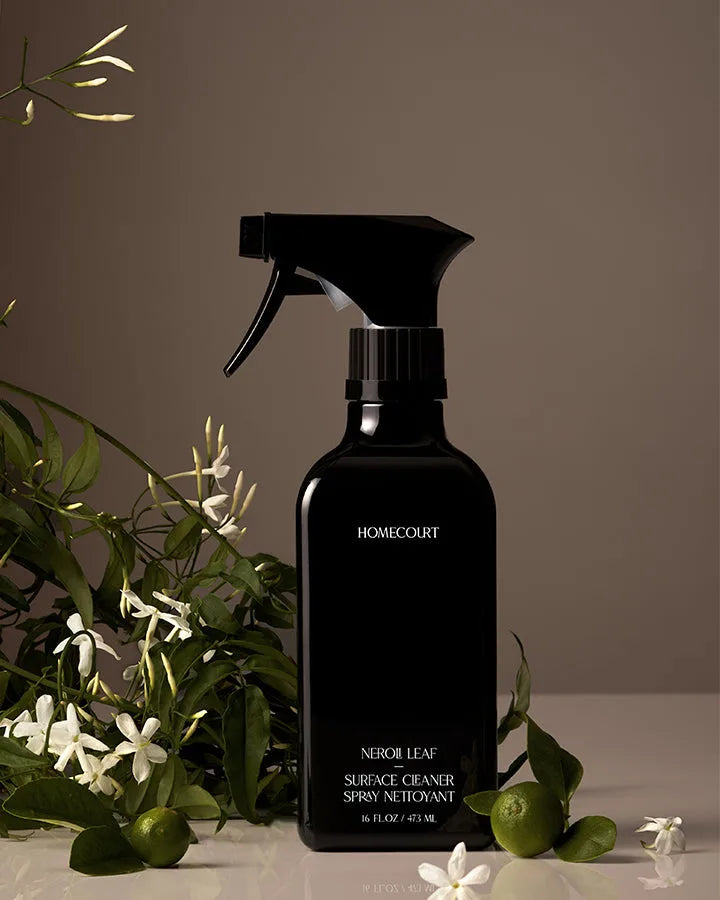
We use Laundry Concentrate for heavy bedding. Its directions say to always follow the garment care instructions and to add 3 to 5 pumps at the start of the wash cycle, adjusting for the size of the load. One bottle covers up to 70 washes, the formula is made without sulfates, phthalates, phosphates, parabens, bleach or dyes, and it costs $48 in Cece, Steeped Rose or Neroli Leaf.
Then dry the duvet completely, the step the EPA's dust mite advice ends on, and feel the middle of the fill before it goes back on the bed.
- Reach for
- Laundry Concentrate
- How often
- Once a season
 Try it withLaundry Concentrate$48
5. Clean the fireplace glass
Cool glass, the maker's cleaner
A white or gray film can build up on the glass front of any gas fireplace, new or old. Kozy Heat, a gas fireplace maker, traces it partly to minerals in the fuel and in the outside air drawn through the venting.
Your manual sets the method, and the maker's instructions win over any general advice, ours included. The usual pattern:
- Turn the fireplace off completely, pilot light included, and let the glass cool. The Hearth, Patio & Barbecue Association says that can take an hour or more.
- Open or remove the glass front as your manual describes and set it on a soft surface.
- Apply the cleaner your fireplace maker prescribes with a soft cotton cloth, let it sit, then buff it off.
- Clean the other side with strokes in the opposite direction, so you can tell which side a streak is on.
Kozy Heat warns against ammonia-based cleansers such as oven cleaner, paper towels and anything abrasive. Our Surface Cleaner does not list glass on its label, so it stays off the fireplace.
- Reach for
- The maker's cleaner
- How often
- When it looks hazy
6. Degrease counters before holiday cooking
A clean start for a busy kitchen
Clear the counters a day or two before the big meal and degrease them properly, so holiday cooking starts on a clean surface.
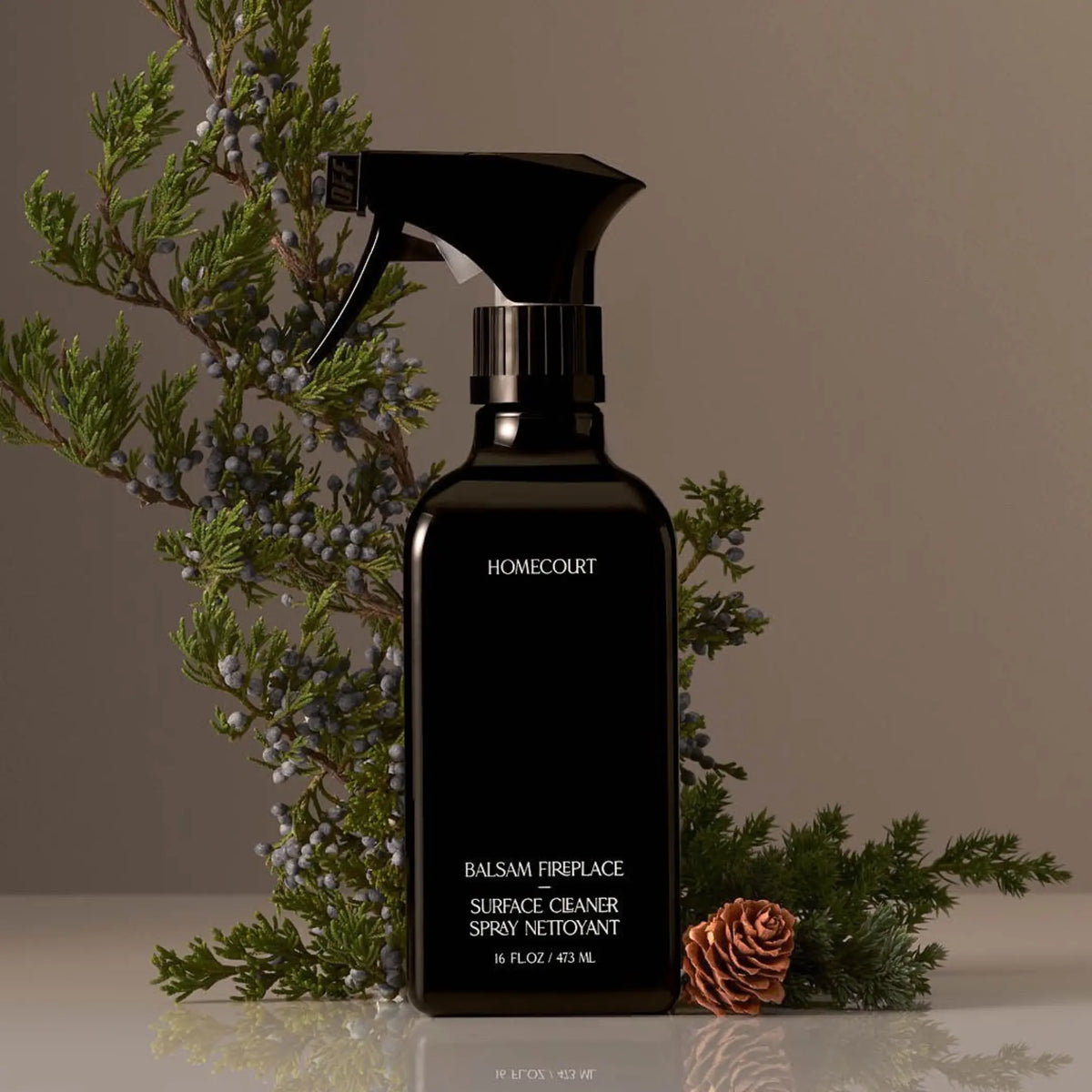
Homecourt Surface Cleaner's directions say to spray it directly onto non-porous surfaces, including finished wood, tile, sealed stone, stainless steel and granite, then loosen grease and debris with a lint-free cloth, sponge or towel and wipe away any excess moisture. The coconut-derived degreaser does the work. It is $26 for 16 oz in six scents, and Balsam Fireplace is the one we keep out from November on.
Quartz, laminate and butcher block are not on the label, so follow the counter maker's care guide and test a small spot. For a full top-to-bottom pass, our guide on how to deep clean a kitchen sets the order.
- Reach for
- Surface Cleaner
- How often
- Before big meals
 Try it withSurface Cleaner$26
7. Wipe light switches & door handles
Cleaning, done often
The CDC recommends cleaning high-touch surfaces such as light switches and doorknobs regularly and after you have visitors, which describes most of December.
The goal is cleaning: the CDC says soap or detergent and water removes most germs from surfaces. Wring a cloth out hard in warm water with a little dish soap and wipe the switch plate, the handle and the area around both. Wet the cloth, never the switch, so no liquid gets behind the plate. Stainless steel handles can take the Surface Cleaner on the cloth instead.
When someone at home is sick, the CDC advises adding disinfection with a registered disinfectant after cleaning. Our cleaners clean; they do not disinfect. Our guide to sanitizing vs disinfecting vs cleaning explains when each step matters.
- Reach for
- Dish soap & a cloth
- How often
- Weekly & after guests
8. Freshen closed-up rooms
Air, a cleaning, then fragrance
The guest room stays shut until someone needs it, and it smells like it. Clean first: open the door, and on a mild afternoon a window, for a few minutes. Dust with a damp cloth, vacuum, and wash any throws that have sat folded since spring. Then mist the air.
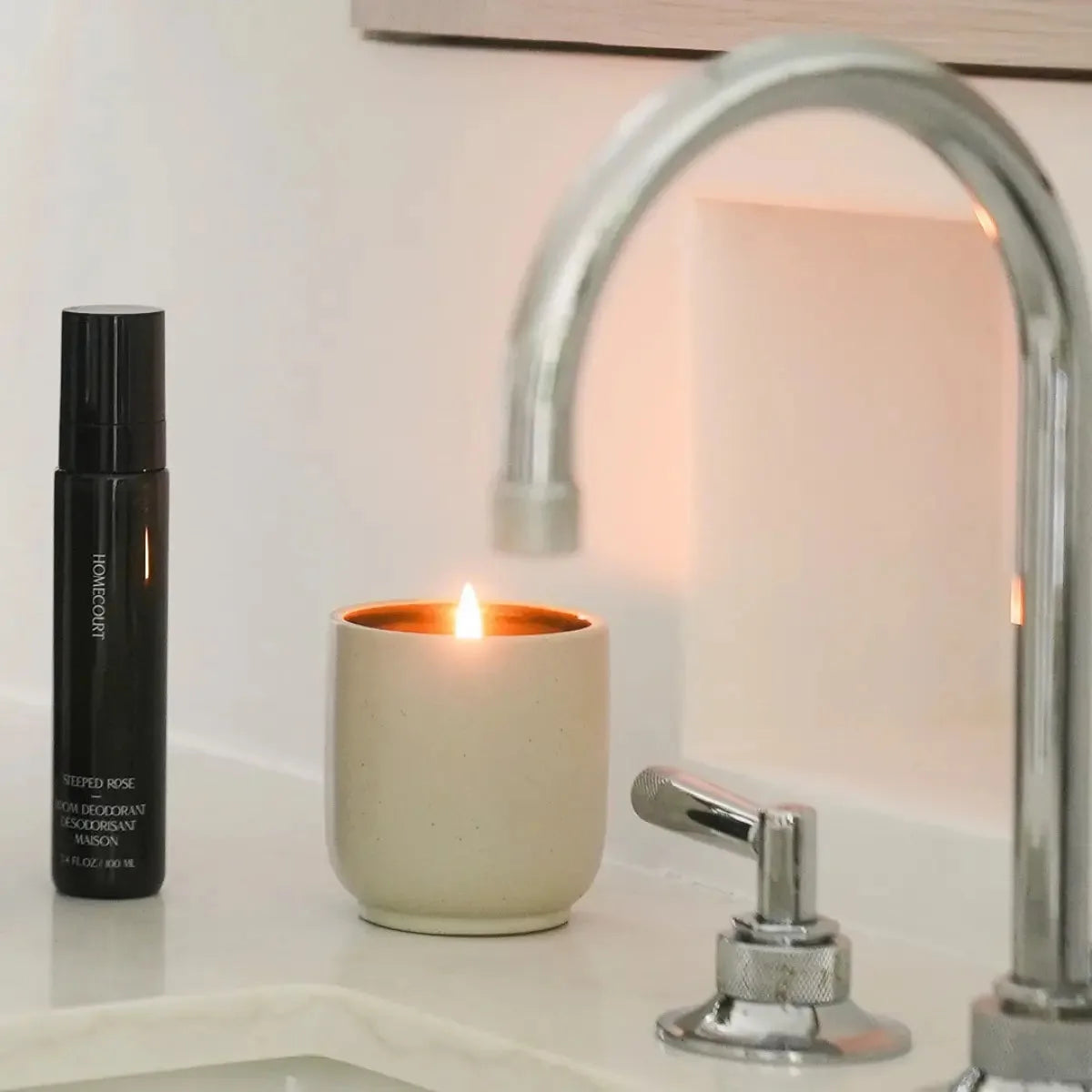
Homecourt Room Deodorant has been clinically tested to reduce and neutralize odors in the kitchen, bathroom and beyond while leaving a lasting fine fragrance, according to its product page. Zinc ricinoleate traps and absorbs odor molecules. It won an Allure Best of Beauty Award in 2023, 2024 and 2025 and costs $45 for 3.4 oz. Shake it, point the nozzle away from your face and eyes, and spray two or three times into the air, at least 8 to 10 inches from surfaces and walls.
- Reach for
- Room Deodorant
- How often
- Before guests
 Try it withRoom Deodorant$45
9. Dry window sills & condensation spots
Five minutes each cold morning
The EPA counts condensation as a sign of high humidity: if it collects on windows, walls or pipes, act quickly to dry the wet surface and reduce the moisture source.
Keep a towel by the windows that fog most and wipe the glass and sill each morning. Once a week, vacuum the track, then wipe it with a soapy cloth and dry it. A finished wood sill can take a light mist of Surface Cleaner on the cloth.
Mold on the sill? The EPA's advice is to scrub mold off hard surfaces with detergent and water, dry completely and fix the moisture problem, or it comes back. It recommends keeping indoor humidity below 60 percent, ideally between 30 and 50.
- Reach for
- A dry towel
- How often
- Each cold morning
10. Clear the dryer vent
Lint out, every single load
The dryer runs more in winter. The CPSC warns that fires can occur when lint builds up in the dryer or the exhaust duct, because lint blocks the air and lets heat build.
Clean the lint screen before or after drying each load, the CPSC advises, and watch the timing. Clothes still damp at the end of a typical cycle, or drying that takes longer than normal, may mean the screen or the exhaust duct is blocked.
Once a month in winter, pull the dryer out a little and vacuum behind it, where lint collects. The full duct cleaning is in the maintenance list below.
- Reach for
- Your hands & a vacuum
- How often
- Every load
Winter cleaning tips for a cozy home
Small habits for the cold months
The best winter cleaning tips spread the work into small habits, because a house that is shut tight and full of people gets dirty faster.
- Set up a boot tray and a hook for wet coats at every door you use.
- Run the kitchen fan while you cook. The EPA lists venting moisture-producing appliances, such as stoves and clothes dryers, to the outside as one way to keep humidity down.
- Air the house for a few minutes when the weather allows, especially after cleaning, and keep the bathroom fan on through showers.
- Hang towels and wet gloves where air reaches them.
Fragrance comes at the end of the routine, never in place of it. We keep Room Deodorant for closed-up rooms on the guest room dresser and in the entry closet, and the Balsam Fireplace scent smells like the season.

Winter home maintenance checklist
The jobs that keep the house safe
A winter home maintenance checklist covers the bigger jobs that protect the house rather than tidy it.
- Dryer vent and duct. Here is how to clean a dryer vent all the way through. The NFPA says to clean lint out of the vent pipe once a year, or more often if clothes take longer than normal to dry, or to have a dryer lint removal service do it. The CPSC notes that clearing a blockage may mean disconnecting the exhaust duct from the dryer; reconnect it to the dryer and the outside vent before the next load.
- The outdoor vent flap. The NFPA advises making sure it opens when the dryer runs and is not covered by snow.
- The duct itself. The CPSC recommends replacing plastic or foil accordion ducting with rigid or corrugated semi-rigid metal duct, which most manufacturers specify.
- Fireplace glass. The task list covers how to clean fireplace glass; this is how often. Kozy Heat says cleaning twice a year should take care of the film on an older gas fireplace, or whenever the glass looks hazy.
- The humidifier at season's end. The EPA says to clean it as directed, dry every part, throw away used demineralization cartridges or filters and store it somewhere dry.
- Leaks. Look under sinks and around windows. The EPA says to dry water-damaged areas and items within 24 to 48 hours to prevent mold growth.
- The furnace filter. Change it on the schedule its maker gives.
Winter cleaning FAQ
What readers ask us
Why does a house get dustier in winter?
Often it is the same dust with fewer ways out: the windows stay shut and more people are home. Dust mites live in mattresses, pillows, carpets and upholstered furniture, the EPA notes, and it advises dusting often with a damp cloth and washing bedding in hot water once a week, then drying it completely. Change the furnace filter on schedule too.
How often should you clean a humidifier?
Every third day for a portable humidifier, the EPA advises, with the tank emptied, wiped dry and refilled every day in between. Console and whole-house units follow their maker's directions.
Is it safe to clean with the windows closed?
For everyday jobs you can, as long as you follow each label and keep some air moving. The EPA notes that many cleaning, disinfecting and degreasing products can release organic compounds while you use them. It advises more ventilation, following every label precaution and never mixing household products unless the label directs it. If a label calls for a well-ventilated area, use an exhaust fan or open a window. A few minutes of fresh air after cleaning belongs on any winter cleaning checklist.
More home cleaning guides
Keep reading
Cleaners Cleaners
Non-Toxic Kitchen Cleaner Surfaces
Casandra Tayag October 29, 2026 Cleaners