


 Cleaners
Most of us clean in bursts. The house slides for a week or two, then a whole weekend disappears into scrubbing, and by Wednesday the counters are sticky again. A schedule breaks that cycle by giving every job a slot small enough to finish on a weeknight.
This plan leans on the University of Florida's IFAS Extension guide to planning household cleaning and on the EPA's advice on dust and mold at home. The product notes come from our own labels.
The short version
Do a few small jobs every day (dishes, a counter wipe, a quick pickup), give each room one focused session a week, and save the bigger jobs like the fridge, the furnace filter and the baseboards for a monthly round. Wash bedding weekly in hot water, keep cleaners in one caddy, and use each product only on the surfaces its label lists.
Chapter 01
Weekly cleaning schedule at a glance
The whole plan on one page
A weekly cleaning schedule works because it trades one long session for many short ones. UF/IFAS Extension recommends splitting household tasks into daily, weekly and monthly groups and keeping each day to one or two jobs, such as wiping down countertops or vacuuming the busiest floors.
The cleaning schedule below follows that pattern. Daily jobs take minutes, weekly jobs rotate through the rooms, and monthly jobs catch what builds up slowly.
For a starting point, try one room per day:
- Monday: kitchen
- Tuesday: bathrooms
- Wednesday: bedrooms and bedding
- Thursday: living room and floors
- Friday or Saturday: laundry, plus anything that slipped
Move the days around to fit your life. A home with one bathroom may finish Tuesday quickly.
| How often | Jobs | Reach for |
|---|---|---|
| Every day | Dishes, counters, a pickup | Dish Soap, Surface Cleaner |
| Once a week | A room a day, bedding, laundry | Surface Cleaner, Laundry Concentrate |
| Once a month | Filter, fridge, baseboards | Labels & manuals |
| Spring | Windows, curtains, closets | A glass cleaner |
Chapter 02
Daily cleaning checklist
Small habits that stop the pileup
A daily cleaning checklist should be short enough to finish. UF/IFAS calls this clean-as-you-go: small habits that keep messes from piling up, so the weekly jobs stay light.
Our daily cleaning schedule at home:
- Wash or rinse dishes right after eating, or load the dishwasher after each meal.
- Wipe the counters and the sink as soon as you finish using them.
- Put things back where they live, and hang up coats and clothes as you take them off.
- Drop dirty clothes straight into the hamper.
- Sweep up crumbs and mop spills while they are fresh, before they stain.
- Run the bathroom fan or open a window during showers, as the EPA advises, and hang damp towels where air can reach them.
For the dishes, a few pumps of Homecourt Dish Soap on a sponge handles a normal night. Its plant-derived surfactants lift food debris, and the glycerin is there for your hands. Pans that need more time can soak overnight in two to three pumps and plenty of water, as its directions describe.
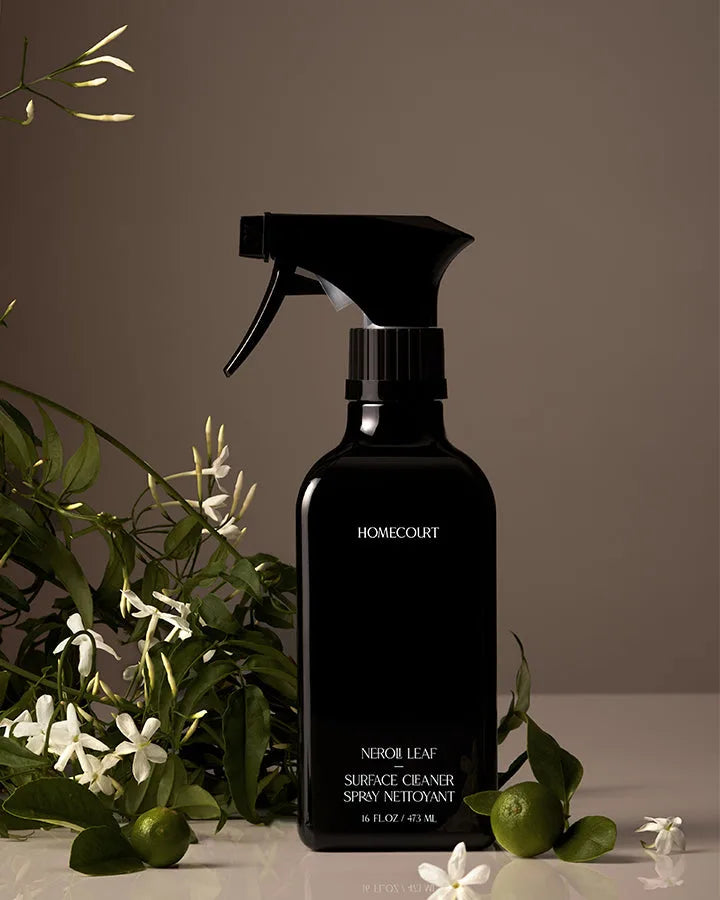
The counter wipe is a job for the Surface Cleaner, whose directions list granite and sealed stone among its surfaces. Spray, loosen the grease with a lint-free cloth, then wipe away the extra moisture.
Key takeaway
A few minutes after dinner and a few before bed do more for a clean house than one long Saturday.
Chapter 03
Weekly cleaning checklist room by room
Five rooms, one focused session each
This is the heart of the plan: a weekly cleaning checklist with one focused session per room. Print it as a house cleaning checklist, or copy the jobs into the calendar or cleaning app you already check. UF/IFAS suggests tracking progress that way, and a room by room cleaning checklist shows what is done and what is next.
Every cleaning checklist here follows the same order: start high, work down, and finish with the floor.
Kitchen
Counters, fronts, fridge shelves & floor
Clear the counters first, wipe underneath, and put back only what you use daily.
Spray the counters and backsplash with the Surface Cleaner, then go over the cabinet fronts and handles, where cooking grease collects. Its label lists finished wood and stainless steel, so the same bottle covers finished wood cabinets and a stainless fridge door. Glass is not on that list, so oven doors and glass cooktops get the cleaner their manufacturer names.
Open the fridge, wipe spills on the shelves and toss leftovers past their time. UF/IFAS lists cleaning out the refrigerator as a regular job, and a quick weekly pass keeps the monthly clean-out small.
Gather the dishcloths and kitchen towels. The University of Illinois Extension recommends laundering dishcloths and potholders on the hot cycle in the washer and dryer.
Sweep, then mop the floor last.
A deep clean of the oven, hood and appliances is a separate project, needed less often when this weekly session happens.
Bathrooms
Toilet, sink, mirror & tub
UF/IFAS lists the bathroom as a weekly job and names the parts to focus on: toilets, sinks, counters, mirrors and tubs.
Work from the cleanest surfaces to the dirtiest, starting with the counter and sink. Tile and sealed stone are on the Surface Cleaner label. The mirror is glass and needs a glass cleaner. The toilet gets its own brush and a toilet bowl cleaner used exactly as its label says.
The tub and shower take the longest. The UF/IFAS guide to controlling mildew suggests squeegeeing the walls after every shower and stretching the curtain along the full rod so it dries instead of bunching. Do that through the week and the Tuesday scrub stays quick.
If you see mold on a hard surface, the EPA says to clean it with soap and water and let the area dry completely. One rule we never bend: never mix chlorine bleach with any other cleaning product. The UF/IFAS mildew guide says so plainly, and it applies to every bottle under the sink, ours included.
Bedrooms
Sheets, surfaces & the floor underneath
Bedding is the main event. The EPA recommends washing bedding in hot water once a week and drying it completely, as one of the simple steps that help with dust mites. UF/IFAS also lists changing bed sheets as a weekly task. Check each care label first, since some fabrics cannot take hot water.
While the sheets wash, dust. The EPA says to dust often with a damp cloth, which holds dust instead of pushing it into the air. Start with the dresser top and headboard, then the nightstands.
Finished wood furniture is on the Surface Cleaner label. Spray the cloth, wipe, and dry the wood.
Vacuum last, including under the bed if you can reach.
Living room
Dust high, vacuum low
The living room collects dust and clutter in equal measure. Start by putting things away: blankets folded, remotes back, mail sorted.
Dust from the top down with a damp cloth, then wipe the tables. Finished wood is on the Surface Cleaner label; a glass tabletop is not.
The EPA's advice on dust mites includes vacuuming carpets and furniture every week. Run the upholstery attachment over the sofa cushions and into the seams, then do the floors last.
Laundry
A load schedule, not a mountain
UF/IFAS suggests doing family laundry weekly or more often, depending on the household. With kids or sports in the house, smaller loads through the week beat one heap on Saturday.
For the wash itself, the directions for our Laundry Concentrate are simple: always follow the garment care instructions, and add 3 to 5 pumps at the start of the wash cycle, adjusting for the size of the load. One bottle covers up to 70 washes, and the formula is made without sulfates, phthalates, phosphates, parabens, bleach or dyes.
The rest of the Laundry Collection covers the steps after the wash, including New Zealand wool dryer balls that soften fabric and cut drying time.
Fold or hang each load the day it comes out of the dryer. A basket that sits for a week becomes the next pile.
Chapter 04
Monthly cleaning checklist
The slow-build jobs, once a month
A monthly cleaning checklist catches the dirt that builds too slowly to notice week to week. Pick one weekend day a month, or spread these across the weeks so each adds a single job.
- Change the furnace or air conditioner filter. UF/IFAS lists this as monthly, or as often as the manufacturer recommends.
- Empty and wipe the fridge shelves and drawers, and throw out anything expired. Do the same for the pantry and cabinets.
- Clean the dishwasher filter, following the manual for your model.
- Wipe the baseboards, door frames, light switches and cabinet handles in every room.
- Vacuum the mattress and wash the dust-proof pillow and mattress covers if you use them, which the EPA suggests for dust mites.
- Look under the sinks and around the toilet for drips. The EPA advises fixing water leaks as soon as possible to keep mold from growing.
- Check that the bathroom and kitchen fans actually pull air.
Some jobs belong to the season. UF/IFAS suggests washing windows each spring or as needed, a good time for curtains and closets too.
Key takeaway
A small monthly round takes the place of one giant spring clean.
Chapter 05
Non-toxic cleaners to keep on hand
A short shelf that covers the house
People who search "non toxic cleaners" usually want products they are comfortable using around family and pets, and fewer bottles under the sink. A short kit covers almost everything on this schedule.
Start with the label. Non-toxic is a description, not a certification, so read the ingredient list and the directions before trusting the front of the bottle. The EPA Safer Choice label is one independent check: the EPA says every ingredient in a labeled product must meet strict criteria for human health and the environment, labeled products must perform comparably to conventional ones, and the agency audits them every year.
Here is what we keep on the shelf:
- A plant-based dish soap for dishes, pans and the overnight soak.
- A surface spray for counters, cabinets and stainless steel. Homecourt Surface Cleaner uses a coconut-derived degreaser and lists finished wood, tile, sealed stone, stainless steel and granite in its directions.
- A glass cleaner for mirrors, windows and glass tabletops.
- A toilet bowl cleaner and a brush that never leaves the bathroom.
- A laundry detergent you measure by the load.
- Microfiber cloths, a soft brush and a caddy to carry it all.
To set up the whole house at once, the Complete Home Collection bundles our Dish Soap, Surface Cleaner, Hand Wash, Hand Cream, Candle and Room Deodorant in one scent for $195, against a $245 value. You can also browse non-toxic cleaners for every room and pick only what your schedule calls for.
Store the kit together. UF/IFAS recommends one central spot for cleaning tools and products, restocked before you run out.

Homecourt for the whole house
Chapter 06
How to make a cleaning routine stick
A plan you keep beats a perfect one
A cleaning routine survives when it is realistic. UF/IFAS puts it first in its planning guide: create a schedule that fits your life, keep it simple and stick to it.
A few habits make that easier:
- Plan projects you can finish in the time you have. Clean one closet or one drawer, not the whole room, on a busy night.
- Start with the rooms you use most. UF/IFAS names the kitchen, bathroom and living room.
- Share the work. Give everyone age-appropriate tasks and rotate them so no one owns the bathroom forever.
- Put the plan where you will see it, on a calendar, a planner or a cleaning app.
- Make it pleasant. UF/IFAS suggests a timer, music or a little friendly competition.
That last point is where scent earns its place. A cleaner that smells like Neroli Leaf or Cece makes the counter wipe something you do not mind, and the habit holds.
For more on choosing products and cutting waste as you go, read our green house cleaning best practices.
Key takeaway
Fit the plan to the week you actually have, and let the household share it.
Cleaning schedule FAQ
Quick answers before you start
How long should weekly cleaning take?
It depends on the size of the home and how many people live in it. Spreading the work helps more than speed: UF/IFAS suggests one or two tasks a day, which keeps each session short. Time yourself the first week, then adjust so each day fits the time you have.
What should you clean every day?
Dishes, the kitchen counters and sink, and anything spilled on the floor. Add a quick pickup, dirty clothes into the hamper, and a fan or open window during showers. UF/IFAS recommends wiping counters and sinks right after use and washing dishes right after eating, so these jobs never stack up.
What is the best day to deep clean?
Whichever day you can protect from other plans. Many households pick a weekend morning for the monthly round, then let a weekly cleaning schedule handle the rest, so the deep clean only has to catch filters, baseboards and the fridge instead of the whole house.
More home cleaning guides
Keep reading
Cleaners Cleaners
How to Clean Quartz Countertops
Casandra Tayag October 28, 2026 Cleaners