Almost every kitchen keeps a jug of white vinegar under the sink, and most of us have read somewhere that it cleans everything. It does clean some things well. On a granite counter, a wood floor or a marble backsplash, though, it is the wrong bottle to grab.
We make a Surface Cleaner, so we have a stake in this. The advice below leans on the groups that set the rules for stone, wood and germs: the Natural Stone Institute, the National Wood Flooring Association, Iowa State University's extension service, the CDC and a 2020 study in BMC Microbiology.
The short answer
Use a plant-based kitchen cleaner on granite, sealed stone, tile, finished wood and greasy stainless steel. Save vinegar for glass and water spots, and keep it off marble, wood floors and anything that just had bleach on it. Neither one is a disinfectant at the strength you clean with.
Non-toxic kitchen cleaner vs vinegar at a glance
Spray the cleaner, save vinegar for glass
- Labeled for granite, sealed stone, tile, finished wood & stainless steel
- Stone & wood authorities advise against acids like vinegar
- Vinegar still earns its spot on glass & water spots
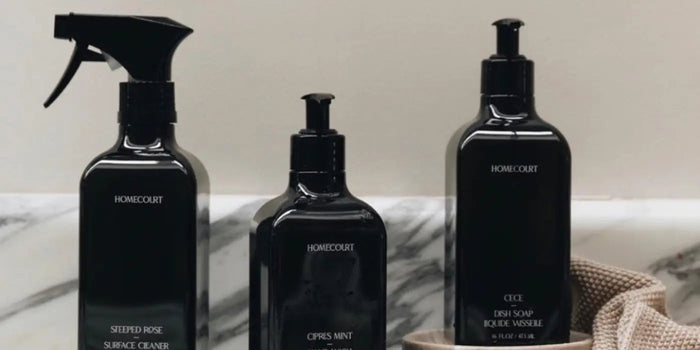
Type "non toxic kitchen cleaner" into a search bar and half of what comes back is a recipe for vinegar spray. The two do different jobs. Ours is built around a coconut-derived degreaser that, in the label's words, dissolves grease and loosens debris.
Vinegar is acetic acid in water, about 4 to 6% by the Virginia Department of Health's count. Acid loosens mineral spots. It is also hard on stone and wood finishes. For the longer chemistry lesson, here is why plant-based degreasers work on everyday kitchen grime.
The table scores both on the surfaces a real kitchen has.
Cleaner vs vinegar, topic by topic
2 rounds, scored
What not to clean with vinegar
What not to clean with vinegar, and who says so:
- Marble and other calcareous stone. The Natural Stone Institute says calcareous stone is mostly calcium carbonate, which is sensitive to acids, and that products containing vinegar may dull or etch it. Iowa State's extension service says only mild dish soap and warm water should touch marble.
- Granite and quartz counters. Iowa State warns that acidic cleaners may damage granite and to keep harsh acids off quartz too.
- Wood floors and finished wood. The National Wood Flooring Association says vinegar's acidity can damage wood floors and their finishes over time and leave a sticky residue that attracts dirt.
- Anything that just had bleach on it. The Washington State Department of Health lists vinegar among household acids and warns that bleach mixed with an acid gives off chlorine gas.
So, can you use vinegar on wood? The flooring trade says no. We agree.
Where a non-toxic kitchen cleaner wins
A plant-based spray wins on the surfaces vinegar should stay off, and on grease.
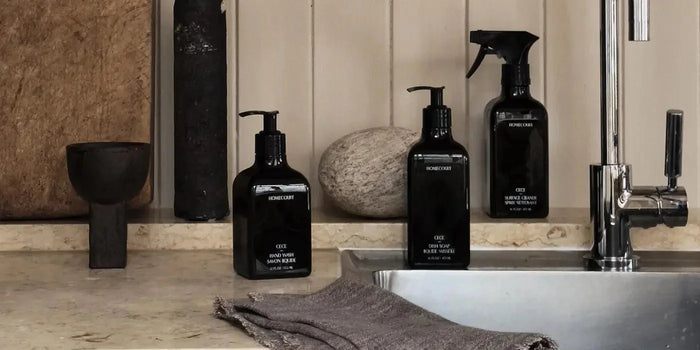
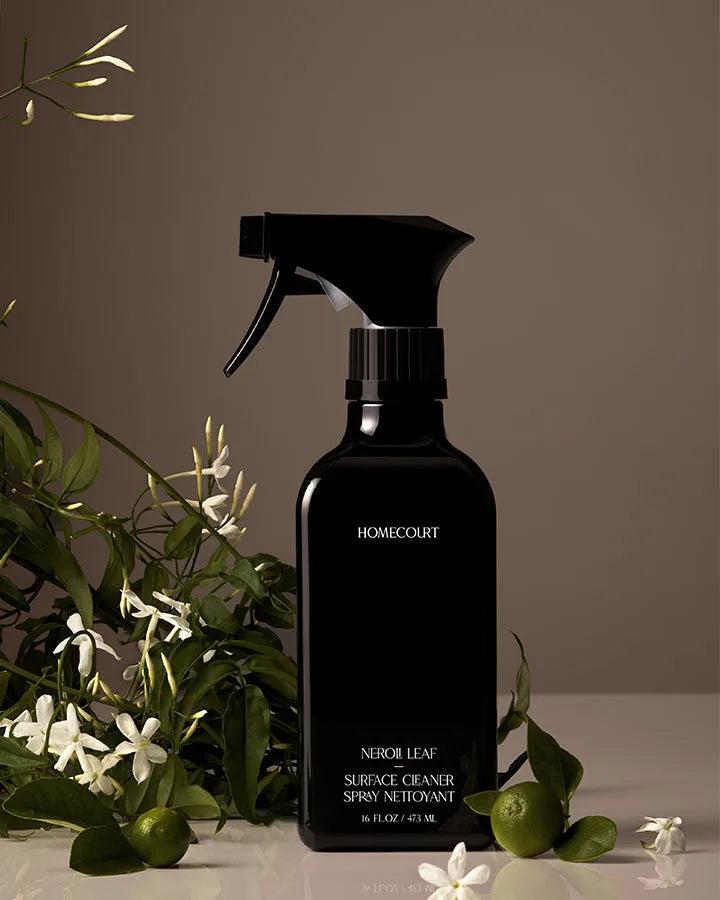
Our Surface Cleaner is a natural kitchen cleaner made for those counters, and its directions name finished wood, tile, sealed stone, stainless steel and granite. Spray, loosen the grease with a lint-free cloth, wipe away the extra moisture. The label promises no streaks or residue.
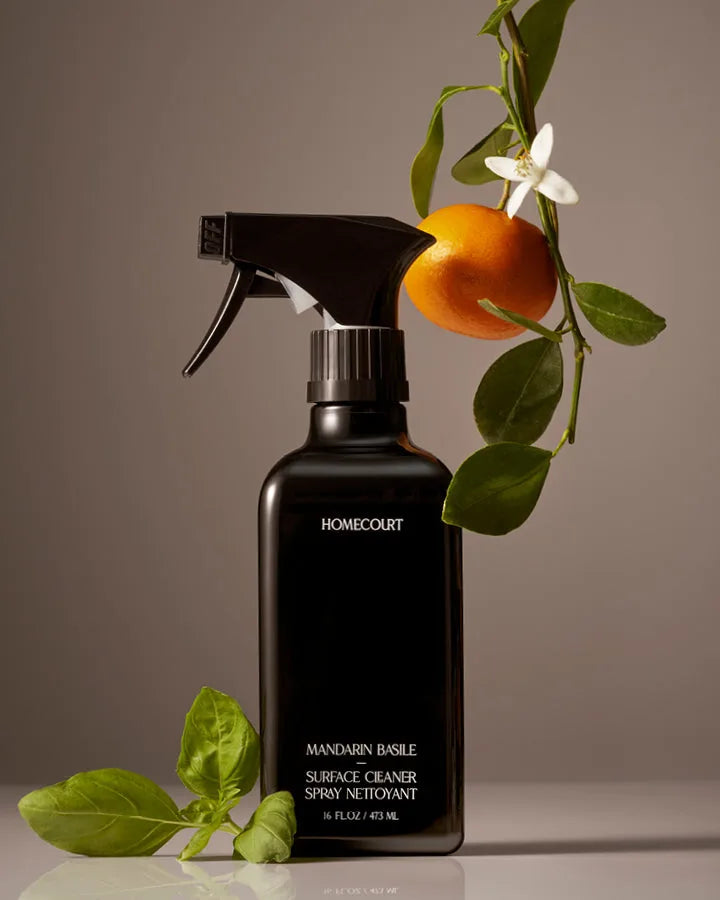
Then there is the smell. Vinegar smells like vinegar until it dries. The Surface Cleaner comes in six scents, from Cece, with its cardamom and cinnamon, to Balsam Fireplace.
A caution on the word itself: non-toxic is a description, not a certification. Read the ingredient list and fragrance notes, which we print on every product page.
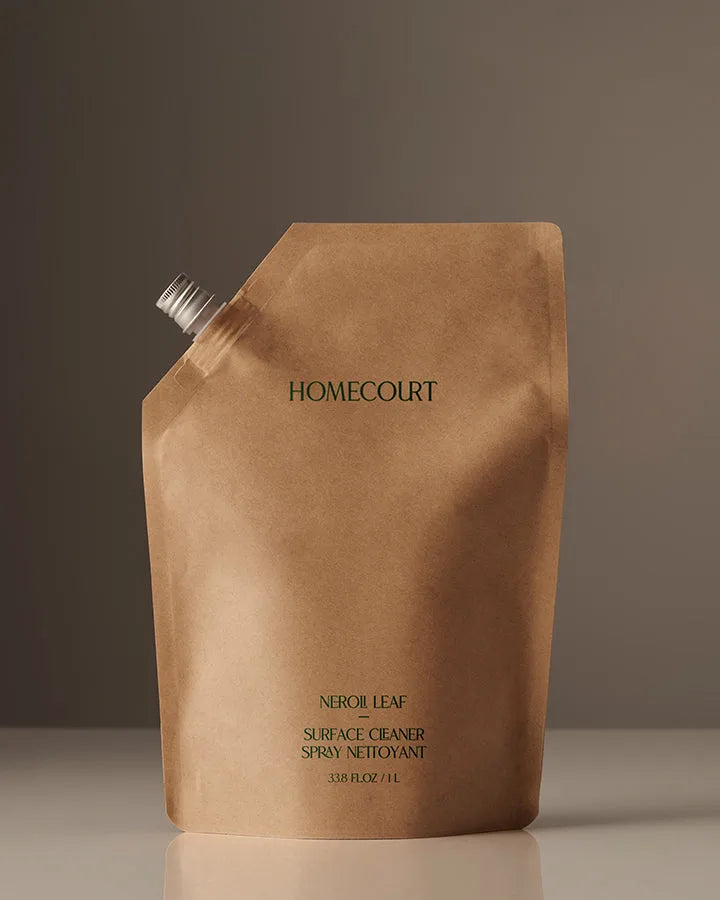
When the bottle runs low, the Surface Cleaner Refill is a 1-liter kraft-paper pouch that fills two bottles and reduces plastic use by 92%. It costs $46, against $26 for a new bottle.
Vinegar on stainless steel, granite & quartz
Vinegar on stainless steel is fine for water spots. New York Sea Grant's sheet lists vinegar for spots and mineral oil or baking soda for polishing. For fingerprints and cooking grease, use the Surface Cleaner, which is labeled for stainless steel.
Can you clean granite with vinegar? Not as a routine. The Natural Stone Institute care guide says acidic cleaners are not recommended even on siliceous stone like granite, because it can hold trace minerals that react to acid. Its routine: a neutral cleaner, stone soap or mild dish detergent with warm water, then rinse and dry with a soft cloth. Granite and sealed stone are both on our label.
Quartz is the one surface where we will not point you to our own bottle. So, can you clean quartz with vinegar? Iowa State's extension service says to avoid bleach and harsh, acidic cleaners on quartz and to clean it with a warm, wet dishcloth. Our label does not list quartz, so we do not recommend the Surface Cleaner there. Use the warm cloth, wipe spills as they happen and follow your fabricator's care guide.
Does vinegar disinfect?
Does vinegar disinfect? Not reliably at the strength people clean with. A 2020 study in BMC Microbiology tested acetic acid, the active part of vinegar, against bacteria, fungi and viruses. In surface tests, 5% acetic acid cleared several bacteria, yet the authors concluded that acetic acid has no disinfecting effect at the dosage commonly used for cleaning. They reached a disinfecting result at 10% acetic acid combined with 1.5% citric acid.
The paper also sums up a 2000 study by Rutala and colleagues: undiluted white distilled vinegar worked against Salmonella and Pseudomonas aeruginosa within 30 seconds but did not work well against Staphylococcus aureus or E. coli.
The CDC keeps it simpler. Clean with soap or detergent first. Disinfecting at home is likely not needed unless someone in the house is sick, and when it is, use an EPA-registered disinfecting product or a stronger bleach solution. Never pour vinegar into that bleach.
Our Surface Cleaner is a cleaner, not a disinfectant. When someone at home is sick, clean with it first, then follow the CDC.
Where a non-toxic kitchen cleaner wins
Cleaner 9Vinegar 4
Grease, stone & finished wood.
Vinegar on stainless steel, granite & quartz
Cleaner 8Vinegar 5
Three surfaces, three answers.
Kitchen cleaner vs vinegar side by side
Feature by feature
| Feature | Kitchen cleaner | Vinegar |
|---|---|---|
| What it is | Spray with a coconut-derived degreaser & cypress oil | About 4 to 6% acetic acid in water |
| Greasy counters | Dissolves grease, per its label | No soap or detergent to lift oil |
| Granite & sealed stone | Both listed on the label | Acidic cleaners not recommended |
| Finished wood | Listed on the label | Can damage wood finishes over time |
| Stainless steel | Lifts smudges & grease | Fine for water spots |
| Glass | Not on the label | 2 tablespoons in a quart of water |
| Quartz | Not on the label: use a warm, wet cloth | Harsh acids not advised |
| Disinfects | No, it is a cleaner | Not at cleaning strength |
Is vinegar a good cleaner?
What a mild acid does well
Is vinegar a good cleaner? For a short list of jobs, yes. Cleaning with vinegar works where the mess is mineral: haze on a window, spots tap water leaves on a stainless sink.
The FDA's labeling guidance holds vinegar to no less than 4% acetic acid, which is why a diluted vinegar cleaning solution still has some bite. New York Sea Grant's cleaning sheet gives two mixes worth keeping: 2 tablespoons of vinegar in a quart of water for windows, and 1 cup in 2 gallons of water as an all-purpose wash.
What vinegar lacks is soap. The CDC notes that household cleaners containing soap or detergent remove germs and dirt, and that cleaning alone removes most harmful viruses and bacteria. On a greasy counter, vinegar has nothing to lift the oil.
Choose kitchen cleaner for
- Greasy countersA coconut-derived degreaser dissolves the film.
- Granite & sealed stoneBoth are on the label, where acids are not advised.
- Finished woodListed on the label, unlike a vinegar mop.
Choose vinegar for
- Windows & mirrors2 tablespoons in a quart of water, per New York Sea Grant.
- Spots on stainless steelThe same sheet lists vinegar for spots, oil for the polish.
- No-wax floors1 cup in 2 gallons of water. Keep it off wood floors.
Vinegar cleaning FAQ
Quick answers at the sink
Can you clean granite with vinegar?
Not as a habit. Iowa State's extension service warns that acidic cleaners can damage granite, and the Natural Stone Institute does not recommend acids even on siliceous stone. Wash granite with mild dish soap and warm water or a cleaner labeled for granite, then dry it with a soft cloth.
Can you use vinegar on wood?
Keep it off wood floors and finished wood. The National Wood Flooring Association says vinegar's acidic nature can damage the floor and its finish over time and can leave a sticky residue that attracts dirt. Use a cleaner whose label lists finished wood, and wipe away the excess moisture.
How do you get rid of the vinegar smell?
Give it air. The smell is acetic acid, which the Virginia Department of Health credits with vinegar's odor, and it lingers until the surface dries. Open a window, wipe the area with plain water and dry it. If the smell is why you are switching, a scented non-toxic kitchen cleaner like our Surface Cleaner in Cece or Neroli Leaf does the counter work without it.
More Homecourt natural cleaning guides
Keep reading