
 Cleaners
Marble is the counter people fall for and then worry about. The veining that looks so good under pendant lights is set in a calcium-based stone, softer than granite and quick to react to acid. A squeeze of lemon, a splash of vinegar or a glass of wine left too long can leave a dull spot that no amount of wiping will bring back.
That does not make the counter fragile. It means gentle cleaning on sealed stone. Here is how to clean marble countertops day to day with a gentle surface cleaner, how to handle stains and etching, and how to tell when the sealer has worn thin.
The short answer
Check that your marble is sealed, then clear crumbs with a soft dry cloth, mist the counter with a gentle surface cleaner whose label lists sealed stone, wipe it with a damp soft cloth and dry it straight away. Blot spills rather than wiping them, keep vinegar, lemon and other acids off the stone, and skip scouring powders. If a drop of water darkens the marble, it is time to reseal it following the sealer maker's directions.
What you need to clean marble countertops
A short list, all of it soft
Marble countertops do not need a cabinet of specialty products. The Natural Stone Institute, the stone industry's trade association, recommends cleaning stone with a neutral cleaner, a stone soap or a mild liquid dishwashing detergent and warm water, then rinsing and drying with a soft cloth. Marble is a calcareous stone, made mostly of calcium carbonate, and the NSI notes that calcium carbonate is sensitive to acidic solutions.
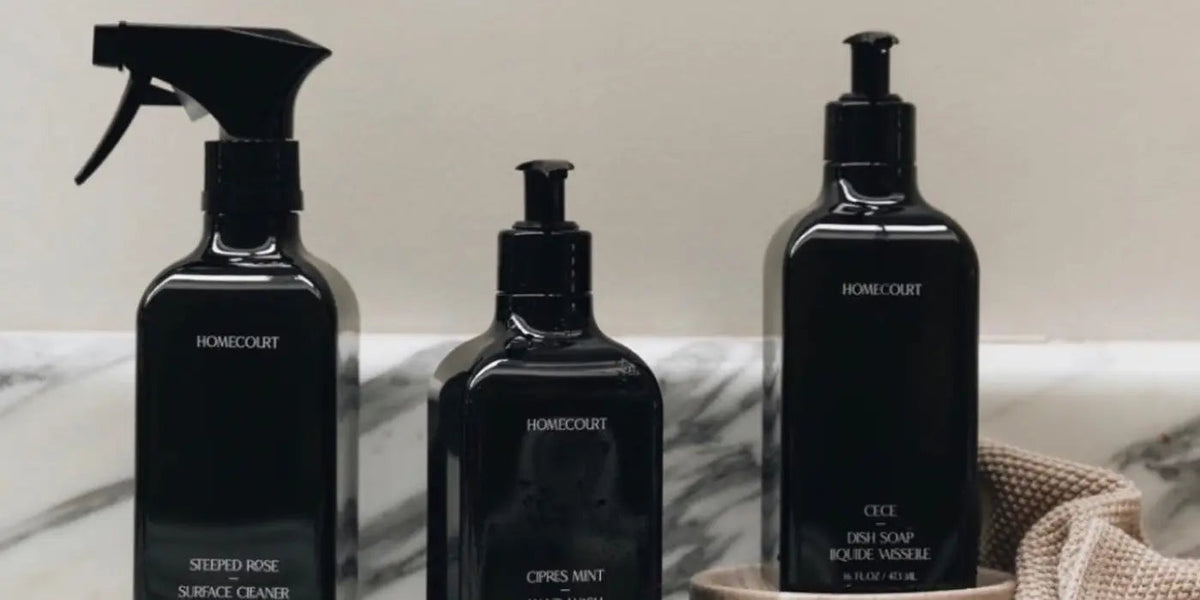
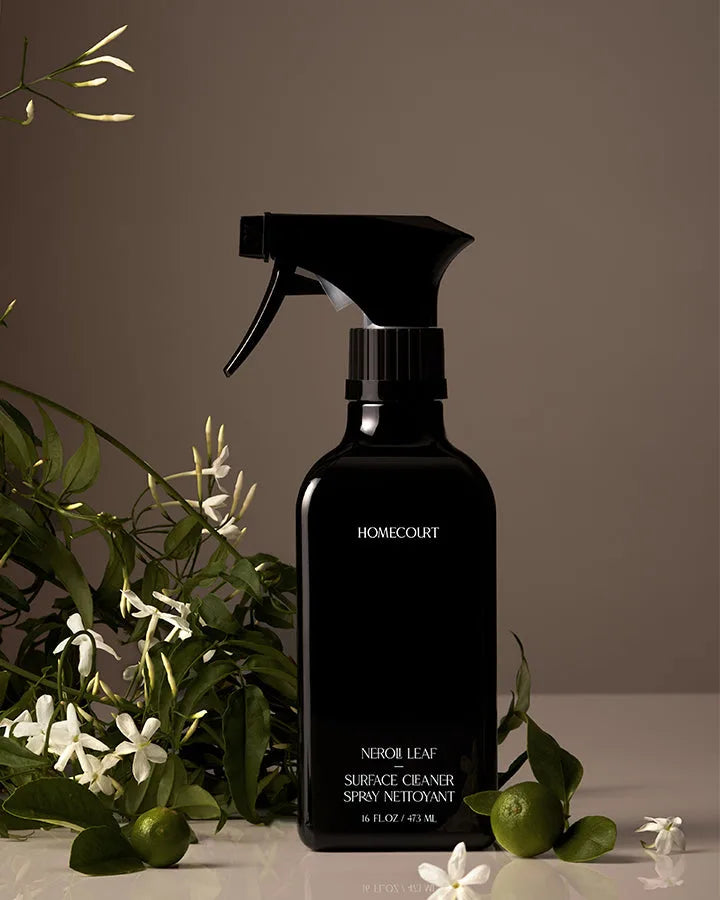
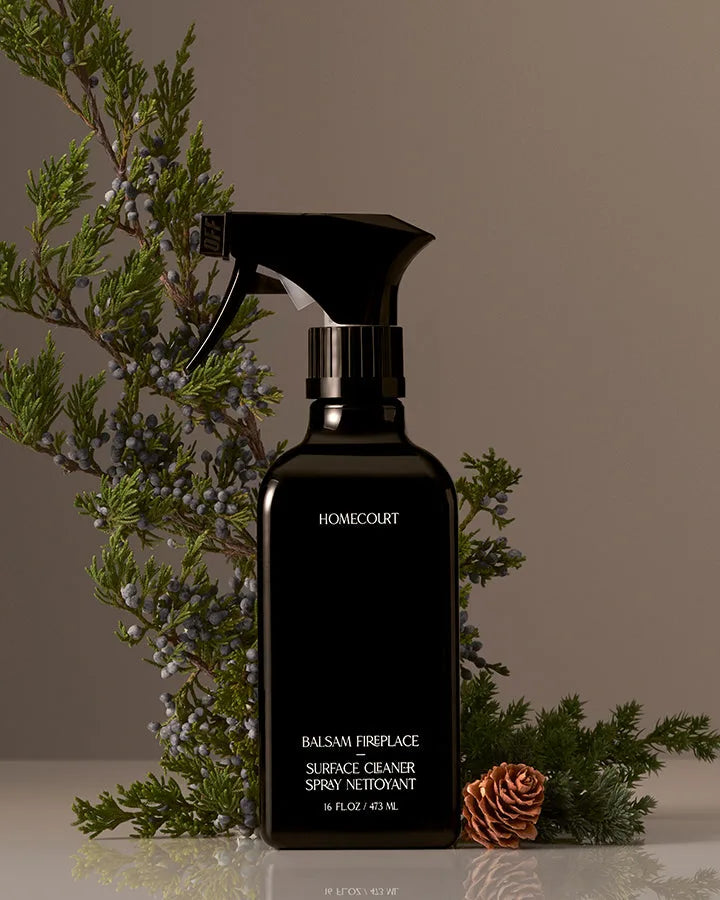
That is why stone care guides often point people toward a ph neutral cleaner. For a daily spray, read the label: Homecourt Surface Cleaner's directions list sealed stone among the surfaces it is made for, along with finished wood, tile, stainless steel and granite. Homecourt does not publish a pH figure for it, so we go by that sealed stone line rather than a pH claim. A Surface Cleaner Refill holds 1 liter and refills two bottles.
- 01Surface CleanerA spray whose label lists sealed stone, for the daily wipe.
- 02Warm waterFor dampening a cloth and for rinsing.
- 03Soft clothsTwo of them, one damp for wiping and one dry for buffing.
- 04Paper towelsFor blotting spills the moment they happen.
- 05Mild dish soapThe NSI's other everyday option, a few drops in warm water.
- 06Poultice powderKaolin, whiting or diatomaceous earth, for stains that have soaked in.
How to clean marble countertops day to day
Five steps from dry cloth to dry finish
Learning how to clean marble is mostly learning what to leave out: no scrubbing, nothing acidic, and a cloth that does most of the work. Homecourt Surface Cleaner uses a coconut-derived degreaser to dissolve grease and loosen debris, and its product page describes a spray that lifts away dirt, smudges and grease without leaving streaks or residue.
If you want a non toxic surface cleaner for stone, the label matters more than the marketing, so check which surfaces it lists. Our post on non-toxic surface cleaner benefits covers what to look for in a formula more broadly.
Step 1: Check that the marble is sealed
A few drops of water tell you
Start with a quick test, because this routine assumes sealed marble. Stone restorers interviewed by Use Natural Stone, the Natural Stone Institute's consumer site, suggest putting a few drops of water on the counter and letting them sit. If a drop leaves a dark spot, the water has soaked into the stone and it needs sealing. Iowa State University Extension describes the same test from the other side: water that beads up means the seal is still working.
Test beside the sink or the stove, where a sealer wears first. If the water soaks in, read the sealing section before you clean with any spray.
Step 2: Clear crumbs with a soft cloth
Lift the grit before anything wet
Sweep crumbs, coffee grounds and salt into your hand with a dry soft cloth. The NSI points out that sand, dirt and grit are abrasive and can damage natural stone. A wet cloth tends to drag them across the surface instead of lifting them.
Step 3: Spray a gentle surface cleaner
A light mist, never a soak
Mist the counter lightly, working one section at a time. Surface Cleaner's directions say to spray directly onto the surface, loosen grease and debris with a lint-free cloth, sponge or towel, and wipe away any excess moisture. On marble, use a soft cloth rather than a sponge with a scrubbing side.

More is not better. The NSI notes that an excessive concentration of cleaner or soap can leave a film and cause streaks, which shows as haze on polished marble.
Step 4: Wipe & rinse with a damp cloth
One pass to clean, one pass to rinse
Wipe the sprayed section with your soft cloth in long, overlapping strokes. Then rinse the cloth in clean water, wring it out well and go over the same area once more. The NSI recommends rinsing stone thoroughly after washing and changing the rinse water often, so you are not spreading the dirt you just lifted.
That second pass keeps a film from building up over weeks of daily cleaning.
Step 5: Dry to prevent water spots
The last pass decides the shine
Finish by drying the counter with a dry soft cloth. The NSI's cleaning steps end the same way, with a thorough dry. Give the area around the faucet an extra pass.
While you dry, look across the stone at an angle. A new dull patch is usually an etch, covered in the etching section below.
How to remove stains from marble
Name the stain before you treat it
How to remove stains from marble depends on what made the stain. The NSI's first advice is to identify it: where it is, its color and what was near it.
Here is how to get stains out of marble, by type, following the NSI.
- Oil-based stains, from cooking oil, milk or cosmetics, darken the stone. The NSI suggests cleaning gently with a soft liquid cleanser and household detergent, mineral spirits or acetone.
- Organic stains, from coffee, tea, wine or fruit, may fade once the source is gone. Indoors, the NSI's suggestion is 12% hydrogen peroxide, the strength sold for bleaching hair, with a few drops of ammonia.
- Metal and rust stains need a poultice, and the NSI warns that deep-seated rust stains may be permanent.
A poultice draws a stain up out of the stone. The NSI describes mixing a liquid cleaner or chemical with a white absorbent powder, such as kaolin, whiting or diatomaceous earth, into a paste about the consistency of peanut butter. Spread it 1/4 to 1/2 inch thick over the stain with a wood or plastic spatula, cover it with plastic and leave it for 24 to 48 hours. It may take more than one round, and some stains never fully lift.
Everyday grime is a different problem. A daily wipe keeps fresh spills and grease from sitting long enough to set, and our piece on how surface cleaners lift grime explains how that works. Once a stain is inside the stone, it is poultice work.
How to remove etching from marble
A dull spot is damage, not dirt
Etching is easy to mistake for a stain. An etch looks like a dull spot or a pale ring where the polish is gone. It happens when something acidic sits on calcium-based stone, and the usual causes are tomatoes, citrus, juice, wine and other alcohol, and vinegar.
Because an etch is a change to the surface itself, cleaning will not remove it. That is the honest answer to how to remove etching from marble at home. For etch marks, the NSI's advice is to contact your stone dealer or a professional stone restorer, who can refinish or repolish the area.
Etches show up more on polished marble than on honed or textured marble, one reason some people choose a honed finish for a busy kitchen.
Prevention is the practical part: cutting boards for anything acidic, coasters under glasses, especially alcohol or citrus juice, and trivets under hot pans, as the NSI recommends. Sealing helps with stains but, according to the restorers Use Natural Stone interviewed, it does not stop etching.
How to seal marble countertops
The sealer's label has the final word
Is marble porous? Yes. Iowa State University Extension describes marble as a porous surface even though it is very durable, which is why liquids that sit on unsealed marble can soak in and stain it. Sealing slows that down.
The products sold as stone sealers are, in the NSI's words, impregnators that act as a repellent. Sealing makes the stone more stain resistant, not stain proof. Learning how to seal marble countertops comes down to choosing the right product and following its directions, because sealers differ in how they are applied and how long they last. Use Natural Stone's experts note that some sealers last 10 years or more and others only 6 months.
A few points hold for any sealer:
- Test before you seal. Use the water drop test from the first step, every couple of months, as Iowa State suggests.
- Start with clean, dry marble, so nothing gets sealed into the stone.
- In a kitchen, the NSI says to make sure a sealer used in a food preparation area is non-toxic and safe for that use.
- Follow the sealer maker's directions for application, drying time and how often to reapply. The NSI's guidance is to consult your stone supplier or the sealer manufacturer about the type of sealer and how often to use it.
The NSI's consumer pages are the best reference on stone types and sealing. For a new counter, ask your installer which sealer went on.
Marble cleaning mistakes to avoid
Six habits that dull the stone
Most marble damage comes from a few habits. The Natural Stone Institute care guide covers them in detail, and these are the ones that come up most in a kitchen.
- Reaching for vinegar or lemon. Can you use vinegar on marble? No. The NSI says products containing lemon, vinegar or other acids may dull or etch calcareous stones such as marble.
- Using scouring powders or creams. The NSI notes they often contain abrasives that may scratch certain stones.
- Wiping a spill instead of blotting it. Wiping spreads the spill across more stone.
- Letting acidic food or drink sit. Restorers interviewed by Use Natural Stone say red wine wiped up right away rarely stains, but the acid can still etch.
- Using too much cleaner. Excess cleaner leaves a film and streaks, according to the NSI.
- Spraying unsealed marble. Surface Cleaner's label lists sealed stone, so if the water test shows the seal has worn off, reseal before you go back to spraying, and use mild dish soap and warm water in the meantime.
Watch rust removers too. The NSI warns that many commercial rust removers contain trace levels of hydrofluoric acid, which attacks every type of stone.
Marble countertop FAQ
What people ask us
Can you use vinegar on marble?
No. Vinegar is an acid, and the Natural Stone Institute says products containing lemon, vinegar or other acids may dull or etch calcareous stones. Marble is calcium-based, so a vinegar spray can leave dull spots that need a professional to repolish. Use a gentle cleaner whose label lists sealed stone, or mild dish soap and warm water.
Is marble porous?
Yes. Iowa State University Extension calls marble a porous surface even though it is very durable. Sealing makes it more resistant to stains, though not stain proof. To check yours, put a few drops of water on the counter: if they bead, the seal is working, and if they soak in and darken the stone, it is time to reseal.
What is the best cleaner for marble countertops?
The best cleaner for marble countertops is a mild one. The NSI recommends a neutral cleaner, a stone soap or a mild dish detergent with warm water, and Iowa State recommends mild dish soap and warm water. For a daily spray, choose one whose label lists sealed stone, like Homecourt Surface Cleaner, and use it lightly. That is the whole of how to clean marble countertops: a check of the seal, a gentle cleaner, a soft cloth and a dry finish.
More surface cleaner guides
Keep reading
Cleaners Cleaners
How to Clean Stainless Steel Appliances
Casandra Tayag October 27, 2026 Cleaners