

 Cleaners
You get the keys, you walk in, and the place looks clean enough. Then you open the kitchen drawer and find crumbs from someone else's toast. A move in cleaning checklist is how you get from "clean enough" to yours: every shelf, drawer and corner wiped before your own things go in.
The safety notes below come from the EPA and the U.S. Fire Administration. The product notes come from our own labels.
The short version
Clean before you unpack, while the rooms are empty. Bring a short kit, open the windows and work from the top of each room down to the floor. Do the kitchen and bathrooms first, wipe the inside of every cabinet and closet, then finish with baseboards and floors. Use each cleaner only on the surfaces its label lists.
Chapter 01
Move in cleaning checklist
The whole clean on one page
Move in cleaning is different from a weekly tidy. You are not keeping up with your own mess; you are starting over in a space where nobody knows when the oven was last wiped. That is why the move in cleaning checklist below spends so much time inside things like cabinets, drawers and the fridge.
Use the table as your plan for the day.
- Start in the kitchen, since food and dishes need clean shelves first.
- Do the bathrooms next, so you have a usable shower and sink on night one.
- Move to the bedrooms and closets before the beds and clothes arrive.
- Finish with baseboards, windows, switches and the floors, in that order.
| Room | Clean first | Reach for |
|---|---|---|
| Kitchen | Cabinets, fridge, oven | Surface Cleaner |
| Bathrooms | Vanity, tub, toilet, fan | Bowl cleaner |
| Bedrooms | Fan blades, closets, vents | Duster, vacuum |
| Floors | Baseboards first | Damp cloth, mop |
| Windows | Tracks, sills, switches | Glass cleaner |
Chapter 02
Cleaning before moving in: What to bring
A small kit that covers a whole house
Cleaning before moving in goes faster when nothing has to be bought halfway through. The water may be on, but the house will not have a single sponge in it. Pack one bin with everything below and put it in your car, not the moving truck.
- A spray cleaner for counters, cabinets and stainless steel.
- A glass cleaner for mirrors, windows and any glass cooktop or oven door.
- A toilet bowl cleaner and a new toilet brush.
- Dish soap for the sink and anything you wash by hand.
- A stack of microfiber cloths, two or three sponges and a small scrub brush.
- An extendable duster for ceiling fans, vents and the tops of cabinets.
- A vacuum with a crevice tool, plus a mop and bucket.
- Rubber gloves, trash bags, paper towels and a step stool.
- Hand soap, a towel and toilet paper for the bathroom.
Open the windows before you spray anything. The EPA introduction to indoor air lists household cleaning products, newly installed flooring and carpet, and cabinets made of some pressed wood products among the sources of indoor air pollution. It also explains that too little ventilation lets pollutants build up, because outdoor air is not coming in to dilute them. A cross breeze is worth the chill.
If the home was built before 1978, add extra paper towels. The EPA says older homes are more likely to have lead-based paint, and its cleanup advice leans on damp wiping, covered in the windows section below.
Key takeaway
Pack the cleaning kit in your car, open the windows first, and you will not lose an hour to a store run.
Chapter 03
How to clean a house before moving in, room by room
Top to bottom, inside to out
Here is how to clean a house before moving in without doing anything twice. In each room, start high and work down: ceiling fan and light fixtures, upper cabinets, counters, lower cabinets, then the floor. Dust falls, so the floor goes last.
Think of this as a deep cleaning checklist for a home you have not lived in yet, with one difference: you open everything. If you wonder what to clean before moving in that you would skip on a normal Saturday, the answer is the insides of drawers, cabinets, the fridge, the oven and the closets.
Print the room list below as your new house cleaning checklist and check off each room as you go.
Kitchen
Inside every cabinet, drawer & appliance
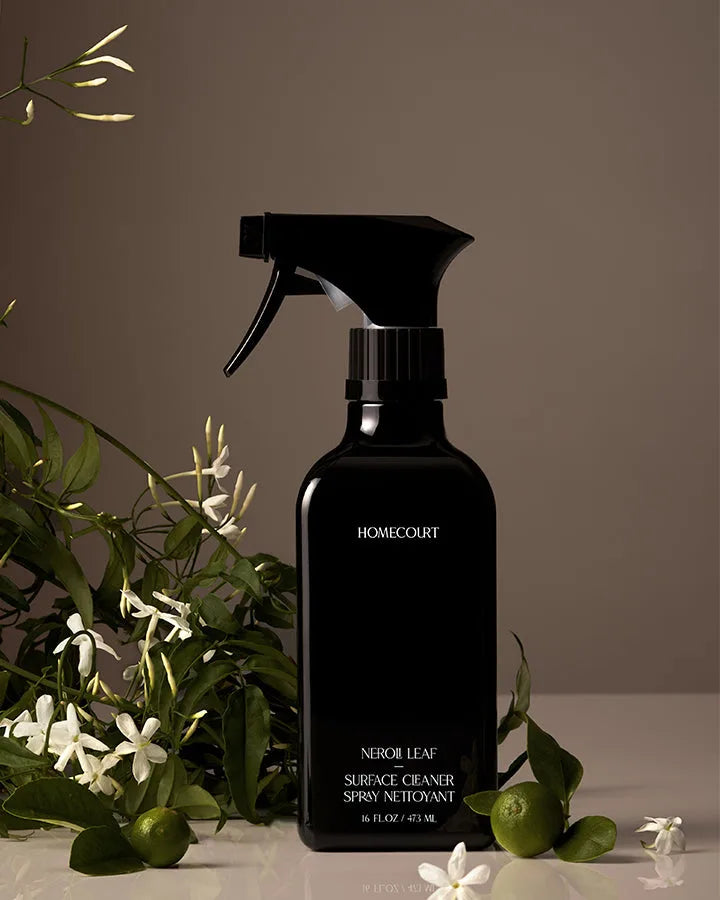
Empty kitchens are rare, so make the most of this one. Vacuum the crumbs out of every drawer and cabinet, then wipe the shelves. Finished wood cabinet doors and frames are on the label of Homecourt Surface Cleaner, along with tile, sealed stone, stainless steel and granite. Spray, loosen grease with a lint-free cloth and wipe away the extra moisture, as the directions say. One bottle covers a tile backsplash, granite counters and a stainless sink.
Laminate shelf interiors are not on that label, so use a cloth wrung out in warm, soapy water.
The fridge is easiest while it is empty. University of Illinois Extension recommends washing the shelves, drawers and other removable parts by hand in hot, soapy water. For the doors and the inside walls, it suggests 2 teaspoons of baking soda in 1 quart of water, and it says to leave the door open for 15 minutes to air dry before you refill it.
For the microwave, the same guide suggests heating 6 tablespoons of baking soda in 1 cup of water until it boils, leaving it to cool with the door closed, then wiping the inside. Clean the oven and range as their manual says. A stainless fridge front takes the Surface Cleaner; a glass cooktop or oven door does not, since glass is not on its label.
Pull the dishwasher filter while you are there and rinse it as your model's manual describes. You have no way of knowing when the last owner did.
Bathrooms
Toilet, tub, fan & mirror
Start high, with the light fixture and the top of the medicine cabinet, and finish with the toilet and the floor. Wipe the inside of the vanity and its drawers.
Tile and sealed stone take the Surface Cleaner. The mirror and any glass shower door take a glass cleaner. The toilet gets the new brush and a toilet bowl cleaner, used exactly as its label says. If you want to disinfect anything, use a registered disinfectant and follow its label, including how long the surface must stay wet. Our guide to cleaning, sanitizing and disinfecting explains the difference.
Check the caulk around the tub for dark spots. The EPA's guide to mold says to scrub mold off hard surfaces with detergent and water and dry them completely, and to fix the leak or moisture problem behind it. The same guide gives one rule that applies to every bottle in your kit: never mix chlorine bleach with cleaners that contain ammonia, because toxic fumes could be produced.
Hold a square of toilet paper to the running exhaust fan. If it does not pull, get the fan looked at.
Bedrooms & closets
Shelves, rods & the corners furniture hides
Bedrooms are mostly dust, so they go quickly. Run the duster over the ceiling fan blades and the tops of door frames. Wipe the closet shelves and rod, and vacuum the closet floor into the corners you will never reach once your shoes are in.
Finished wood shelves and closet doors can take the Surface Cleaner. Vacuum the vents and return grilles with the brush attachment.
Floors & baseboards
Last in every room, never first
Baseboards come before floors. Painted baseboards only need a damp microfiber cloth along the top edge, where dust settles. Then vacuum, edges first, and mop hard floors with the cleaner their maker recommends.
Mop each room backing toward the door, so you never cross a wet floor. If the carpets look tired, this is the one day they are free of furniture, so shampoo them or book a carpet cleaner now.
A home built before 1978 calls for a gentler routine. The EPA's lead guidance says to wet mop floors, to skip polishing machines and vacuums with beater bars because they may wear away painted surfaces, and to use only a HEPA vacuum, with no dry sweeping, if you see dust or chips from flaking paint.
Windows & light switches
The details guests notice first
Vacuum the window tracks, then wipe them with a damp cloth. Clean the glass with a glass cleaner. Window sills deserve care in older homes. The EPA recommends wiping hard surfaces like countertops, window sills and door jambs with a damp sponge or cloth, and says not to use steel wool, scouring pads, or abrasive or solvent cleaners that may dissolve paint.
Light switches and door handles get touched more than anything else in the house. Spray a cloth, never the switch itself, and wipe each plate.
Chapter 04
Non-toxic house cleaner picks for a new home
A short shelf for a fresh start
People who search for a "non toxic house cleaner" are usually setting up a home they want to feel good in, often with kids or pets. A new address is a natural moment to start fresh instead of carrying over half-empty bottles.
Non-toxic on a label is the maker's own description, so read the ingredient list and the directions, not just the front of the bottle. For more on what changes when you switch, read how non-toxic cleaners help indoor air.
What we would put on the first shelf:
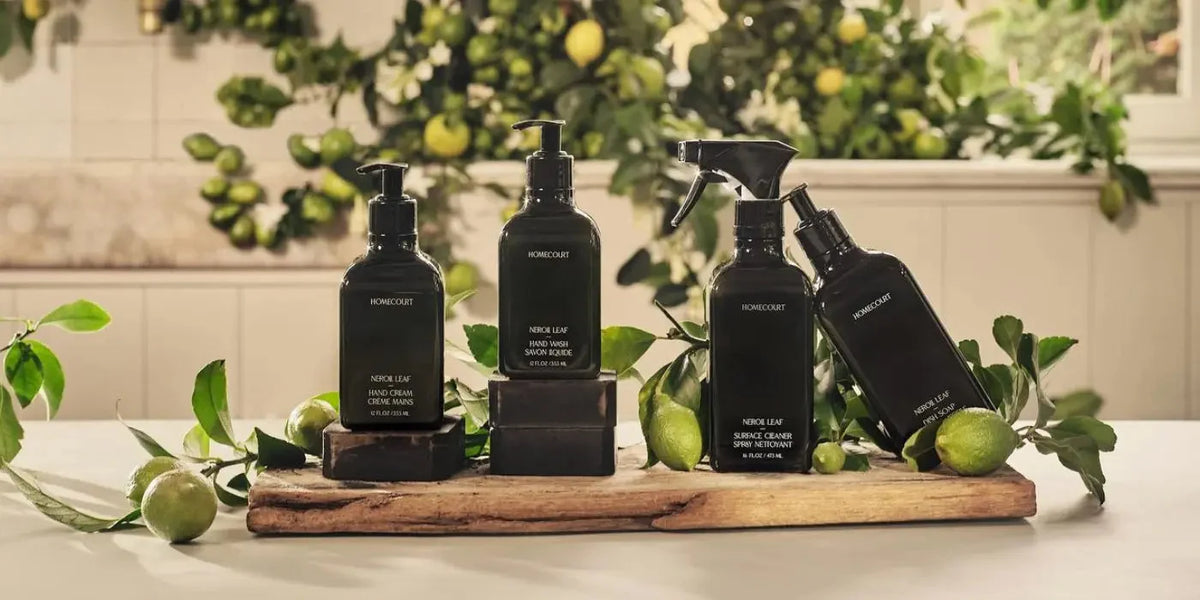
- Surface Cleaner, $26 for 16 oz. A coconut-derived degreaser and Mediterranean cypress oil, for finished wood, tile, sealed stone, stainless steel and granite.
- Dish Soap, $28 for 16 oz. Plant-derived surfactants with glycerin, and a 2022 Good Housekeeping Cleaning and Organizing Award winner.
- Hand Wash, $36 for 12 oz, with argan oil, for every sink in the house.
- A glass cleaner and a toilet bowl cleaner, since our labels do not cover glass or toilets.
To stock a whole home in one order, the Complete Home Collection brings together Dish Soap, Surface Cleaner, Hand Wash, Hand Cream, a Candle and Room Deodorant in one scent for $195, against a $245 value. It comes in five scents, Cece and Neroli Leaf among them, and makes an easy housewarming gift.
If you only need the kitchen covered, start with a non-toxic house cleaner kit instead. The Kitchen Trio, for example, pairs Surface Cleaner, Dish Soap and Hand Wash for $80, against a $90 value.

Homecourt for a new home
Key takeaway
Start the new home with a few bottles you trust, and keep a separate glass and toilet cleaner for what the labels do not cover.
Chapter 05
Move in cleaning vs move out cleaning checklist
Same rooms, different goal
A move out cleaning checklist is written for someone else. Its job is to hand the home back in the condition your lease or sale agreement asks for, so the details come from that document or the landlord's checkout list.
A move in clean is written for you. Nobody inspects it, so you can go further: inside the oven, behind the fridge if it slides out, the vent covers and the tops of the cabinets.
- Move out: follow the lease, empty every room and photograph the result.
- Move in: photograph any damage first, then clean everything, including what the last owner skipped.
Photos help in both cases. On move in day, photograph scuffs and anything broken before you clean, so the record shows what was already there.
Chapter 06
New home checklist for the first week
Small jobs that make it feel like home
Once the boxes are inside, cleaning gives way to setting up. This new home checklist covers the first week.
- Test every smoke alarm. The U.S. Fire Administration says to test smoke alarms monthly and to replace the whole alarm 10 years from its manufacture date, so check the date on the back while you are up there.
- Find the main water shutoff and the electrical panel.
- Change the furnace or air conditioner filter, and write its size somewhere you will find it.
- Look under every sink for drips. The EPA advises fixing water leaks as soon as possible and drying wet areas within 24 to 48 hours to keep mold from growing.
- Run the bathroom fan or crack a window during showers, another EPA moisture tip.
- Give the moving day kit a home, with one caddy in the kitchen and one in the bathroom.
- Put hand soap at every sink and learn which day the trash goes out.
- Consider changing or rekeying the locks, since you cannot know who still has a key.
Then make the place smell like yours. The Mini Candle Discovery Set holds three 2.25 oz votives in Steeped Rose, Cece and Neroli Leaf for $75, a good way to try a scent in each room before choosing a full-size Candle. The directions on our mini candles are short: trim the wick to a quarter inch before every lighting, burn it on a flat, stable, fireproof surface, and keep it within sight.
Key takeaway
Test the alarms, find the shutoffs and change the filter in week one, then light a candle.
Move in cleaning FAQ
Quick answers before the truck arrives
How long does a move in clean take?
It depends on the size of the home, its condition and how many people help. An empty home is much faster than a furnished one, so try to get the keys a day before the movers. If time runs short, clean the kitchen and one bathroom first.
Should you clean before or after unpacking?
Before. Empty cabinets, closets and floors take a fraction of the effort, and you only have to clean the inside of each shelf once. Plan a quick pass after unpacking too, because moving day brings in dust, tape and cardboard scraps.
What should you clean first in a new house?
The kitchen, then the bathrooms. Food and dishes need clean shelves, and you will want a working shower and sink by the first night. Within each room, start high and finish with the floor. Keep this move in cleaning checklist open on your phone and work through it room by room.
More home cleaning guides
Keep reading
Cleaners Cleaners
Non-Toxic Kitchen Cleaner Surfaces
Casandra Tayag October 29, 2026 Cleaners