

 Cleaners
Tile shrugs off almost everything, and the thin lines between the tiles take the blame for it. Soap film, foot traffic, cooking splatter and shower steam all settle into the same narrow channels, and over a few months white grout turns gray and gray grout turns brown.
The reason is in the material. The Tile Council of North America (TCNA), the tile industry's trade group, describes cement grout as porous, with a large microscopic surface area that absorbs stains. That is also why gentle works better than aggressive. Here is how to clean grout with a non-toxic cleaner and a soft brush, what changes for floors and showers, and how sealing keeps the lines clean longer.
The short answer
Sweep or vacuum the grit off, mist the tile with a cleaner whose label lists tile, and scrub the grout lines with a soft brush dipped in warm, lightly soapy water. Rinse with clean water and dry. For dingy, unsealed grout, use a baking soda paste. Skip vinegar and other acids, which attack cement grout, and seal the lines once they are clean and dry.
What you need to clean grout
A short kit, nothing harsh
You do not need a specialty grout cleaner for routine cleaning. According to the TCNA, the cleaner that works on grout generally works on the tile, and the tile itself can often be cleaned with water. What matters more is what the cleaner leaves out: acids, oils and waxes.
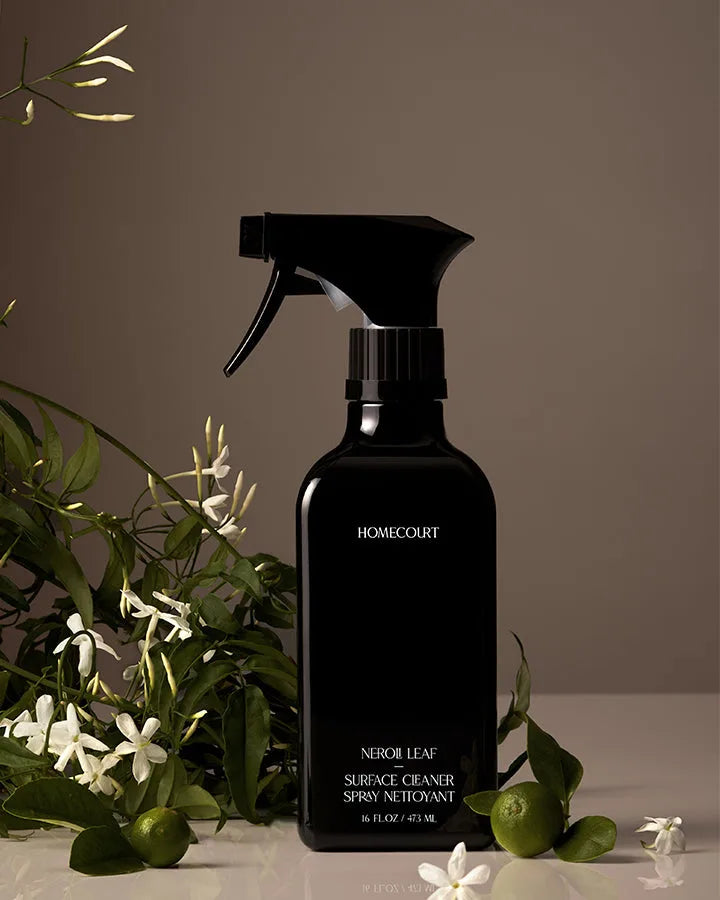
That is where a non toxic house cleaner earns its place. For the tile faces, Homecourt Surface Cleaner is a non-toxic house cleaner for tile: its directions list tile among the non-porous surfaces it is made for, along with finished wood, sealed stone, stainless steel and granite. Homecourt says its ingredients are selected to be non-toxic and safe for people and pets when used as directed. Grout is not on that list. The label says non-porous, and grout is porous, so the lines themselves get soap and water.
- 01Surface CleanerFor the tile faces, with a coconut-derived degreaser that lifts dirt and grease.
- 02Dish soapA few drops in a bowl of warm water, for the grout lines.
- 03Soft brushA nylon grout brush or a clean, discarded toothbrush. Nothing wire.
- 04Baking sodaFor a paste on dingy, unsealed grout.
- 05Soft clothsOne to rinse and one to dry.
- 06Vacuum or broomFor the grit, before anything wet touches the floor.
How to clean grout step by step
Four steps, one section at a time
Most of how to clean grout comes down to the same four moves, on a floor or a wall. Work one small section at a time so the soapy water never dries in the joints before you rinse it.
These steps are also how to clean tile grout that has gone dull rather than stained. Learning how to clean grout lines well is mostly patience: a soft brush and a second pass do more than a stronger product.
Test first. The University of Florida's IFAS Extension advises trying any cleaner on an inconspicuous area to check for discoloration.
Step 1: Sweep or vacuum loose grit
Lift the dirt before you wet it
Dry dirt comes off first, because a wet cloth turns grit into a paste and pushes it into the joints. UF/IFAS lists sweeping or vacuuming often among the habits that reduce the need for cleaning, especially on floors that dirt and grit can scratch or dull.
Run the vacuum or a soft broom along the lines, not just across the tiles. On a shower wall, the dry brush clears hair and soap flakes from the corners.
Step 2: Spray a non-toxic house cleaner
Tile gets the spray, joints get soap
Mist one section of tile with Surface Cleaner. Its directions say to spray directly onto the surface, loosen grease and debris with a lint-free cloth, sponge or towel, and wipe away any excess moisture.

Grout is not on the label. Its directions cover non-porous surfaces, and cement grout is porous, so wipe the spray off the tile right away, as the directions say, and keep it from pooling in the joints.
For the grout lines, mix a few drops of dish soap into a bowl of warm water. Cleaners that lift a stain from clothing should also work on grout, per the TCNA, and a mild detergent is an easy place to start.
Step 3: Scrub the lines with a soft brush
Short strokes along each line
Dip the brush in the soapy water, shake off the excess and scrub along each grout line in short strokes. Let the bristles do the work rather than pressing hard.
UF/IFAS recommends a nylon bristle brush or a discarded toothbrush for grout. Change the soapy water when it turns gray.
Stubborn spots get a second pass, not a stiffer brush, then the baking soda paste below.
Step 4: Rinse & wipe dry
No soap left in the joints
This is the step most people rush. Grout can absorb soap as well as a stain, the TCNA explains, and even a good cleaner leaves a sticky film if it is not rinsed properly. That film attracts dirt, which is why poorly rinsed grout darkens again so fast.
Go over the section with a cloth wrung out in clean water, rinse the cloth and repeat. Dry the tile and the lines with a clean towel.
Best way to clean grout without harsh chemicals
Gentle first, then a paste
The best way to clean grout is the mildest method that still works, repeated as often as the room needs. For routine cleaning, the Ceramic Tile Education Foundation recommends a pH-neutral cleaner, and its academic director warns that acid makes cement grout more porous, so it collects dirt faster.
A natural grout cleaner is already in your kitchen. Here is how to clean grout with baking soda, following UF/IFAS:
- Mix baking soda with a little water into a thick paste.
- Work it into the dingy grout with a nylon bristle brush or an old toothbrush.
- Rinse with clean water and a cloth, then dry.
UF/IFAS gives that method for grout that is not sealed. Sealed grout gets the soap and water steps above.
For stains that survive, the TCNA suggests steam, which clears some stains that ignore conventional cleaners.
What to leave out matters just as much:
- Vinegar, lemon juice and other acids. The TCNA says cement is dissolved by acids, and that as baking soda and vinegar react, so do grout and vinegar.
- Oil or wax based cleaners. They leave a waxy or oily film in the grout, the TCNA warns.
- Bleach mixed with anything. UF/IFAS warns never to mix bleach with other household chemicals, including acids and products containing ammonia, because the mix can release a toxic gas.
Grout that stays stained after all of that may be past cleaning. Cutting it out and regrouting is the last resort the TCNA describes, taking care not to damage or loosen the tile.
How to clean grout on floor tiles
Wet vacuum, then a clean rinse
How to clean grout on floor tiles follows the same steps, with one change for the rinse. A mop can leave dirty water sitting in the joints. The TCNA's preferred method lifts it out instead: apply the cleaner, vacuum up the dirty water, then apply rinse water and vacuum that up too. No wet vacuum? Work in small sections and wring the rinse cloth often.
Two cautions for floors:
- Keep sealers and coatings off glazed tile. According to the TCNA, the glaze on floor tile is easier to clean and longer lasting than any coating.
- Skip oily floor soaps. They leave a film in the grout, the same TCNA guidance warns.
For mopping, entry mats and the tiles themselves, see the complete tile floor cleaning guide on our blog.
How to clean grout in shower & bathroom tile
Soap, a soft brush & a fan
How to clean grout in shower walls is the same soap, brush and rinse routine, done more often, because a shower gets wet every day. Start at the top and work down, so drips land on tile you have not cleaned yet.
Dark spots in a shower can be mold. The EPA guide to mold cleanup says to scrub mold off hard surfaces with detergent and water and dry completely. It also warns that mold can fill the crevices of porous materials, where it may be difficult or impossible to remove completely, and that it can cause staining. Cleaning removes what it can reach. It is not disinfecting, and our guide to sanitizing vs disinfecting vs cleaning explains the difference.
The EPA's bathroom advice is about moisture more than products. If shower mold keeps coming back, it says running a fan or opening a window, and cleaning more often, will usually stop it recurring or keep it to a minimum. The EPA also says not to caulk over moldy surfaces, and points to its larger remediation guide when mold covers more than about 10 square feet.
That leaves a simple plan for how to clean shower grout:
- Run the fan during and after every shower.
- Scrub the lines with soapy water and a soft brush once a week, then rinse and towel them dry.
- Keep the Surface Cleaner on the tile and off the glass. Its label does not list glass, so shower doors and mirrors get the cleaner their makers recommend.
Once the tile is done, finish with a spa-style bathroom refresh ritual.
How to seal grout to keep it clean
Clean, dry, then seal
Sealing keeps all that scrubbing from starting over next month. The TCNA calls sealer a very good idea for regular cement grout, the porous kind. Its advice is not for epoxy grout, which it describes as virtually as stain proof as the tile.
How to seal grout starts with the cleaning steps above and a fully dry surface. The TCNA describes two broad classes of sealer:
- Penetrating sealers soak in, bond with the grout and repel water and water-based stains. They cost more and last longer, and since they are usually vapor permeable, they can go on sooner than topical sealers.
- Topical sealers coat the surface and repel almost everything until foot traffic wears them off. They cost less, can look plastic and are very sensitive to water in the grout while curing.
The sealer's label sets the details: how long new grout must cure first, how many coats to apply and how often to reapply. Follow it, along with your grout maker's directions, and keep the sealer in the joints rather than on glazed tile.
After that, a light routine keeps it clean. If you clean tile weekly, the Surface Cleaner Refill keeps the bottle full. Its 1L kraft-paper pouch refills two bottles and, according to Homecourt, reduces plastic use by 92%.
Grout cleaning FAQ
What people ask us
Can you use dish soap on grout?
Yes. A few drops of mild dish soap in warm water is a gentle place to start. The EPA's mold guidance calls for detergent and water on hard surfaces, and the TCNA says the cleaners that lift stains from clothing should also work on grout. Rinse well afterward, since grout can absorb soap and leftover film attracts dirt. Homecourt Dish Soap pairs plant-derived surfactants with glycerin, which helps protect your hands while you scrub.
Does vinegar damage grout?
It can. Cement grout is alkaline, and acids dissolve cement, so grout reacts with vinegar the way baking soda does, the TCNA explains. The Ceramic Tile Education Foundation adds that household acids, including vinegar, fruit juices and carbonated drinks, may be detrimental to the grout and possibly the tile. UF/IFAS does list a weak vinegar solution for periodic cleaning of ceramic tile, but on the grout lines, baking soda paste or soap and water is the safer choice.
How often should you clean grout?
None of the tile guidance cited here sets a fixed schedule, though the EPA advises cleaning more often when bathroom mold keeps coming back. A simple rhythm to start with: sweep floors every few days, scrub shower grout weekly, and clean floor and backsplash grout every month or two. That is how to clean grout without a harsh product: little and often, rinsed and dried every time.
More home cleaning guides
Keep reading
Cleaners Cleaners
Non-Toxic Kitchen Cleaner Surfaces
Casandra Tayag October 29, 2026 Cleaners