


 Cleaners
Stainless steel earns its place in a kitchen because it shrugs off heat and most spills, and then it shows every fingerprint and every lazy wipe. The streaks you see after cleaning are not damage. They are a thin film of cleaner, oil or mineral deposits that dried wherever the cloth stopped.
Five steps remove that film: warm water, a drop of dish soap, a surface cleaner labeled for stainless steel and two or three microfiber cloths. It works on a refrigerator door, a dishwasher front, a stove hood or a sink, and takes less time than the scrubbing most people do by instinct.
Knowing how to clean stainless steel starts with what to use to clean stainless steel appliances. The list is short: nothing gritty, nothing that leaves a residue.
If stainless is a weekly job in your kitchen, a Surface Cleaner Refill fills two 16 oz bottles from one 1 L pouch and uses 92 percent less plastic than new bottles.
Here is how to clean stainless steel appliances without streaks: every pass follows the grain, and nothing wet is left to dry on its own.
The American Cleaning Institute's advice for stainless comes down to the same habits. Wipe with warm water and a cloth, add mild dish detergent only if dirt remains, and towel dry immediately so the minerals in the water never spot the finish.
The short answer
Find the direction of the brushed grain, dust the panel and lift fingerprints with a dry microfiber cloth, wash with warm water and a drop of dish soap, spray a cleaner labeled for stainless steel onto a cloth and wipe along the grain, then dry and buff at once with a second dry cloth. No abrasive pads, no steel wool, nothing left to air dry.
What you need to clean stainless steel
Four things, two of them cloths
- 01Microfiber clothsTwo or three, one dry for dusting, one damp for washing, one dry for buffing. Microfiber lifts oil without leaving lint.
- 02Dish soapA drop or two in warm water. Plant-based dish soap handles the cooking grease on a stove hood.
- 03Surface cleanerA spray whose label names stainless steel and promises no residue.
- 04Warm waterFor the wash and the rinse. Hard water leaves minerals as it dries, so dry faster if yours is hard.
Step 1: Find the stainless steel grain
Look closely before you wipe
Brushed stainless steel carries faint parallel lines, the stainless steel grain, running side to side or top to bottom across each panel. Catch the light across a refrigerator door and you will see them. Handles and trim often run a different direction from the panel they sit on, so check each one.
Wiping against the grain pushes residue into those lines, which is where streaks live.
Step 2: Dust & lift fingerprints
Dry cloth first
Wipe the panel along the grain with a dry microfiber cloth. That clears the dust and crumbs that would scratch under a wet cloth, and it solves most of how to get fingerprints off stainless steel: the oil in a fingerprint lifts onto dry microfiber with light pressure, no cleaner needed.
Step 3: Wash with warm soapy water
Grease comes off here
Fill a bowl with warm water and add a drop of dish soap. Wring a microfiber cloth until damp rather than wet, then wash the panel along the grain, refolding as it picks up grime. Around the stove, let the soapy cloth rest on the heaviest grease for a minute before you wipe.
Rinse with a cloth dampened in plain water. Soap left behind is the first ingredient in a streak.
Step 4: Spray & wipe with the grain
Cloth, not panel
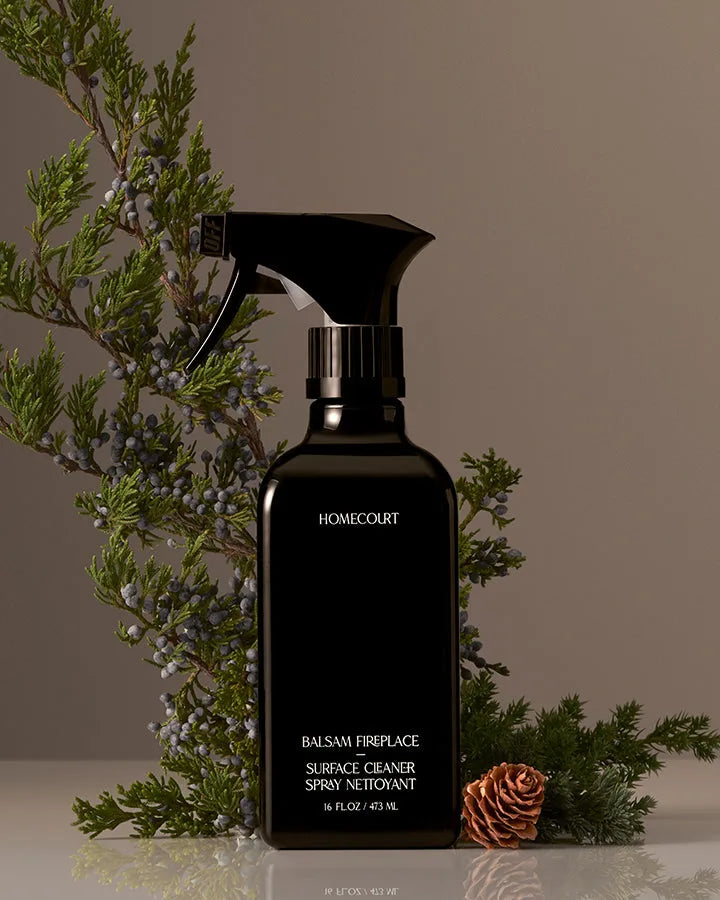
Spray Homecourt Surface Cleaner onto a clean microfiber cloth, not onto the appliance, so nothing runs into seams, vents or control panels. Wipe in long, overlapping strokes along the grain, in sections about the size of the cloth so the cleaner never dries before you reach it. The coconut-derived degreaser lifts the oily film the wash missed, and the directions name stainless steel among the non-porous surfaces the formula is made for.

Step 5: Dry & buff to a streak-free shine
The step most people skip
Pick up the dry cloth at once and buff along the grain until the panel is fully dry. Water left to evaporate leaves mineral spots, and cleaner left to dry leaves a haze.
Step back and look from an angle. Any streak you see now is a spot you missed drying, and a few more passes fix it.
Step 6: Stainless steel refrigerator & dishwasher tips
The two doors that get touched most
The refrigerator door opens dozens of times a day and collects more fingerprints than anything else in the kitchen. For how to clean stainless steel refrigerator fronts, run the five steps above and add the handles and the top edge of the door, where dust and kitchen grease settle. While the door is open, wipe the gasket and the inside edge with the soapy cloth.
For how to clean stainless steel fridge panels that carry a fingerprint-resistant coating, keep to the dry microfiber pass and the mild soapy wash, and check the manufacturer's guide before any spray or polish.
How to clean stainless steel dishwasher doors is the same routine with one addition, the control strip along the top edge. Keep the spray off the buttons and wipe the strip last with the dry cloth. Steam escaping at the end of a cycle leaves mineral spots along that top edge, so dry it first when the cycle finishes.
If you are refreshing the whole kitchen, the Kitchen Trio set pairs the Surface Cleaner with Dish Soap and Hand Wash in one scent, $80 for a $90 value.
Step 7: Stainless steel cleaning mistakes to avoid
What dulls the finish for good
Stainless steel is hard to ruin and easy to dull.
- Abrasive pads and steel wool. They scratch the brushed finish, and a scratch cannot be wiped away.
- Cleaners not labeled for stainless. Read the label, as the American Cleaning Institute advises, and keep bleach and oven cleaners for the surfaces that call for them.
- Wiping against the grain. The lines fill with residue.
- Letting water or cleaner air dry. Spots form in the time it takes to find a towel.
- Scrubbing cooked-on grime. The UF/IFAS guide to cleaning metals keeps stainless care to a thorough wash and, when needed, a fine-powdered polish, and saves scouring pads for unpolished aluminum pans.
Grease baked onto a hood or the back of a stove responds to patience rather than force: a soapy cloth left to sit, a second wash, then the spray. Our note on how to clean stainless steel grime explains how plant-based degreasers loosen that film without grit.
Stainless steel appliance FAQ
What people ask us
What Is the Best Way to Clean Stainless Steel Appliances?
The best way to clean stainless steel appliances is the five-step routine above: a dry dust, a warm soapy wash, a residue-free cleaner sprayed on the cloth, then an immediate dry buff, all with the grain. That is most of how to clean stainless steel appliances: no abrasives, and a shine that comes from drying speed, not polish.
Can You Clean Stainless Steel With Vinegar?
Yes, in moderation. The American Cleaning Institute lists a cloth dipped in white vinegar to brighten a dull stainless sink. For how to clean stainless steel with vinegar on an appliance, dilute it with water, wipe along the grain, rinse with a damp cloth and dry at once. Vinegar is acidic, so never leave it sitting on the finish, skip it on coated panels, and check the maker's guide first.
How Do You Remove Scratches From Stainless Steel?
For how to remove scratches from stainless steel, clean the panel first so you are not mistaking a streak for a scratch. Fine surface scratches can often be blended with a non-abrasive pad worked gently with the grain, and the American Cleaning Institute's rule for any scratch product is to test it in an inconspicuous spot. Deeper scratches, and any mark on a coated finish, belong to the appliance maker or a refinishing professional rather than more rubbing.
More kitchen cleaning guides
Keep reading
Cleaners Cleaners
Non-Toxic Kitchen Cleaner Surfaces
non toxic kitchen cleaner surfaces (blog)Casandra Tayag October 29, 2026 Cleaners