

 Cleaners
Steam and cooking spatter drift up from the range, wet hands grab the same pulls dozens of times a day, and a fine film of grease and dust settles over the doors nearest the stove.
The fix is gentler than the mess suggests. Cabinet makers' own care guides keep landing on one method: a mild solution of dish soap and warm water on a cloth wrung out until it is barely damp, a clean water rinse, then a dry towel right behind it. Here is how to clean kitchen cabinets that way, plus what changes for grease, stained wood and painted doors.
The short answer
Dust the doors with a soft, slightly damp cloth, then wash them with a mild mix of gentle dish soap and warm water on a cloth wrung out until it is barely damp. Wipe with the grain, go over the doors again with a cloth dampened in clean water, and dry every surface right away. Skip wax, polish, ammonia, bleach and anything abrasive.
What you need to clean kitchen cabinets
A short kit, nothing harsh
Cleaning kitchen cabinets takes very little gear, and none of it should be tougher than the finish it touches. MasterBrand, a cabinet maker, says in its homeowner care guide that a soft cotton cloth dampened with warm water usually does the trick, with a mild dishwashing liquid solution for extra grime.
That is also the best cleaner for kitchen cabinets in most homes: a gentle dish soap that lifts grease without stripping the finish.
Leave the kitchen sponge and the everyday dishcloth at the sink. MasterBrand's guide warns that sponges and dish cloths can hold particles that scratch, along with food, oil residue or leftover cleaning solution.
- 01Dish soapA gentle dish soap, the kind you use for washing dishes by hand. Never dishwasher detergent, which both MasterBrand and Decor Cabinet Company rule out.
- 02Warm waterA bowl or small bucket for the soap solution, and a second bowl of clean water for rinsing.
- 03Soft clothsThree of them, white cotton or microfiber. One washes, one rinses, one dries.
- 04Soft brushA clean, soft toothbrush for carved trim, door grooves and the edges around pulls.
- 05Dry towelA clean, soft towel on your shoulder, so drying never waits.
How to clean kitchen cabinets step by step
Five steps, one door at a time
The best way to clean kitchen cabinets is the slow, damp one. MasterBrand warns that long contact with water and other liquids can permanently damage a cabinet finish, so the whole method uses very little water and never lets it sit.
For the wash itself, a gentle dish soap for kitchen cabinets is the one cleaner the cabinet makers agree on. Work one door at a time, from wash to rinse to dry.
Step 1: Empty & dust the doors
Clear the counter, lift the dust
Clear the counter under the cabinets, and empty the shelves if you plan to wipe the insides too. Open each door to reach its edges and the face frame.
Dust comes off first. Timberlake, a cabinet brand, says in its cabinet care guidelines to dust periodically with a soft, slightly dampened, lint-free cloth. Decor's general cabinet care manual adds that dry dusting a heavy buildup can scratch the finish, which is why the cloth should be just damp, never dry and never wet.
Step 2: Mix gentle dish soap & warm water
A mild solution, barely damp
Fill a bowl with warm water and add your dish soap. MasterBrand puts the ratio at about 5 percent dishwashing liquid to 95 percent water, which works out to roughly two and a half teaspoons per cup. Decor describes it more simply: a few drops in warm water, the same as washing dishes by hand.

Dip a soft cloth and wring it out until it stops dripping. Decor says to limit excess water at every step.
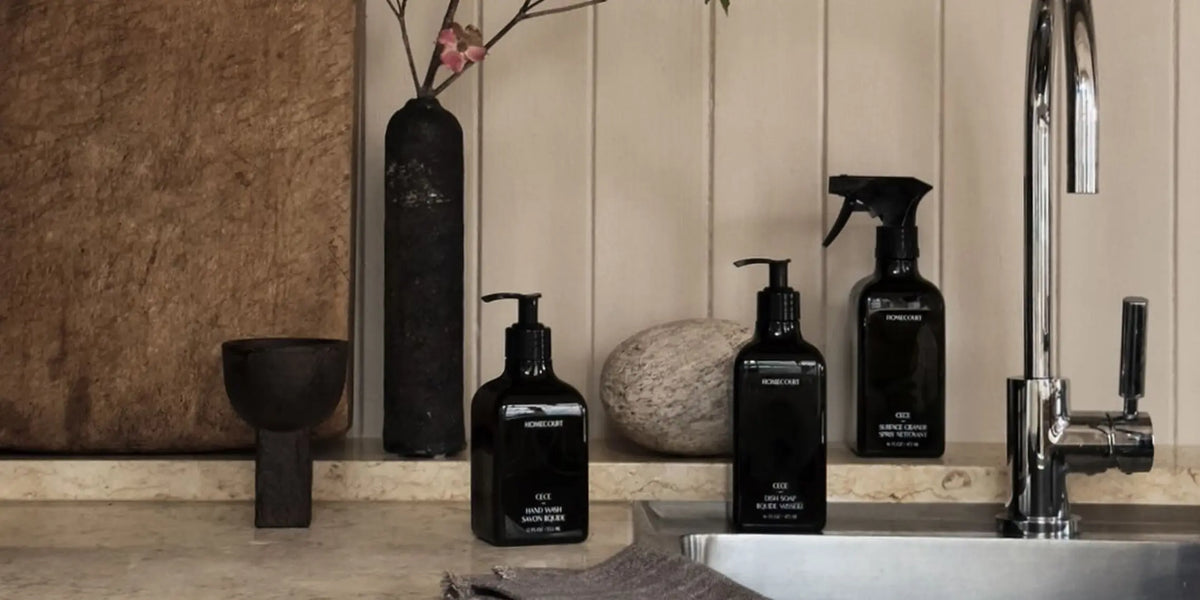
Homecourt Dish Soap uses plant-derived surfactants to remove food debris, with glycerin to hydrate and protect your hands while you work. The formula won a 2022 Good Housekeeping Cleaning and Organizing Award.
Step 3: Wipe with the grain
Follow the wood, not a circle
Wipe each door in long strokes that follow the direction of the wood grain. Decor calls following the grain good practice when wiping cabinets.
Clean the door face, then the edges, then the face frame. Spend extra time on the area around each pull, where hands leave oil every day. Use the soft brush on carved profiles and shaker panel corners, where grime collects.
Rinse the cloth often, and mix a fresh bowl when the water clouds.
Step 4: Rinse with a damp cloth
Clean water takes the soap away
Decor tells owners to follow up with clean water after using any cleaning solution. MasterBrand's instructions are just as clear: after cleaning stained or painted cabinets, wipe them down with a clean, damp cloth.
Dip your second cloth in the bowl of clean water, wring it out just as hard, and go over each door the same way, with the grain. Give carved trim and textured edges an extra pass. Wikipedia's article on dish soap notes that it is harder to rinse off rough surfaces than smooth ones.
Step 5: Dry right away
No water left on the wood
Dry each surface with a clean, soft towel as soon as you finish rinsing it. MasterBrand advises drying wet or damp surfaces immediately, and Decor notes that drying right away also prevents streaking.
Check each door's bottom edge and the frame joints, where water hides.
How to clean grease off kitchen cabinets
Repeat the soap, never scrub harder
Grease is usually why people look up how to clean greasy kitchen cabinets in the first place. Cooking vapor carries oil out of the pan onto the doors nearest the range, where it catches dust until it feels sticky.
The good news: how to clean grease off kitchen cabinets comes down to the same soap and water. Decor's guide says residue from smoke, cooking vapors, grease and hand oils comes off with a cloth dampened in mild soap and warm water. As the entry on dishwashing liquid on Wikipedia explains, surfactants do the main cleaning work, lowering the surface tension of water and removing grease and food particles.
For the stubborn spots, Decor suggests this:
- Put a small squirt of dish soap straight onto a damp cloth under warm running water.
- Rub the greasy area gently, following the grain where there is one.
- Rinse with a clean damp cloth and dry it at once.
- Repeat on the same spot rather than pressing harder.
That is also how to degrease kitchen cabinets without harming them. Plant-based cleaners lift grease by emulsifying it into tiny droplets that wipe away, which is how plant-derived degreasers work without harsh solvents.
What you leave out matters just as much. MasterBrand lists solvent and petroleum-based products, such as mineral spirits, nail polish remover and paint thinner, among the products to keep off cabinets, along with ammonia, bleach and scouring pads.
How to clean wood kitchen cabinets
Little water, no wax
For stained or clear-coated doors, the soap method above is how to clean wood kitchen cabinets day to day.
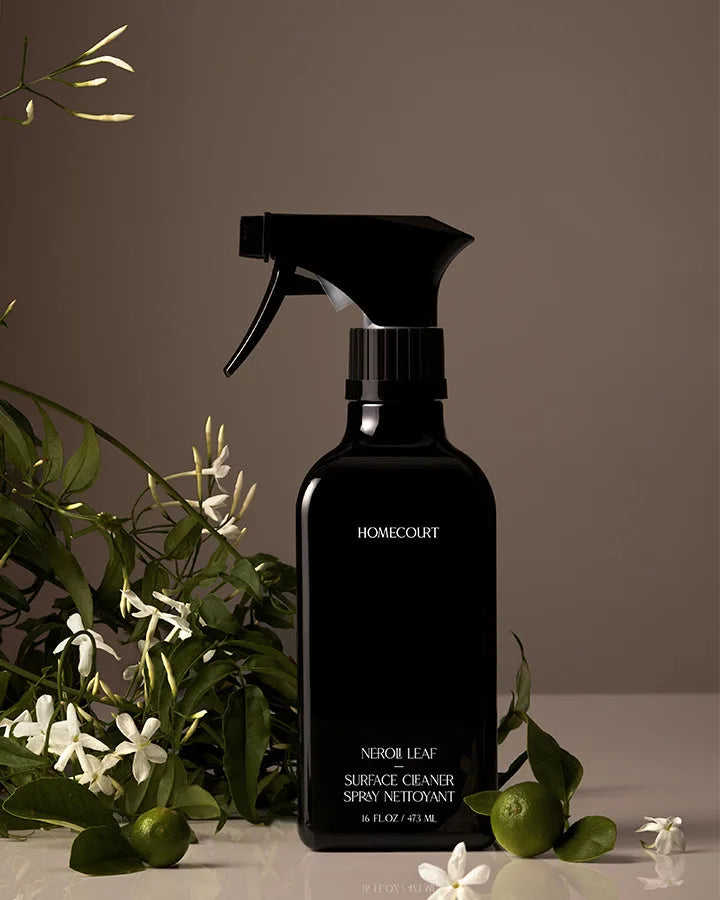
If your doors are finished wood, you can also use Surface Cleaner for finished wood. Its directions list finished wood among the non-porous surfaces it is made for, along with tile, sealed stone, stainless steel and granite. Its coconut-derived degreaser dissolves grease: spray, loosen the grime with a lint-free cloth, then wipe away any excess moisture. Check your cabinet maker's care sheet first, though. MasterBrand's guide lists multi-purpose cleaners among the products to avoid, and Decor rules out any cleaner that contains alcohol or acids. Surface Cleaner's ingredient list includes both, as denatured alcohol and citric acid. If your sheet says the same, stay with dish soap and water on the doors and keep the spray for sealed stone counters and stainless steel.
Two habits protect wood more than any cleaner:
- Skip the wax and polish. MasterBrand says its cabinets don't need waxing and warns that wax and polish can build into a hazy, streaked or yellowed film that is very hard to remove. Timberlake says the same buildup leaves a residue that attracts dust and moisture.
- Watch the sun. MasterBrand notes that direct sunlight darkens most natural wood, while walnut lightens. Blinds or curtains are the easiest protection.
Wood floors follow the same rule of damp, never wet. If your kitchen has them too, here is cleaning hardwood the right way.
How to clean painted kitchen cabinets
Gentle pressure keeps the paint
The steps for how to clean painted kitchen cabinets are the same as for wood: a mild dish soap solution, a barely damp cloth, a clean water rinse and an immediate dry. MasterBrand's guide gives one set of instructions for stained and painted cabinets alike.
Paint does show wear faster in one place. Decor explains that oil from hands, food and lotions builds up around knobs and handles, and that on painted or lower-gloss finishes, wiping those areas can leave a shiny, greasy-looking patch. Its answer is regular washing with mild soap and warm water, so clean the handle zones every time.
Decor rules out abrasive pads, sponges and steel wool. Surface Cleaner's label does not list painted surfaces, so keep painted doors on dish soap and water.
How to clean white kitchen cabinets follows the same routine, with two extra cautions:
- No bleach. MasterBrand, Timberlake and Decor all list bleach among the products to keep off cabinets.
- Mind the light. MasterBrand notes that painted wood can fade or discolor in direct sunlight.
How often to clean kitchen cabinets
Small wipes, then a full wash
None of the cabinet makers' guides set a fixed schedule. Decor says cabinets should be cleaned routinely or based on how much mess has built up, and MasterBrand stresses wiping spills and splatters quickly, since prolonged contact with food, liquids and grease can permanently damage or discolor the finish.
A rhythm that works in most kitchens:
- Same day: Wipe up splatters and drips, then dry the spot.
- Every week: Wash the handle zones and the doors nearest the range and the sink.
- A few times a year: Empty, dust and wash every door, drawer front and face frame.
Heat matters too. Timberlake warns that small appliances under wall cabinets, such as coffee makers or toasters, can give off enough heat to discolor or swell the wood. MasterBrand suggests removing the doors and drawers closest to the oven before running a self-cleaning cycle.
Kitchen cabinet cleaning FAQ
What people ask us
Can you use vinegar on kitchen cabinets?
Some cabinet makers allow it, with care. Decor Cabinet Company describes a 50/50 mix of distilled white vinegar and warm water, but warns that the acid can harm some surfaces and says to test it in a hidden spot first. Its own recommendation, like MasterBrand's, is dish soap and warm water, which is the safer first choice for any finish.
How do you get sticky residue off cabinets?
Sticky residue is usually cooking grease that has trapped dust, or hand oil around the pulls. Put a little dish soap directly on a damp cloth, rub the spot gently with the grain, rinse with a clean damp cloth and dry it. Repeat instead of scrubbing. Skip solvents like nail polish remover or paint thinner, which MasterBrand lists among the products to avoid. If the film is old wax, MasterBrand says it is very hard to remove, so ask your cabinet maker first.
What is the best cleaner for kitchen cabinets?
For most finishes, a mild dish soap in warm water. Decor calls dish soap and warm water its recommendation for cleaning its cabinets, and MasterBrand's care guide relies on the same mild solution. Homecourt Dish Soap fits that job. It dissolves grease and grime with plant-derived surfactants, and its glycerin helps hydrate and protect your hands. For anyone wondering how to clean kitchen cabinets without risking the finish, that bottle and a dry towel are the whole kit.
More kitchen cleaning guides
Keep reading
Cleaners Cleaners
Non-Toxic Kitchen Cleaner Surfaces
Casandra Tayag October 29, 2026 Cleaners