

 Cleaners
The refrigerator is the one appliance in the kitchen that never gets a day off, and it shows. A drip of marinade dries on the glass, a lemon goes soft in the back of the crisper, crumbs settle into the door seal, and the whole cabinet starts to carry a faint smell that every container seems to pick up.
Here is how to clean a refrigerator without reaching for anything harsh: take everything out, wash the removable parts at the sink, wipe the cabinet and seals, then put it all back dry. After that come the two jobs most people skip, the coils and the stainless door.
The short answer
Unplug the refrigerator or switch off cooling if your manual allows, move perishables to a cooler with ice packs and toss anything past its date. Let glass shelves warm to room temperature, then wash shelves and drawers in warm water with dish soap, rinse and dry. Wipe the walls with a cloth misted with surface cleaner, follow with a damp rinse cloth, clean the door seals with mild soap, then dry everything before you restock.
What you need to clean a refrigerator
Seven things, most of them already in your kitchen
Gather everything before you open the door. The supply list for how to clean fridge interiors is short and gentle on purpose. Everything inside a refrigerator sits next to food, which is why anyone shopping for a non toxic kitchen cleaner usually has this job in mind.
- 01Dish soapA few pumps in a sink of warm water for the shelves, drawers, door bins and seals.
- 02Surface cleanerA non-toxic kitchen cleaner for fridges, misted onto a cloth for the walls and the stainless door.
- 03Baking sodaAbout one tablespoon per quart of warm water for odors, plus an open box for the shelf afterward.
- 04Microfiber clothsThree of them. One washes, one rinses, one dries.
- 05Soft brushAn old toothbrush for gasket folds, drawer tracks and shelf supports.
- 06Cooler with ice packsSomewhere cold for perishables while the cabinet is empty.
- 07Vacuum with a brush attachmentFor the coils and the grille at the base.
How to clean a refrigerator step by step
Top shelf down, then close the door on a clean cabinet
How to clean a refrigerator comes down to five steps done in order, so nothing clean gets dripped on. The USDA's refrigerator guidance sets the ground rules: wipe up spills right away, clean surfaces with hot, soapy water and then rinse, and avoid solvents, abrasives or any cleanser that could leave a chemical taste on food or ice.
If you remember one thing about how to clean refrigerator interiors, make it that rinse. Where your manual disagrees, the manual wins.
Step 1: Empty it & toss old food
Start with a cooler, not a trash bag
If your manual allows it, unplug the refrigerator or switch off cooling, and pause the ice maker. Move perishables into a cooler with ice packs, the first step in Whirlpool's interior care guide. The USDA advises against eating food held above 40 degrees Fahrenheit for more than two hours, so this is a one hour job.
As each item comes out, decide on the spot. The USDA gives most leftovers three to four days in the refrigerator, so anything older or unlabeled goes. Wipe sticky jars before they go into the cooler.
Step 2: Wash shelves & drawers in dish soap
Warm water, a soft sponge, a thorough rinse
Slide out the shelves, crisper drawers and door bins. Glass shelves come out cold, so stand them on a towel until they reach room temperature. Whirlpool warns that hot water on cold glass can stress it.
Fill the sink with warm water and a few pumps of dish soap, then wash each piece with a soft sponge and the brush. Rinse every piece well. The University of Florida IFAS Extension points out that dish detergent left behind can lead to odors, so the rinse matters as much as the wash. Dry with a lint-free towel.
Step 3: Wipe the walls with surface cleaner
Spray the cloth, never the cabinet
Work from the top down: ceiling, back wall, sides, then the floor of the fridge where drips collect. Mist a microfiber cloth with surface cleaner and wipe, refolding as the cloth picks up grime. Spraying the cloth instead of the wall keeps liquid out of vents and seams.

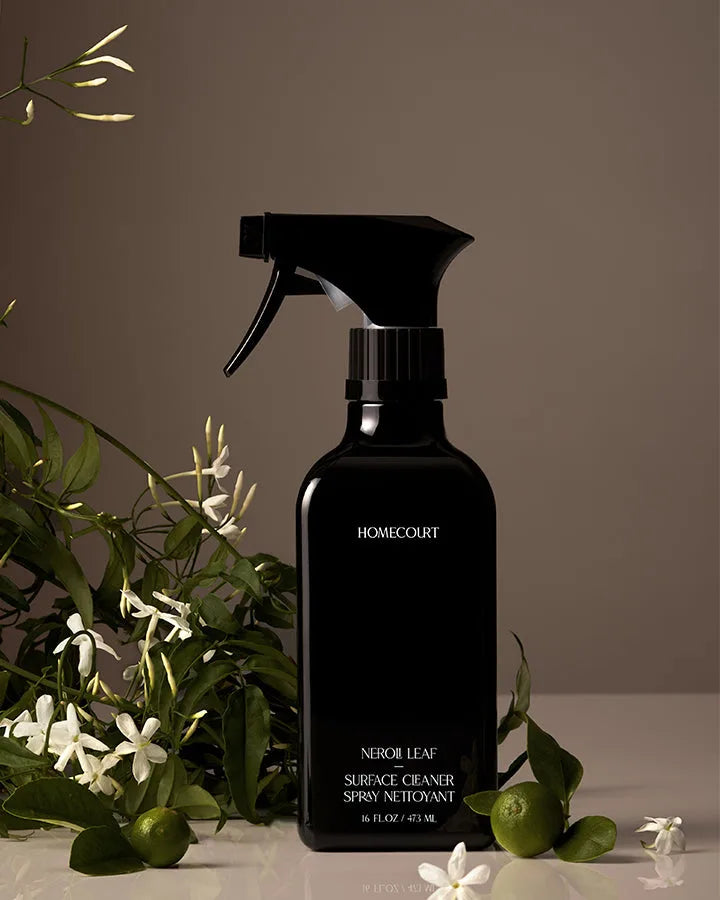
Homecourt Surface Cleaner is made for non-porous surfaces, and its ingredient list contains no ammonia or bleach. Whirlpool's guide names warm water with mild dish soap and non-abrasive, ammonia-free sprays, and it rules out window sprays, scouring cleansers, bleach and concentrated detergents on plastic liners. Follow every pass with a cloth dampened in plain water, then dry. The USDA asks for that rinse.
Test the spray on a small spot near the bottom first. If your manual limits the liner to soap and water, use the dish soap solution here and save the spray for the door.
Step 4: Clean the door seals
Crumbs hide in every fold
The rubber gasket around each door keeps the cold air in. Run a wrung-out soapy cloth along each seal, lifting the folds with the soft brush to reach the crumbs. The UF/IFAS Extension notes that sticky gaskets can let air leak, which costs energy over time.
Keep surface cleaner off the gasket itself, since Whirlpool lists gaskets among the parts that get mild soap only. Dry each seal fully so it closes tight. A torn seal is a part to replace, not a cleaning job.
Step 5: Dry & restock
Every part back in, completely dry
Make sure every shelf, bin and drawer is completely dry before it goes back in. Water left on a freezer shelf turns into ice that food sticks to. Slide the parts back and restore power or cooling.
Restock in groups so you can see what you have, with room for air to move. Keep raw meat, poultry and seafood sealed or wrapped so their juices cannot reach other food, as the USDA advises. Set an open box of baking soda on a shelf, and if you own an appliance thermometer, confirm the refrigerator holds 40 degrees Fahrenheit or below.
How to clean inside of refrigerator shelves & drawers
Glass, plastic, tracks, corners
The routine above covers a regular clean. This part is for pieces that need more, and it starts with how to clean refrigerator shelves that have gone a while without care.
- Glass shelves: Let them warm to room temperature, then lay a warm, soapy cloth over a dried spill for a few minutes before you wipe. Never scrape the glass.
- Shelves with lights: Wash them by hand with a damp, soapy cloth. Whirlpool says shelves with under-shelf LED lighting are not dishwasher safe.
- Crisper drawers: For how to clean refrigerator drawers, pull them all the way out, empty the debris that collects underneath, and wash them in warm water with Homecourt Dish Soap. The soft brush clears the tracks they slide on.
- Stubborn residue: Dissolve about one tablespoon of baking soda in a quart of warm water, let it sit on the spot for a few minutes, then scrub gently, as Whirlpool suggests.
For how to clean inside of refrigerator walls around the shelf supports, a toothbrush dipped in soapy water reaches the slots where crumbs pack in. Homecourt Dish Soap uses plant-derived surfactants to lift food debris and glycerin to help protect your hands during a long session at the sink.
How to clean refrigerator coils
The dusty job under the fridge
The condenser coils release the heat your refrigerator pulls out of the food. As the article on refrigerators on Wikipedia explains, those coils are cooled by room air, and clearing the dust that blocks heat flow can improve efficiency. The UF/IFAS Extension puts it plainly: dusty coils make the refrigerator work harder and use more energy.
Here is how to clean refrigerator coils on most models, following Whirlpool's coil cleaning guide:
- Unplug the refrigerator or switch off its circuit breaker.
- Find the coils. On many models they sit behind the base grille at the bottom front; on others they run across the back.
- Remove the base grille. Some pop off by hand, and some come off with two screws.
- Vacuum the grille, the open area behind it and the front of the coils with a soft brush attachment or a coil brush. Do not bend the fins or tubing.
- Snap the grille back into place, then restore power.
How often depends on your home. The USDA suggests cleaning the condenser coil several times a year. Whirlpool says a typical home may not need routine coil cleaning, but homes with pets, heavy kitchen traffic or construction dust should check and clean every three to six months. Some models need no coil cleaning and some need a technician, so read your manual first.
How to get smell out of fridge
Find the source, then absorb what lingers
Most fridge smells come from something specific, like a spill under a drawer or a forgotten container. The USDA separates spoilage bacteria, which make food smell off, from the bacteria that cause illness, which usually give no warning at all. A smell is a reason to clean, never a test of whether food is safe. Our guide to how odor-causing bacteria work explains why covering a smell rarely ends it.
So the first answer to how to get smell out of fridge shelves is the full clean above. If the smell survives, the USDA's steps for lingering odors are simple:
- Wipe the inside with equal parts white vinegar and water.
- Wash the walls, shelves, sides, door and gaskets with baking soda dissolved in water, then let the cabinet air out with the door open.
- Set an open box of baking soda, or a dish of fresh coffee grounds, on a shelf.
For a stubborn smell, Whirlpool suggests washing the removable parts in one part vinegar to one part warm water and setting bowls of activated charcoal inside. It warns that a strong odor can take several weeks to clear.
How to clean stainless steel refrigerator doors
Follow the grain, dry as you go
The American Cleaning Institute starts stainless care with the gentlest step: wipe with a cloth soaked in warm water and towel dry right away, so minerals in the water do not spot the finish. Add a mild dish detergent only if grime remains, then rinse and dry.
That is the base of how to clean stainless steel refrigerator fronts. For the oily film around the handles, mist Homecourt Surface Cleaner onto a microfiber cloth, since stainless steel is named in its directions, and wipe in long strokes along the brushed grain. Buff dry with a second cloth before anything evaporates. Speed is what keeps streaks away.
Skip harsh abrasives and steel wool, which the ACI rules out for stainless. If your refrigerator has a fingerprint-resistant coating, follow the maker's care guide and try any product on a hidden edge first.
Refrigerator cleaning FAQ
What people ask us
How often should you clean a refrigerator?
For how often to clean refrigerator interiors, think in rhythms. Wipe spills the moment you see them, as the USDA advises, and clear out old leftovers each week. Do a deep clean like the one above every one to three months, the window Whirlpool gives, and check the door gaskets monthly.
Can you put glass fridge shelves in the dishwasher?
Sometimes. Whirlpool says its glass shelves and bins are dishwasher safe on the top rack, though it recommends hand washing, and only after the glass has come to room temperature so it does not crack. Shelves with under-shelf LED lighting never go in. Other makers set their own rules, so when in doubt, wash by hand in warm water with dish soap.
What is safe to clean the inside of a fridge?
Warm water with a mild dish soap is the standard answer, and both the USDA and appliance makers start there. Baking soda in warm water handles odors, and diluted white vinegar works as a deodorizing wipe if you rinse after. Avoid solvents, abrasives, bleach and anything that could leave a taste on food. Homecourt Dish Soap and Surface Cleaner are cleaners and make no disinfecting claim. To keep both on hand, the Kitchen Trio pairs them with our Hand Wash for $80, $10 less than the three bottles bought on their own. Together they cover how to clean a refrigerator, shelf to handle.
More kitchen cleaning guides
Keep reading
Cleaners Cleaners
Non-Toxic Kitchen Cleaner Surfaces
Casandra Tayag October 29, 2026 Cleaners