
 Natural Cleaning Products
Three words get used as if they were one, and the labels do not help. One spray says it cleans, another says it sanitizes, a third says it disinfects, and all three sit on the same shelf. At Homecourt we make a cleaner, so we spend a lot of time explaining where cleaning ends and the other two begin.
They are three different jobs, done in a fixed order, and most homes need only the first one most of the time. Our definitions come from the EPA, which registers sanitizers and disinfectants, and the CDC, which says when a home needs them.
The short answer
Cleaning removes dirt and most germs with soap, water and scrubbing, and it is all most surfaces need most days. Sanitizing lowers bacteria to a level public health codes consider safe and is meant for food contact surfaces. Disinfecting kills most viruses and bacteria with an EPA-registered product left wet for its full contact time. Clean first, every time, the CDC says, and sanitize or disinfect only when there is a reason to.
Chapter 01
Disinfect vs sanitize verdict
Clean every day, disinfect when someone is sick
- Cleaning with soap and water removes most germs on its own
- Sanitizing is for food contact surfaces, after cleaning
- Disinfecting kills viruses and bacteria, after cleaning
Nearly every disinfect vs sanitize debate skips the step that does most of the work. Cleaning alone removes most harmful viruses and bacteria from a surface, according to the CDC, which adds that sanitizing or disinfecting at home is likely not needed unless someone in the house is sick.
Think of the verdict as a sequence. Clean regularly. Sanitize the counter after raw chicken. Disinfect when a stomach bug is going around.
A Homecourt Surface Cleaner handles the first job. It is not a sanitizer or a disinfectant, and we do not claim it is.
Key takeaway
Clean daily · Sanitize after raw meat · Disinfect during illness. Always clean before you sanitize or disinfect.
Chapter 02
Cleaning vs sanitizing vs disinfecting at a glance
Who regulates what & what each one kills
Put in a table, the difference between cleaning sanitizing and disinfecting comes down to three verbs. Cleaning vs sanitizing is removing germs versus reducing them with a chemical. Cleaning vs disinfecting is removing germs versus killing them.
Only the last two are regulated. Sanitizers and disinfectants are registered by the EPA as antimicrobial pesticides, and the agency checks that they do what the label says. A cleaner falls under no such rule unless it claims to do more than clean, which is why the words on its label deserve a close read. Our guide to what non-toxic really means explains them.
| Cleaning | Sanitizing | Disinfecting | |
|---|---|---|---|
| What it does | Removes dirt, grime and most germs | Lowers bacteria to a level public health codes call safe | Kills most viruses and bacteria left on a surface |
| What you use | Soap or detergent, water and scrubbing | An EPA-registered sanitizer or a weak bleach solution | An EPA-registered disinfectant or a stronger bleach solution |
| Regulated by | Nobody, unless it claims to sanitize or disinfect | EPA, as an antimicrobial pesticide | EPA, as an antimicrobial pesticide, to a higher bar |
| Kills viruses | Removes them rather than killing them | Not intended to | Yes, when used for the full contact time |
| Comes first | Always | After cleaning | After cleaning |
| How often at home | Regularly, and after visitors | After raw meat, a recall or a flood | When someone is sick or immune-compromised |
Chapter 03
Sanitizing vs disinfecting side by side
Five terms, read the way the agencies define them
Sanitize vs disinfect is a question of degree, and sanitizing vs disinfecting products are tested to different standards. According to the EPA guide to disinfecting vs sanitizing, sanitizers kill bacteria and are not intended to kill viruses, while disinfectants kill both and must clear a higher bar in testing. For what is inside these products, see our guide to common chemicals in cleaning products.
Cleaning: What cleaning removes from surfaces
Cleaning removes dirt, grime and most germs from a surface with soap or detergent, water and some scrubbing. It does not necessarily kill anything. Germs get lifted off and rinsed away, which is why the CDC calls cleaning the important first step.
Sanitizing: What sanitizing means on food contact surfaces
Sanitizing reduces bacteria on a surface to a level that public health codes or regulations consider safe, the standard restaurants work to. At home it belongs on food contact surfaces: the counter and the inside of the sink after raw meat, poultry or their juices, refrigerator shelves after a recall, anything that got wet in a flood.
A food contact surface sanitizer is either an EPA-registered sanitizing product or a weak bleach solution, applied after the surface has been washed with hot, soapy water. Daily sanitizing may not be necessary, the CDC notes, if surfaces are cleaned carefully after use.
Disinfecting: What disinfecting means on hard surfaces
Disinfecting kills most viruses and bacteria left on a hard surface after cleaning, using an EPA-registered disinfectant or a stronger bleach solution. In the EPA's definition, a disinfectant destroys or irreversibly inactivates bacteria, fungi and viruses on hard surfaces, but not necessarily bacterial spores. Add disinfecting to cleaning, the CDC advises, when someone in the home is sick or at higher risk because of a weakened immune system. For the coronavirus specifically, the EPA keeps List N, a searchable list of registered disinfectants expected to work against it when used as the label directs.
The label: Contact time on the product label
Contact time is the number of minutes a disinfectant or sanitizer has to stay visibly wet to do its job. It is printed in the Directions for Use, and the EPA says to pay close attention to it.
Spray and wipe in ten seconds, and the surface was cleaned, not disinfected.
Also on the label: the EPA registration number, the only reliable way to identify a registered product, and the list of organisms the product was tested against. A pathogen missing from that list means the EPA has not reviewed data showing the product works on it.
Sterilizing: Sanitize vs disinfect vs sterilize
Sanitize vs disinfect vs sterilize runs from least to most. Sterilizing, the top of that ladder in the EPA's definition, destroys everything: fungi and their spores, viruses, bacteria and bacterial spores. It belongs in hospitals and dental offices, done with steam under pressure, dry heat or chemical sterilants on instruments. No household spray sterilizes a counter, and none needs to.

Chapter 04
When to clean, sanitize or disinfect at home
A simple schedule for an ordinary house
Disinfecting vs sanitizing at home is mostly a question of what just happened. Nothing happened: clean. Raw chicken happened: clean, then sanitize. Someone is sick: clean, then disinfect.
A surface cleaner for everyday cleaning covers the first case, which is nearly every day, with a coconut-derived degreaser that lifts grease and smudges without streaks. For the other two, the CDC lays out the steps: clean the surface with soap and water, pick an EPA-registered product suited to the surface, follow the label, keep the surface wet for the contact time, never mix products, and wash your hands when you are done.
Clean
- Every day: Counters, tables and the sink, with a plant-based cleaner or soap and water.
- High-touch spots: Light switches, doorknobs and handles, regularly and after visitors.
- Before anything else: Dirt shields germs, so the chemical steps only work on a clean surface.
Sanitize
- After raw meat or poultry: Counters and the inside of the sink, with a sanitizer or a weak bleach solution.
- After a recall: The refrigerator shelves that held the recalled food.
- After a flood: Any food contact surface that got wet.
Disinfect
- When someone is sick: The bathroom and the surfaces the sick person touches.
- Weakened immunity at home: Chemotherapy, a transplant or an immune condition raises the bar.
- Only with the right product: An EPA-registered disinfectant, left wet for its full contact time.
Chapter 05
Disinfect vs sanitize bottom line
What to buy & what to skip
Disinfect vs sanitize matters a few days a year. Cleaning matters every day.
Regular cleaning, in the CDC's view, is enough to prevent the spread of germs in most situations. Keep a disinfectant on hand for sick days, read its contact time, and spend the rest of the year with a cleaner you actually like using. Our guide to safe natural cleaning covers what to look for, and the Surface Cleaner Refill keeps the bottle you already own in rotation with 92% less plastic.
Cleaning, sanitizing & disinfecting FAQ
Quick answers to the three questions we hear most
Does Cleaning Come Before Disinfecting?
Yes, always. Clean the surface with soap and water first, the CDC says, because dirt and other impurities keep the chemical from reaching the germs. What does disinfect mean in practice, then? The second step, applied to a surface that is already clean and left wet for the label's contact time.
What Is an EPA-Registered Disinfectant?
An EPA registered disinfectant is a product the EPA has reviewed and registered as an antimicrobial pesticide, with a registration number on its label and approved directions for use. Registration means the EPA has verified that it kills the organisms on the label when used as directed.
Is Sanitizing the Same as Disinfecting?
No. What does sanitize mean? Reducing bacteria on a surface to a level public health codes consider safe. Sanitizers are not intended to kill viruses. Disinfecting kills most viruses and bacteria and is held to a higher testing standard by the EPA. Many products are registered as both because they passed both tests.
More Homecourt cleaning guides
Keep reading
Natural Cleaning Products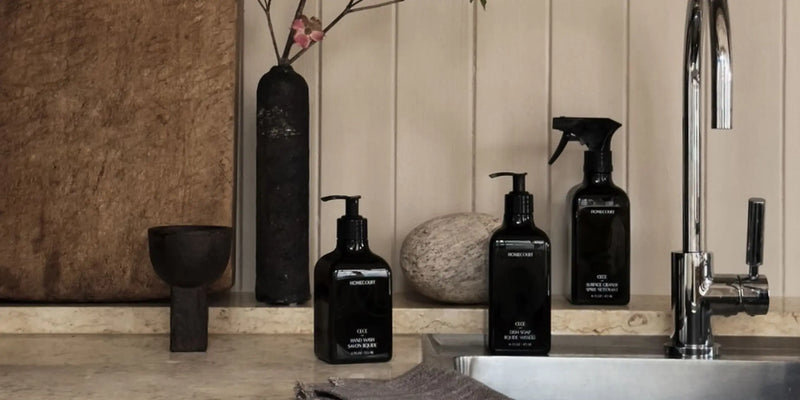 Natural Cleaning Products
Why Luxury Surface Cleaners Are Worth The Investment For Modern Homes
Bianca Virtudazo February 23, 2026 Natural Cleaning Products