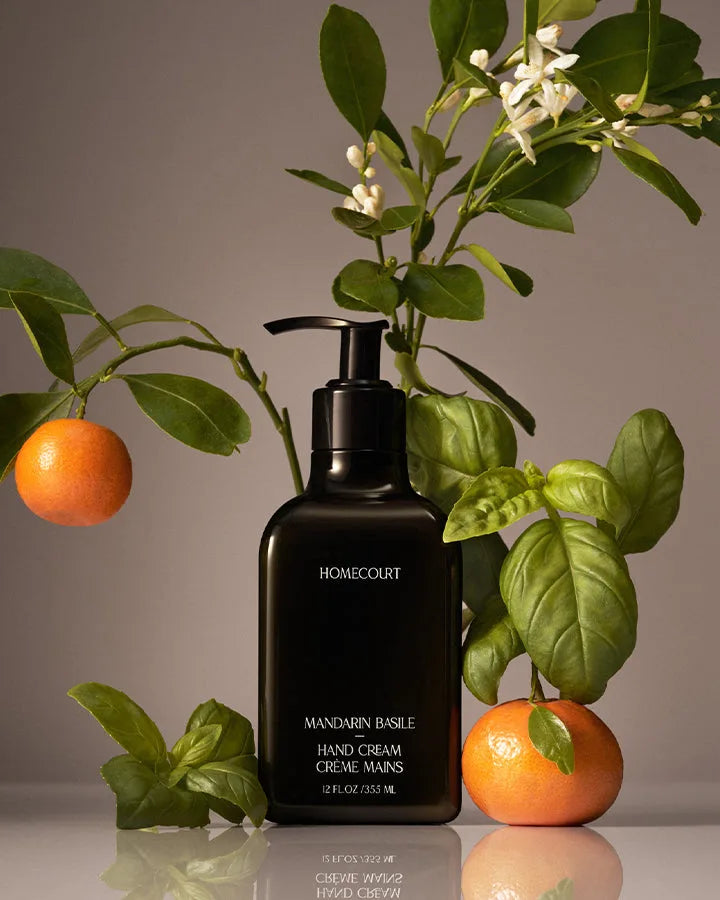
Many people use "hand lotion" and "hand cream" to mean the same thing: the bottle by the sink. Body lotion lives in the bathroom and covers everything else. The two share a lot of ingredients, so it is fair to ask whether you need both.
We make a Hand Cream and a Body Butter, not a thin body lotion, so this comparison has a point of view. Our facts on moisture come from the American Academy of Dermatology (AAD).
The short answer
Hand lotion, or the hand cream many people mean by it, is usually thicker than body lotion and made to be reapplied after every wash. Body lotion has more water, so it spreads across arms and legs fast. The moisturizers overlap. You can use body lotion on your hands, but the AAD says creams add more moisture than lotions, so for hands you wash all day, a cream earns its spot by the sink.
Hand lotion vs body lotion at a glance
Hand cream is built for skin you wash all day
- Creams carry less water than lotions, so they feel thicker
- The AAD says creams add more moisture than lotions
- Body lotion spreads fast over arms & legs, so keep it for the body
The hand lotion vs body lotion question comes down to texture and timing. A hand lotion, as many shoppers mean it, is a cream you put on after each wash, often many times a day. A body lotion goes on once, after a shower, over a lot of skin.
The moisturizing ingredients are often the same. The formats are built for different jobs.
| Feature | Hand lotion or cream | Body lotion |
|---|---|---|
| Texture | Usually a cream: thicker, less water | Usually thinner, more water, spreads easily |
| Made for | Hands you wash many times a day | Arms, legs & torso after a shower |
| Moisture | Creams add more moisture, per the AAD | Lighter, so you may reapply more often |
| Moisturizers | Glycerin, shea butter, plant oils | Often the very same ingredients |
| Where it lives | A pump bottle by the sink or a tube in your bag | A larger bottle or jar in the bathroom |
| Homecourt pick | Hand Cream, $45 for 12 oz | Body Butter, $56 for 6.7 fl oz |
What makes hand cream different
Thicker, for skin you wash all day
The difference between hand cream and body lotion starts with water. A lotion is a thin mix of oil and water, and a cream is thicker, typically because it holds less water. That is the standard definition, as in lotion on Wikipedia, and it settles most of the hand cream vs lotion debate.
Hands get washed and wet more often than the rest of your skin. The AAD notes that hands are often where dry skin shows first, and that dishwashing or wet hands all day make it worse. Its advice: carry a non-greasy hand cream and apply it after each hand washing.
That habit shapes the product. A good hand cream has to sink in fast enough that you can pick up a phone, from a bottle you can reach with wet hands. A pump by the sink does that. A big bottle of body lotion in the cabinet does not.
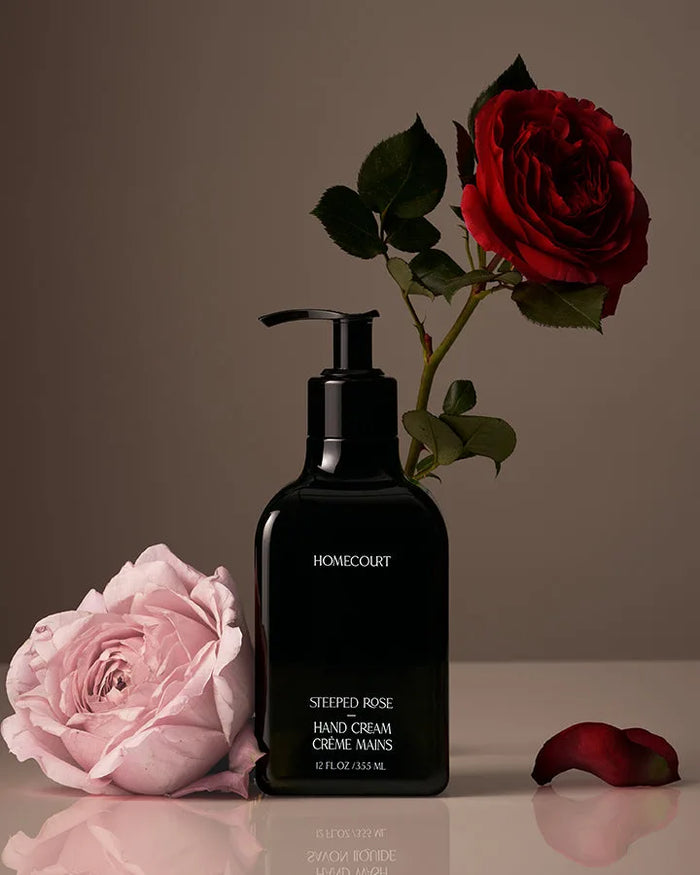
If you want a non-toxic hand lotion for the sink, our Hand Cream is built that way. It is a velvety cream that the product page describes as non-greasy and quick to absorb. One pump covers both hands and cuticles, and the 12 oz bottle comes with a reusable pump.
So in the hand cream vs body lotion matchup, hand cream wins this round. It is thicker, and it is packaged for the way hands get used.
Can you use body lotion on hands?
Yes, with one catch
Can you use body lotion on hands? Yes. A body lotion is still a moisturizer, and many of its moisturizing ingredients turn up in hand cream too.
The catch is staying power. The AAD says ointments and creams add more moisture to skin than lotions. A thin body lotion on hands you wash every hour may be gone after the next wash, so you will reapply more often.
If your body moisturizer is a cream, like our Body Butter, the gap shrinks. It comes in a jar, though, which is less handy at the sink than a pump.
Hand cream works on elbows or knees too. A 12 oz bottle would just run out fast on your whole body.
Non-toxic hand lotion: Ingredients to look for
The checklist is the same for both
Shopping for the best non toxic hand lotion? Start with the ingredient list, not the front of the bottle. FDA rules list cosmetic ingredients in descending order of predominance, so the first few show what the cream is mostly made of. Anything at 1% or less can sit in any order at the end. Our guide to reading a hand cream label walks through it line by line.
For dry skin, the AAD suggests a cream or ointment with one or more of these:
- Glycerin, shea butter or jojoba oil
- Hyaluronic acid, lactic acid or dimethicone
- Petrolatum, mineral oil or lanolin
The list is the same for body lotion, so this round is a tie.
Fragrance is the other line to check. The AAD recommends fragrance-free products for dry, sensitive skin. If scent has bothered your hands before, choose a fragrance-free formula.
Here is how ours compare. In our Hand Cream, shea butter is the second ingredient after water, glycerin is sixth, and fragrance is second to last. In our Body Butter, shea butter is also second and glycerin is fourth, with fragrance in eighth place. Our Hand Cream page lists every ingredient and says the formula is vegan and cruelty-free. A non toxic hand lotion should show you that much.
Non-toxic body lotion for everything else
Lotion for the body, cream for the hands
For arms, legs and shoulders, body lotion makes sense: it is thin, spreads quickly and usually sinks in before you dress. The AAD's tip is to apply moisturizer right after a shower or bath, while skin is still damp.
We do not sell a thin body lotion. Our answer for the body is Body Butter for dry skin, a rich cream with shea butter, glycerin and natural clay minerals. It still won Best Body Lotion in the Glamour Magazine Awards 2026, as our product page notes.
For more formats, we covered body butter vs lotion vs oil in a separate guide. Choosing a non toxic body lotion works the same way as for hands: an AAD-listed moisturizer near the top, and no fragrance if your skin is sensitive.
Choose hand cream for
- After every hand washA pump by the sink makes it a habit.
- Cuticles & knucklesOne pump covers both hands, cuticles included.
- Your desk or bagA non-greasy cream you can wear while you type.
Choose a body moisturizer for
- After a showerOn skin that is still damp, the way the AAD advises.
- Arms, legs & shouldersA lotion or cream that covers a lot of skin quickly.
- Dry patches at nightA richer cream, like our Body Butter, before bed.

Hand lotion FAQ
Quick answers
Is hand cream thicker than body lotion?
Usually, yes. Creams hold less water than lotions, so they are thicker. Product names are not always precise, so feel the texture or read the first few ingredients. Our Body Butter is a cream too, and a rich one.
Can you use hand cream on your face?
It is not made for it. Our Hand Cream is for hands and cuticles, and it contains fragrance. For the face, the AAD advises people with acne-prone skin to look for a moisturizer labeled oil-free, non-comedogenic or "won't clog pores." A face moisturizer is the better choice.
When should you apply hand lotion?
After every hand washing and whenever your hands feel dry, the AAD advises, ideally while skin is still damp. For most people that means several times a day, so on either side of the hand lotion vs body lotion question, keep a cream by the sink. Our directions are one pump, massaged into hands and cuticles, reapplied whenever hands feel dry.
More Homecourt hand cream guides
Keep reading