
 Dish Soap
A non-stick pan is the easiest thing in the kitchen to clean, right up until it is not. Eggs slide off for months, then one day a film of oil turns tacky, a scorched sauce clings to the center, and the coating starts to look tired long before its time.
Here is how to clean a non-stick pan so the surface stays smooth: let it cool, wash it with a gentle dish soap and a soft sponge, soak anything stuck instead of scraping it, then rinse and dry by hand. The same routine works for PTFE coatings and ceramic ones, with a few extra notes for burnt spots and sticky buildup.
The short answer
Let the pan cool completely, then wash it in warm water with a few drops of gentle dish soap and a soft sponge. Soak stuck-on food in warm, soapy water instead of scrubbing, and use only a plastic or nylon scrubber if something still clings. Rinse well, dry with a soft towel, and keep the pan out of the dishwasher and away from metal utensils and abrasive pads.
What you need to clean a non-stick pan
A short list, all of it soft
Everything here is gentle on purpose, since the tools that touch the coating should be softer than it is. A gentle dish soap does the cleaning, and the rest of the kit protects the surface.
- 01Dish soapA gentle dish soap for coated pans, a few drops for a single pan or two to three pumps for a soak.
- 02Soft spongeA plain, non-scratch sponge or a soft dishcloth for the everyday wash.
- 03Plastic or nylon scrubberOnly for burnt-on food that a soak did not loosen.
- 04Baking sodaFor a paste that lifts oily buildup.
- 05Silicone or wooden spatulaFor nudging loose residue during a soak, and for cooking afterward.
- 06Soft dish towelFor drying by hand, and for padding the pan in a stacked cabinet.
How to clean a non-stick pan step by step
Four steps, all of them at the sink
Most advice on how to clean non stick pan surfaces agrees on the basics. Consumer Reports says all you need is a plain sponge, soap and water, and that abrasive pads or sponges can scratch the surface.
That holds for how to clean nonstick pan bottoms, sides and rims. It is also the answer to how to clean ceramic pan coatings and how to clean teflon pans, since Teflon is a brand name for PTFE, the most common non-stick coating. If you wonder how mild soap still cleans without harsh scrubbing, the short version is surfactants, which loosen grease and food so water can carry them away.
Step 1: Let the pan cool
Patience protects the shape
Set the pan on a cold burner or a trivet and let it come down to room temperature before it touches water. Consumer Reports warns that plunging a hot pan into water can warp it, and that non-stick pans tend to be lightweight and more prone to warping. A warped pan no longer sits flat on the burner, so it heats unevenly from then on.
Slide leftover food out with a silicone or wooden spatula, and skip the paper towel wipe-out. Consumer Reports notes that paper towels can leave behind food debris that smokes and burns the next time you cook.
Step 2: Wash with gentle dish soap & a soft sponge
Light pressure, warm water, a few drops
Run warm water into the pan, add a few drops of dish soap, and wash the cooking surface with a soft sponge in small circles. Then wash the outside and the handle, where stovetop grease collects.

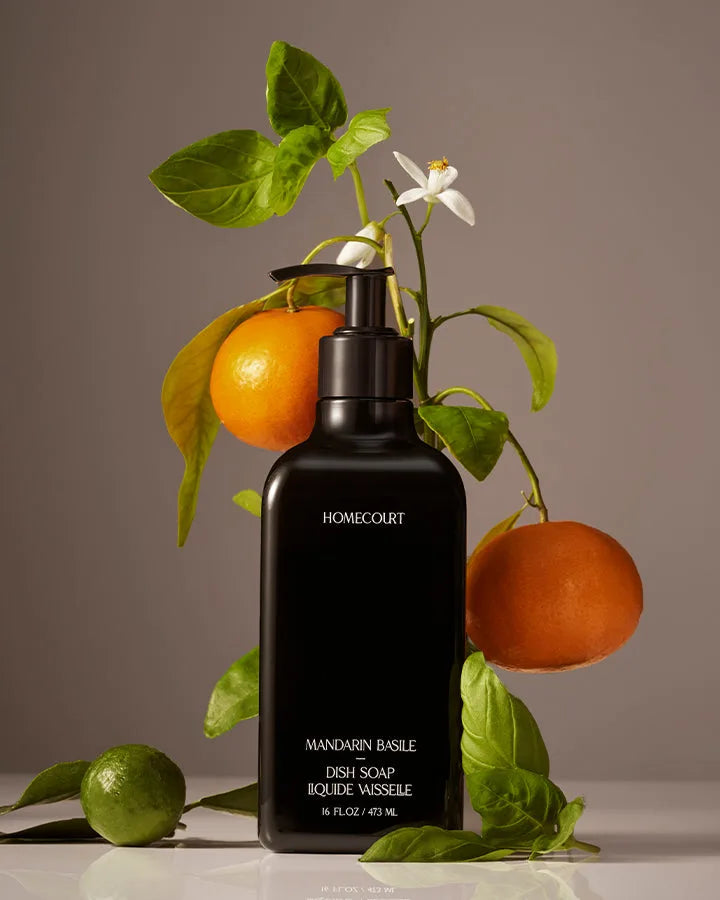
Homecourt Dish Soap uses plant-derived surfactants to remove food debris, which is why light pressure is usually enough. Its glycerin helps hydrate and protect your hands at the sink. The formula won a 2022 Good Housekeeping Cleaning and Organizing Award.
Keep steel wool and scouring powder away from the coating. They are made for cast iron and stainless steel, not a finish this thin.
Step 3: Soak stuck-on food
Let warm water do the scrubbing
If anything is still stuck, fill the pan with warm water and a little dish soap and walk away. Consumer Reports suggests a soak in hot water for a few minutes to loosen stuck food, followed by a soft sponge.
For something tougher, use the overnight soak in the Homecourt Dish Soap directions: mix two to three pumps with plenty of water, leave the pan submerged for several hours, then use a sponge to remove what is left and rinse well with water. A plastic or nylon scrubber, which Consumer Reports recommends for burnt-on food, is the strongest tool a coated pan should ever see.
Step 4: Rinse & dry by hand
Clear water, then a soft towel
Rinse the pan under warm running water until no soap film is left behind, on the inside or the outside.
Dry it straight away with a soft dish towel, inside and out. If your pans live in a stack, put a towel, a potholder or another soft layer between them. Consumer Reports points out that the bottom of one pan can scratch the cooking surface of the pan beneath it.
How to clean burnt non stick pan residue
Soak first, scrub soft, repeat
The safest way to handle how to clean burnt non stick pan spots is to give them more time, not more force. Let the pan cool, cover the burnt area with warm water and a few pumps of dish soap, and leave it for several hours or overnight. If dark flecks hold on, work them gently with a plastic or nylon scrubber, then soak again.
How to remove sticky residue from non stick pan surfaces is a slightly different job. That tacky, amber film is usually polymerized oil or cooking spray rather than burnt food. Consumer Reports explains that cooking sprays burn at a lower temperature than butter or oil and can leave a sticky buildup that is hard to remove.
For that film, Consumer Reports passes along a cookware maker's advice: spread a paste of baking soda and water over the buildup, let it sit for up to 24 hours, then wash it off. Most of the time, that restores the non-stick feel.
- Burnt food: Long soak in warm, soapy water, then a soft sponge or a nylon scrubber.
- Sticky film: Baking soda paste, left on for hours, then a gentle wash.
Prevention is mostly about heat. Wikipedia notes that PTFE makers typically recommend keeping pans below 500 degrees Fahrenheit, and that any PTFE coating rapidly loses its non-stick properties if overheated.
Can you put non stick pans in the dishwasher?
Even when the box says yes, wash by hand
So, can you put non stick pans in the dishwasher? Consumer Reports says no, even when a pan is labeled dishwasher-safe. High heat and harsh detergents can damage both the non-stick surface and the outside of the pan. Its general care guide agrees that most non-stick pans are not meant to be washed in the dishwasher.
The coating explains why. As the article on non-stick surfaces on Wikipedia describes, a PTFE pan is made by roughening the metal and spraying or rolling on one to seven layers of coating. The number and quality of those layers decide how long the surface lasts, and every hot, harsh wash wears a little of it away.
Hand washing takes a few minutes. A dishwasher cycle may save that time today and cost you the coating sooner.
How to clean a ceramic pan
The same gentle routine, a slightly different coating
Ceramic non-stick pans use a different finish. Wikipedia describes it as a coating of silica applied with a sol-gel process, made without PFAS, and notes that it starts to break down at about 700 degrees Fahrenheit, compared with about 500 degrees for PTFE.
The cleaning routine stays the same. Consumer Reports groups ceramic and PTFE together as non-stick coatings and says either one will deteriorate over time, especially without care. Cool the pan first, wash it with warm water, gentle dish soap and a soft sponge, soak anything stuck, then rinse and dry by hand.
- Light discoloration: A soak in warm, soapy water, then a soft sponge.
- Oily film: The baking soda paste from the section above, then a gentle wash.
- Scratches or chips: A sign the coating is wearing out. See the FAQ below.
How to restore non stick pan coating
Strip the buildup, then protect what is left
Here is the honest answer to how to restore non stick pan coating: you can restore its slickness, but you cannot repair a coating that is scratched or flaking. When food sticks to a pan that still looks smooth, the cause is usually a layer of oil or spray on top of the coating.
To bring that pan back, use the baking soda paste from the burnt section, wash the pan with gentle dish soap, then rinse and dry it. The same advice says that most of the time, this restores the non-stick properties.
Then change the habits that caused the buildup. This is how to care for non stick pans day to day, drawn from Consumer Reports:
- Use silicone or wooden utensils, never metal.
- Skip aerosol cooking spray. Use a little oil or butter, or a refillable oil mister.
- Never heat the pan empty. Consumer Reports notes that this can damage the coating and shorten its life.
- Cool it before washing, and keep it out of the dishwasher.
- Pad it with a towel or potholder if it lives in a stack.
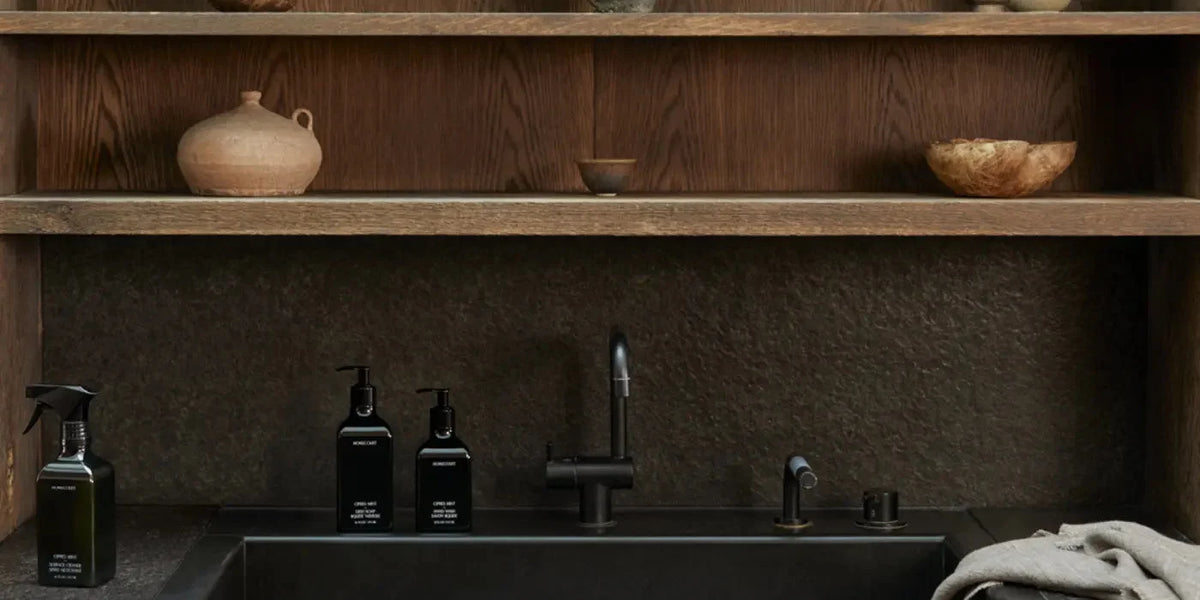
A good setup at the sink helps. The Kitchen Trio pairs Homecourt Dish Soap with Surface Cleaner and Hand Wash for $80, $10 less than the three bottles bought on their own, so there is always a gentle soap within reach.
Non-stick pan FAQ
What people ask us
Why is my non-stick pan sticky?
A sticky non-stick pan usually has a film of oil or cooking spray baked onto the surface. Consumer Reports explains that cooking sprays burn at a lower temperature than butter or oil and can leave a sticky buildup that is hard to remove. A baking soda paste, left on for several hours and then washed off with dish soap, usually clears it.
When should you replace a non-stick pan?
Replace it once the coating is chipped or scratched. Consumer Reports' cookware testing lead says a non-stick pan with any chips or scratches should be thrown away, because the coating could be flaking into food. A pan that has warped and rocks on the burner is also worth replacing, since it will not heat evenly.
Can you use baking soda on non-stick pans?
Yes, as a paste rather than a scrub. Mix baking soda with a little water, spread it over the buildup, let it sit for up to 24 hours, then wash it off gently with dish soap and a soft sponge. Skip hard scrubbing, since anything abrasive can scratch the coating. That gentle approach is the heart of how to clean a non-stick pan, every time you cook.
More dish soap guides
Keep reading
Dish Soap Dish Soap
How to Clean a Dishwasher
Casandra Tayag October 25, 2026 Dish Soap