 Non-Toxic Body Mist
Most of us choose a body spray by smelling it. The ingredient list gets a glance at best, yet it is the part of the bottle with the most to say, because the FDA requires cosmetics sold to consumers to list every ingredient, with an exception for fragrance we will come to.
We make a Body Mist and a Perfume Oil, so we read a lot of these lists, ours included.
The short answer
Look for a short list you can read: a named carrier such as alcohol or water, glycerin, plant oils or extracts, a named preservative in any water-based mist, and a brand that tells you its fragrance notes. Skip sprays where "fragrance" stands alone with nothing disclosed behind it, and skip phthalates, parabens, synthetic musks, added dyes and aerosol propellants if you would rather not wear them. Then read the list in order, since ingredients above 1% must appear by predominance.
Non-toxic body spray ingredients at a glance
All fourteen in one table
A non toxic body spray is easier to describe than to certify, so this table sticks to what a label can show: what each ingredient does in a body spray and the name it goes by. The first eight we look for. The last six we skip.
| Ingredient | What it does | On the label as |
|---|---|---|
| 01Sustainably sourced essential oils | Carries the scent | Named oils or sourced notes |
| 02Plant-derived alcohol | Carries & spreads the scent | Alcohol Denat. or SD Alcohol |
| 03Glycerin | Humectant | Glycerin |
| 04Aloe | Plant juice in the water base | Aloe Barbadensis Leaf Juice |
| 05Botanical extracts | Plant oils & extracts | Latin plant names |
| 06Disclosed fragrance notes | Tells you the scent | A notes list from the brand |
| 07Water as the base | Alcohol-free base | Water or Aqua |
| 08Natural preservatives | Prevents bacteria & mold | A named preservative |
Ingredients to look for
Signs of a short, readable formula
None of these eight makes a mist non-toxic on its own. The FDA is clear that an ingredient's source does not determine its safety. Together they describe a short, readable formula, which is what most people mean when they shop for a non toxic body mist or a natural body mist. Our older guide to healthier fragrance choices covers why so many people started reading these labels.
1. Sustainably sourced essential oils
Where the scent comes from
There is no regulatory definition of "essential oils," the FDA notes. The useful question is whether the brand tells you which oils it uses, and where they came from.
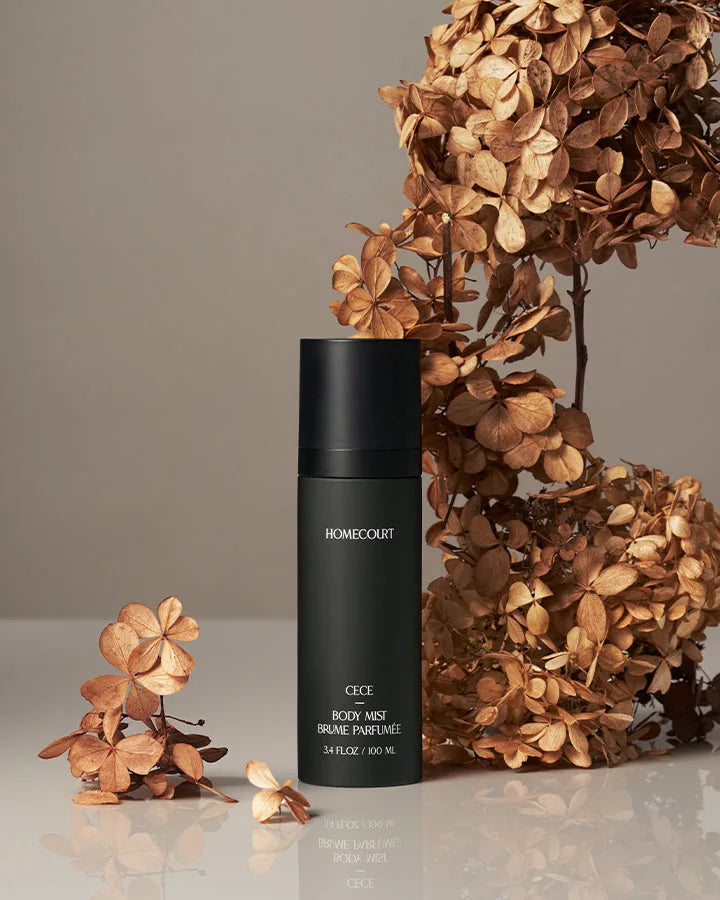
On our Body Mist and Perfume Oil pages, every note marked with an asterisk is an eco-friendly and/or sustainably sourced ingredient. For Cece that covers Guatemalan cardamom, dried mate absolute leaves, Sri Lankan cinnamon, Indonesian patchouli oil and vetiver oil. For Cocomoi, cedarwood, vetiver, sweet cardamom and black pepper.
- What it does
- Carries the scent
- On the label as
- Named oils or sourced notes
2. Plant-derived alcohol
The carrier in many fragrance sprays
On a cosmetic label, the FDA explains, "alcohol" by itself means ethyl alcohol. It is often denatured, made undrinkable, and may appear as SD Alcohol 40 or Alcohol Denat. Neither name says where the alcohol came from, so if plant-derived matters to you, look for the brand to say so.
Our Body Mist is alcohol-based. Alcohol Denat. is the first ingredient on its list.
If you want an alcohol free body spray, read past the front label. Some people choose one because they believe ethyl alcohol dries their skin, the FDA says, yet a product labeled alcohol free may still contain fatty alcohols such as cetyl or stearyl alcohol. A scent with no ethyl alcohol at all is easiest to find in an oil. Our Perfume Oil is formulated alcohol-free.
- What it does
- Carries & spreads the scent
- On the label as
- Alcohol Denat. or SD Alcohol
3. Glycerin
Small amount, real job
Glycerin is a humectant. A review in the Journal of Clinical and Aesthetic Dermatology describes glycerol in the skin's outer layers as a natural humectant that binds and holds water.
It is the last of six ingredients on our Body Mist list. No mist replaces your moisturizer.
- What it does
- Humectant
- On the label as
- Glycerin
 Try it withBody Mist$22.80 body mist (product)
4. Aloe
A plant juice in the water base
Aloe appears on the labels of some mists sold as natural, listed as Aloe Barbadensis Leaf Juice. If aloe is the reason you are buying a mist, look for it near the top of the list. An ingredient near the end may be present at 1% or less.
Neither of our body fragrances lists aloe.
- What it does
- Plant juice in the water base
- On the label as
- Aloe Barbadensis Leaf Juice
5. Botanical extracts
Latin names are a good sign
Plant oils and extracts often appear under their Latin botanical names, sometimes with the common name in parentheses, so they are easy to spot.
Our Perfume Oil is the clearest example we make: fragrance in six plant oils, from Simmondsia Chinensis (Jojoba) Seed Oil to Argania Spinosa Kernel Oil and Prunus Amygdalus Dulcis (Sweet Almond) Oil. Its product page calls that a concentrated blend of naturally-derived, skin-nourishing botanical oils.
- What it does
- Plant oils & extracts
- On the label as
- Latin plant names
 Try it withPerfume Oil$27.60 perfume oil (product)
6. Disclosed fragrance notes
Notes put the scent into words

US rules let a brand list its whole scent as "Fragrance," and ours does. A notes list tells you more than the law asks.
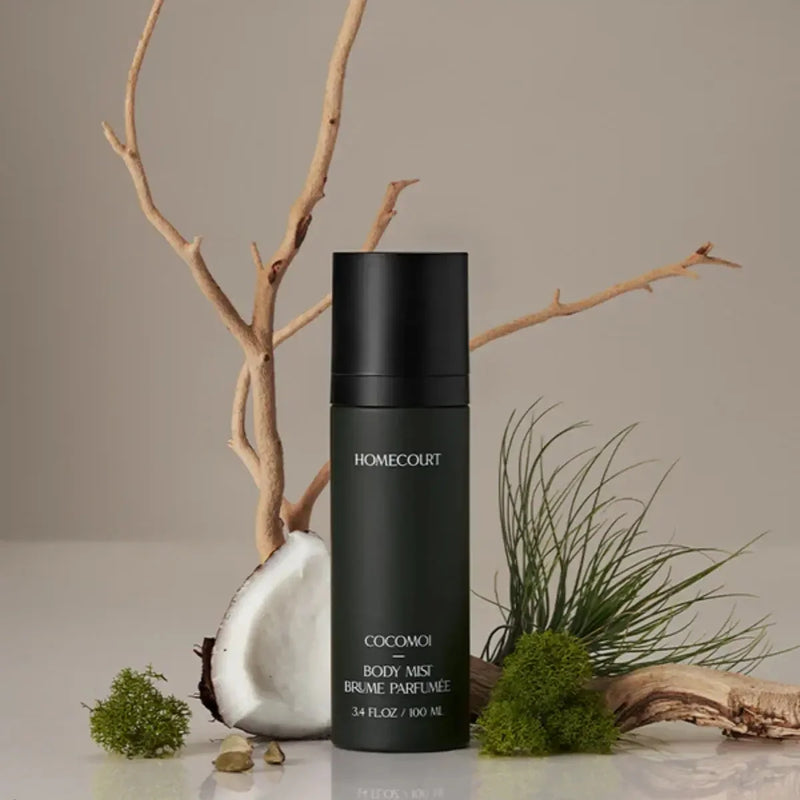
Cocomoi, for example, lists coconut water, cedarwood, vetiver, sweet cardamom and black pepper, with creamy fig in its description. Notes are not a full formula, but they tell you what you will smell and what to ask about if you react to one.
- What it does
- Tells you the scent
- On the label as
- A notes list from the brand
7. Water as the base
Base of many alcohol-free mists
In an alcohol-free mist, water is often the base, listed as Water or Aqua. Because ingredients above 1% are listed in descending order of predominance, a list that opens with water tells you water is the main ingredient.
Ours opens with alcohol, then water (aqua): an alcohol-based mist cut with water. The order tells you which kind you are holding.
- What it does
- Alcohol-free base
- On the label as
- Water or Aqua
8. Natural preservatives
Any mist with water needs one
Preservatives prevent the growth of harmful bacteria and mold, protecting both the product and the person using it, according to the FDA. The agency counts an ineffective preservation system among the ways a cosmetic can become contaminated, so a mist that contains water should name a preservative.
Natural is a bonus here, not a guarantee. Look first for a preservative you can name. On our Body Mist list, caprylhydroxamic acid and benzyl alcohol follow the fragrance. A 2017 Cosmetic Ingredient Review safety assessment says benzyl alcohol works mostly as a fragrance ingredient or preservative in cosmetics. Our Perfume Oil contains no water and lists no preservative.
- What it does
- Prevents bacteria & mold
- On the label as
- A named preservative
Ingredients to skip
Six we leave out, & how to spot them
A word on why. For DEP, the one phthalate still common in cosmetics, and for parabens, the FDA says it has no safety concerns or no information showing a health effect as they are used today, and we say so below. People skip them for other reasons: a list they can read, a personal rule, or what washes down the drain. Shopping for a non toxic perfume, these are the names that come up.
Phthalates
Usually hidden inside fragrance
Best known as plasticizers, phthalates also work as solvents and stabilizers in perfumes. According to the FDA on phthalates in cosmetics, diethyl phthalate (DEP), a solvent and fixative in fragrance, appears to be the only one still commonly used in cosmetics.
The catch with phthalates in perfume is the label. Because fragrance ingredients can be listed simply as fragrance, the FDA says a consumer may not be able to tell whether phthalates are present. It also says it has no safety concerns with DEP as currently used, and that people who want to avoid it may choose products that do not list fragrance at all.
For a phthalate free perfume, look for the brand to state it. Our Perfume Oil's product page says it is formulated without parabens, sulfates and phthalates.
Undisclosed fragrance
One word standing in for many
Fragrance formulas are complex mixtures of natural and synthetic chemicals and often trade secrets, which is why US rules allow the single word. Even some products labeled unscented may contain a little fragrance to mask other smells, the FDA notes.
"Fragrance" on a list is normal. What we skip is fragrance with nothing behind it: no notes, no description, no answer when you ask. If you are sensitive, the FDA suggests fragrance-free products, a careful read of the ingredient list and a question to the maker.
Parabens
Easy to spot by name
Parabens are a family of preservatives, most often methylparaben, propylparaben, butylparaben and ethylparaben, and the FDA says they are usually easy to identify by name. It also says it does not have information showing that parabens as used in cosmetics have an effect on human health.
To skip them anyway, scan for paraben at the end of a name. None of the six ingredients on our Body Mist list is a paraben, and our Perfume Oil is formulated without them.
Synthetic musks
Not on any label by name
Synthetic musks were made to replace costly natural musk. A 2024 study in Environmental Science & Technology describes them as widely used fragrances in personal care and household products, found in air, water, sediments and wastewater, with the polycyclic musks galaxolide and tonalide among the most abundant.
You will not see them on a label. They sit inside the word fragrance, so the only way to skip them is to ask the brand.
Artificial dyes
Color adds nothing to a scent
Every color additive in a cosmetic needs FDA approval, and many must be batch certified. Certified colors are mostly made from petroleum and carry names like FD&C Yellow No. 5, or just Yellow 5. The FDA also lists dyes among the five classes of ingredients behind most allergic reactions to cosmetics.
A clear mist needs no color. Our Body Mist list carries no color additive.
Heavy propellants
A pump does the same job
Aerosol body sprays push the product out with a gas, which can be a hydrocarbon such as butane or propane. FDA rules require every cosmetic aerosol to warn "Contents under pressure. Do not puncture or incinerate," and most cans with a hydrocarbon or halocarbon propellant need a second warning as well.
A pump sprayer makes a fine mist without any of that. Ours comes in a recycled plastic bottle with a spray nozzle, and its ingredient list names no propellant.
Body mist vs perfume
Light & often, or close & lasting
The real body mist vs perfume question is how strong you want the scent and how long it should stay. A body mist is the light one. A perfume is more concentrated, made to be worn closer and to linger.
Homecourt Body Mist is a delicate, fine fragrance spray that its product page says you can keep light or reapply through the day. It comes in Cece and Cocomoi, 3.4 fl oz for $38.
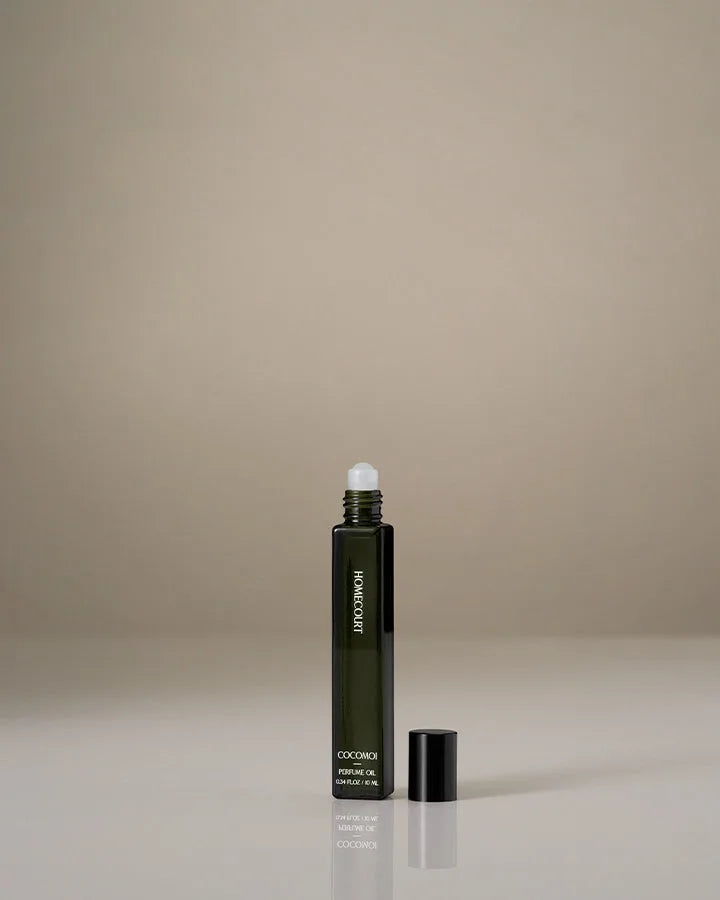
Our Perfume Oil for layering is the concentrated one: an alcohol-free blend of botanical oils that rolls onto pulse points, 0.34 fl oz for $46. It is a 2026 Allure Best of Beauty Award winner, and Cece was named Best Fragrance Collection-Indie in the 2025 Marie Claire US Fragrance Awards.
For how the two wear, see mists vs perfume oils, compared, or our guide to perfume oil, eau de parfum & body mist for all three side by side.

How to read a fragrance label
Five things to check, in order
Shopping for a non toxic fragrance comes down to reading one panel well. The FDA says there is no federal standard or definition for hypoallergenic or fragrance-free, so the ingredient list is where the facts are.
- Read the first few lines. Ingredients above 1% must be listed in descending order of predominance, so the top of the list is most of the bottle.
- Give the end less weight. Ingredients at 1% or less can follow in any order.
- Find the carrier. Alcohol means ethyl alcohol, water or aqua means a water base, and a run of plant oils means an oil.
- Find the word fragrance, then look for notes on the box or product page. If there are none, ask the brand.
- Check the carrier oils if you avoid certain foods. Our Perfume Oil lists soybean and sweet almond oil, for example.
Practice on ours. The Body Mist lists Alcohol Denat., Water (aqua), Fragrance, Caprylhydroxamic Acid, Benzyl Alcohol and Glycerin: an alcohol-based mist, cut with water and scented, with three more ingredients after the fragrance, six in all.
Body spray FAQ
What readers ask us
Is body spray bad for you?
Body spray is a cosmetic, and under US law the company that makes it must ensure it is safe when used as its label directs or in the customary way. Some people are allergic or sensitive to certain fragrance ingredients, the FDA notes, so if you know what you react to, read the full list and ask the maker about the fragrance. If you think a product caused a reaction, the FDA suggests talking with your healthcare provider about it, and you can report the reaction to the FDA.
How long does a body mist last?
A body mist is the lighter format, made to be refreshed. Our Body Mist directions say to apply a light mist and refresh as needed, and its product page suggests keeping it light or reapplying through the day for long-lasting wear. How long it stays depends on your skin, how much you spray and where it lands.
Can you layer body mist with perfume oil?
Yes, and they work best in the same scent. Roll the Perfume Oil onto your pulse points first, then mist over it for a lighter, wider layer. Pairing a non-toxic body spray with an oil in the same scent keeps it simple: both come in Cece and Cocomoi. Our guide to layering home & body fragrance carries the same scent into the rest of the house.
More body fragrance guides
Keep reading
Non-Toxic Body Mist