
Everyone has a side in this one. The bar soap loyalist likes the thrift and the bare shelf. The shower gel fan likes a scented lather that rinses fast. The body wash person, which is most of our customers, likes leaving the shower without reaching for lotion.
The three are made differently, sit at different pH levels, and leave different things on your skin. We make a body wash, so the verdict has a point of view. The facts about bar soap and shower gel are kept honest.
The short answer
For most skin, body wash is the gentlest everyday choice: it is formulated near the skin's own acidic pH and leaves moisturizing ingredients behind. Bar soap is true soap, alkaline by nature, and tends to leave skin tight. Shower gel is thinner and usually more fragrant, a liquid cleanser for oily skin and hot weather. The American Academy of Dermatology recommends a gentle cleanser for dry skin and warns that deodorant soaps are too harsh for it.
Shower gel vs body wash verdict
Body wash is the kindest of the three to skin
- Formulated near the skin's own acidic pH, while most bar soaps sit at 9 to 10
- Humectants and conditioners stay behind after the rinse
- A sealed pump bottle for a shared shower, with a refill pouch
Shower gel vs body wash is the closer contest. Body wash vs bar soap is not close at all. We scored Homecourt Body Wash against a classic bar from 1 to 10 on six rounds. The wash averages 8.2, the bar 5.5, and the bar's best result is a tie on hygiene and storage.
We left shower gel unscored, a texture more than a category. If you like a brisk rinse and a strong scent, it is a fine choice. If your skin feels tight after a shower, it is not.
Bar soap vs body wash side by side
Six rounds, from chemistry to the soap dish
Bar soap vs body wash comes down to six rounds: two on chemistry, two on your skin, two on living with the thing. Every fact is linked to the FDA, the American Academy of Dermatology or the dermatology literature.
Our guide to body wash for your skin type goes deeper on skin type, and our post on pH-balanced body washes in skincare explains the acid mantle that round four turns on.
True soap vs synthetic cleansers
Body Wash 8Bar soap 6
Bar soap is true soap: oils or fats reacted with an alkali into fatty acid salts. That is how the FDA defines soap, and a product only counts as soap under the law if those salts do the cleaning and it is labeled and sold only as soap. Most body washes, shower gels and even many "beauty bars" are synthetic detergent cleansers, which the FDA regulates as cosmetics. True soap is alkaline by its chemistry. Synthetic cleansers can be formulated to any pH. That is why a body wash can be built to match skin and a bar cannot.
Body wash for dry skin
Body Wash 9Bar soap 5
The job of a body wash for dry skin is to clean without stripping and leave something behind. The American Academy of Dermatology's advice for dry skin: a gentle cleanser, only as much as you need, showers of five or ten minutes in warm water, and moisturizer while skin is still damp. Homecourt Body Wash is built for that brief: upcycled sugar beet extract and organic rosella extract to moisturize, vitamin B5 and plant-derived glucose to support the skin's barrier, and naturally-derived polymers that condition as you rinse. The bar leaves nothing behind.
Body wash for sensitive skin
Body Wash 7Bar soap 5
Shopping for a body wash for sensitive skin means a gentle base and a short ingredient list, and one caveat applies to ours. Deodorant soaps, the AAD says, are too harsh for dry, sensitive skin, and it recommends fragrance-free products for it. Homecourt Body Wash is fragranced, so if your skin reacts to scent, patch test first or choose a fragrance-free cleanser. If your skin tolerates fragrance, a cream-textured body wash with mild surfactants beats a bar on two counts: lower pH and no deodorant actives. In 2016 the FDA banned 19 antibacterial ingredients, including triclosan, from consumer washes because makers could not show they were safer or more effective than plain soap and water.
pH balanced body wash vs bar soap
Body Wash 9Bar soap 4
This is the round bar soap cannot win. Healthy skin is acidic: a multicenter study of 330 people put the natural surface pH at about 4.7, and found skin below pH 5 had better barrier function and moisture than skin above it. In a 2014 lab test of 64 bar soaps, 53 came in between pH 9 and 10, including the ones marketed for acne and sensitive skin. Formulated close to the skin's own pH, a pH balanced body wash leaves the acid mantle less to recover from after every shower. Bar soap pushes skin pH up every time, and the same study links higher skin pH to dryness and irritation.
Bar soap hygiene & storage
Body Wash 7Bar soap 7
Is bar soap sanitary? Mostly yes, which surprises people. Used bars do pick up bacteria, but a 1988 study in Epidemiology and Infection, run by a soap maker's lab, inoculated bars with far more bacteria than a used bar carries and found none on the hands of the 16 people who washed with them. CDC handwashing advice does not distinguish between bar and liquid. Call it a tie, because the trade is real. The bar sits wet in a dish, softens, and gets handled by everyone in the house, while the body wash stays sealed and each person gets a fresh pump. Then again, the bar needs no plastic, and the Body Wash comes in a bottle, with a refill pouch to keep it in use.
Scent & lather in the shower
Body Wash 9Bar soap 6
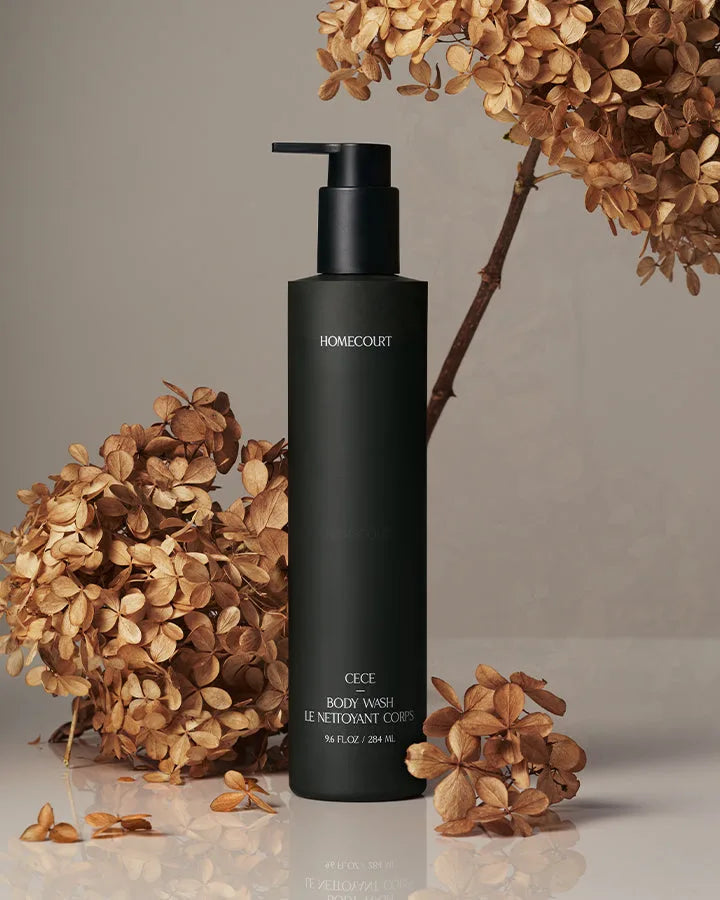
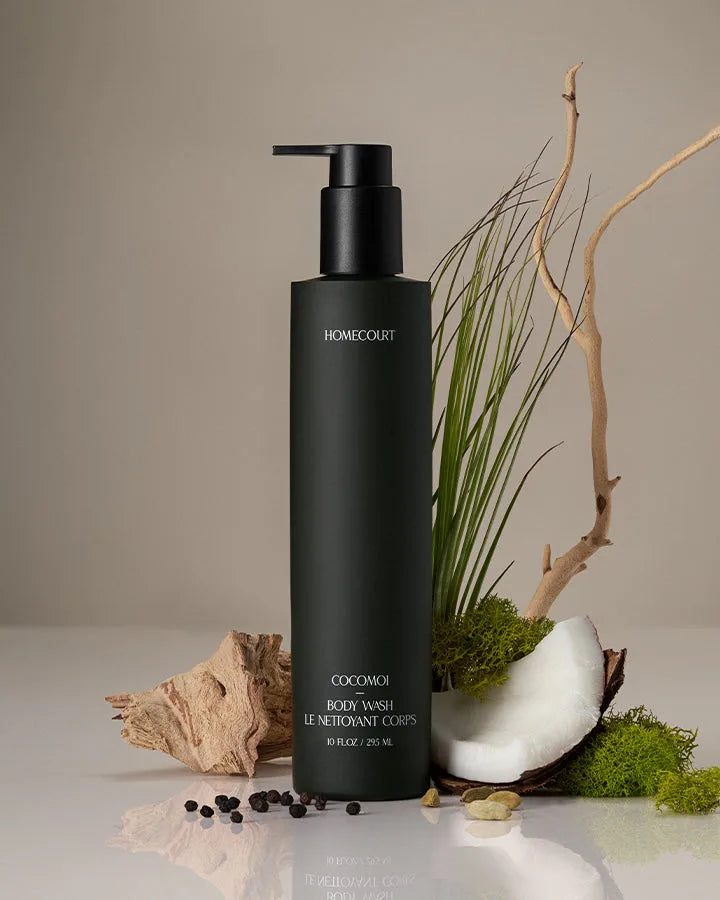
Lather is where body wash earns its keep. Worked on a cloth or in your hands, a creamy wash builds a rich foam, and the fragrance blooms in the steam. Cece is cedarwood smoke, cardamom, cinnamon and white leather. Cocomoi is the warmer, sweeter of the two. Bar scent is usually light and fades as the bar wears down, and bar lather depends on your water. Of the three, shower gel carries the most fragrance, which is its whole appeal and, for sensitive skin, its whole problem.
Body wash, bar soap & shower gel at a glance
What each one is made of & what it leaves behind
Start with what is body wash, since the other two are defined against it: a liquid cleanser built on mild synthetic surfactants rather than true soap, usually with humectants and conditioners that stay on the skin after rinsing. Body wash vs shower gel is mostly texture and fragrance load, the gel being clearer, thinner and often stronger smelling. Bar soap is the odd one out, because it is actual soap.
| Feature | Body wash | Bar soap / shower gel |
|---|---|---|
| What it is | A liquid cleanser built on gentle synthetic surfactants, usually creamy | True soap: oils reacted with lye into fatty acid salts / A liquid cleanser with a clear, gel texture |
| pH | Formulated close to the skin's own, which averages about 4.7 | Mostly 9 to 10 in lab testing / Usually close to skin pH as well |
| Moisture | Humectants and conditioners are left on the skin | Varies by bar, and many leave skin tight / Lighter, with less conditioning by design |
| Lather | Rich and creamy | Depends on the bar and your water / Firm and foamy |
| Fragrance | Subtle to full, by formula | Light or none / Usually the strongest of the three |
| Between showers | Sealed in the bottle | Sits wet in a dish / Sealed in the bottle |
| Packaging & travel | Bottle plus refill, liquid limits apply | Paper or none, and it packs anywhere / Bottle, liquid limits apply |
Who should choose body wash, bar soap or shower gel
Pick by your skin, then by your bathroom
Your skin settles body wash vs bar soap: if it ever feels tight after a shower, a bar is working against you and Homecourt Body Wash is built to fix that. Gel earns its place for oily skin, hot weather and the strongest scent. Bar soap keeps the shelf bare and the suitcase light.
Shower gel vs body wash bottom line.
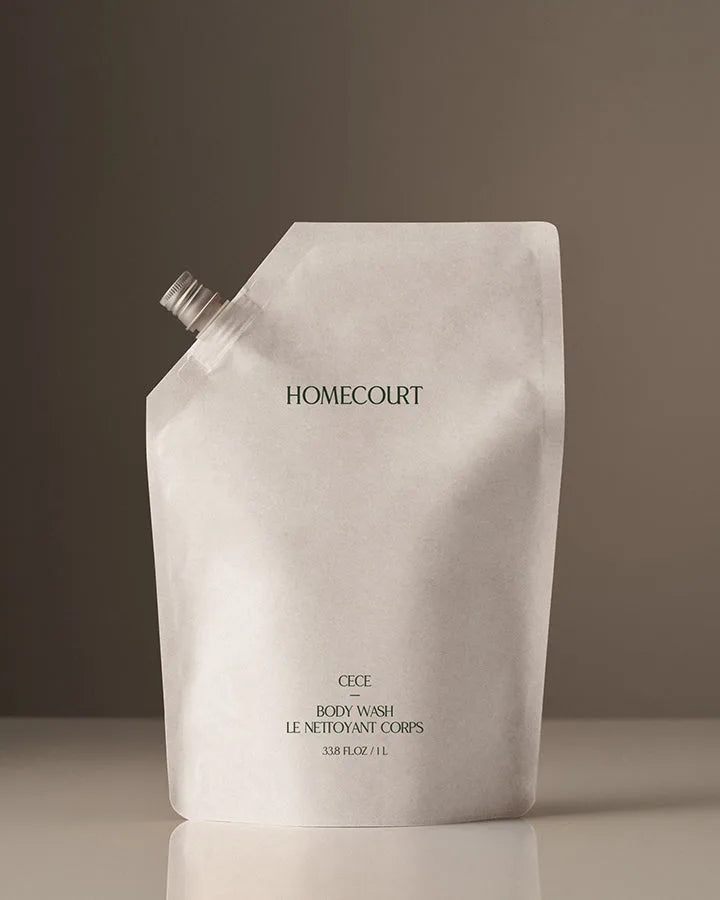
Shower gel vs body wash is a question of texture and scent, and either beats bar soap on pH and moisture. For most skin, most of the year, a body wash near skin pH with real conditioners is the easy call, and the Body Wash Refill keeps that bottle in rotation in the same two fragrances. Keep a bar for travel. Keep a gel for August.
Choose body wash for
- Dry or tight skinHumectants and conditioners that stay behind after rinsing.
- Shared showersOne pump each, so nobody handles the same bar.
- A scent you live inCece or Cocomoi, in a lather you can smell from the hallway.
Choose bar soap / shower gel for
- Zero plasticA paper wrap or no packaging at all.
- Carry-on bagsA solid passes every liquid limit.
- Low cost per washBars are usually the least expensive way to get clean.
- Shower gel, Oily or sweaty skinA lighter rinse with less left behind.
- Shower gel, Fragrance firstGels usually carry the most scent of the three.
- Shower gel, Hot climatesA cooler, thinner texture in a humid bathroom.
Body wash & shower gel FAQ
The three questions readers ask most
What Is Shower Gel?
People asking what is shower gel usually mean how it differs from body wash. Mostly texture: a liquid body cleanser with a clear, gel-like feel, built on the same synthetic surfactants but thinner, with more fragrance and fewer conditioning ingredients. It rinses fast and suits oily skin.
Is Bar Soap Better Than Body Wash?
Is bar soap better than body wash? For packaging, travel and cost per wash, yes. For skin, no: most bar soaps test at pH 9 to 10 against a skin surface pH of about 4.7, and true soap leaves no moisturizer behind. Both get you clean.
What Do Dermatologists Say About Bar Soap vs Body Wash?
Put the bar soap vs body wash dermatologist question to the American Academy of Dermatology and the answer turns on the formula more than the format: a gentle cleanser, no deodorant soap, fragrance-free if your skin reacts. A mild, pH-balanced body wash fits that advice, and so can a plain unscented syndet bar. A classic alkaline bar does not.
More Homecourt body wash guides
Keep reading

Non-Toxic Body Wash for Sensitive Skin: A Complete Buyer's Guide
Casandra Tayag non toxic body wash for sensitive skin a complete buyers guide (blog)
Plant-Based Skincare: Why It's Better for Hydration & Longevity
Jayraldine T plant based skincare why its better for hydration longevity (blog)