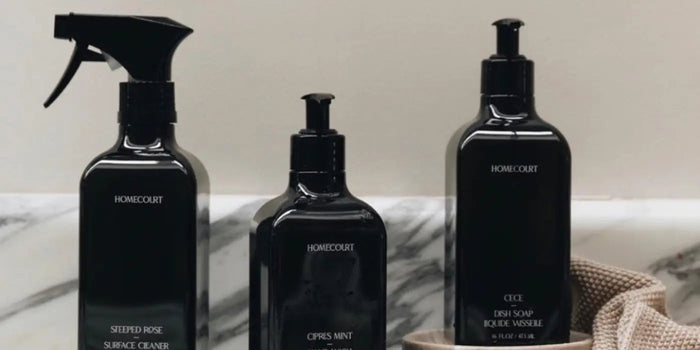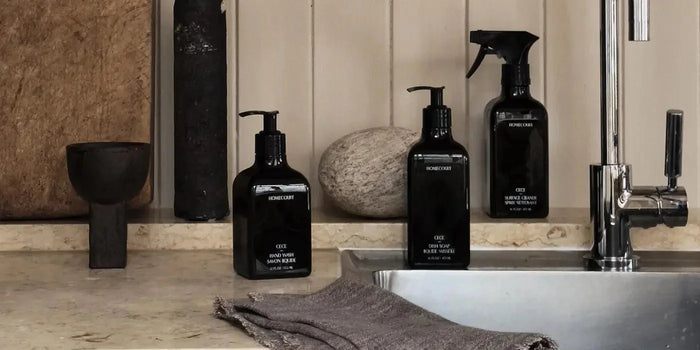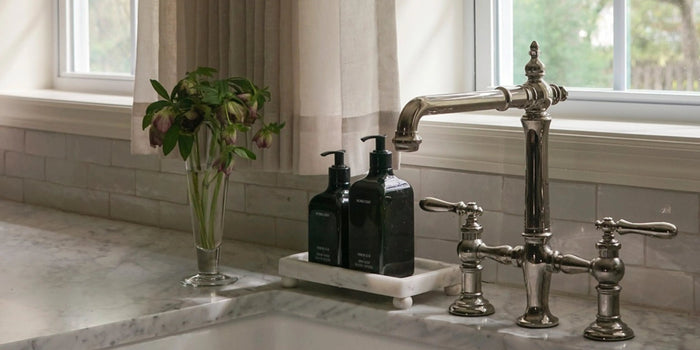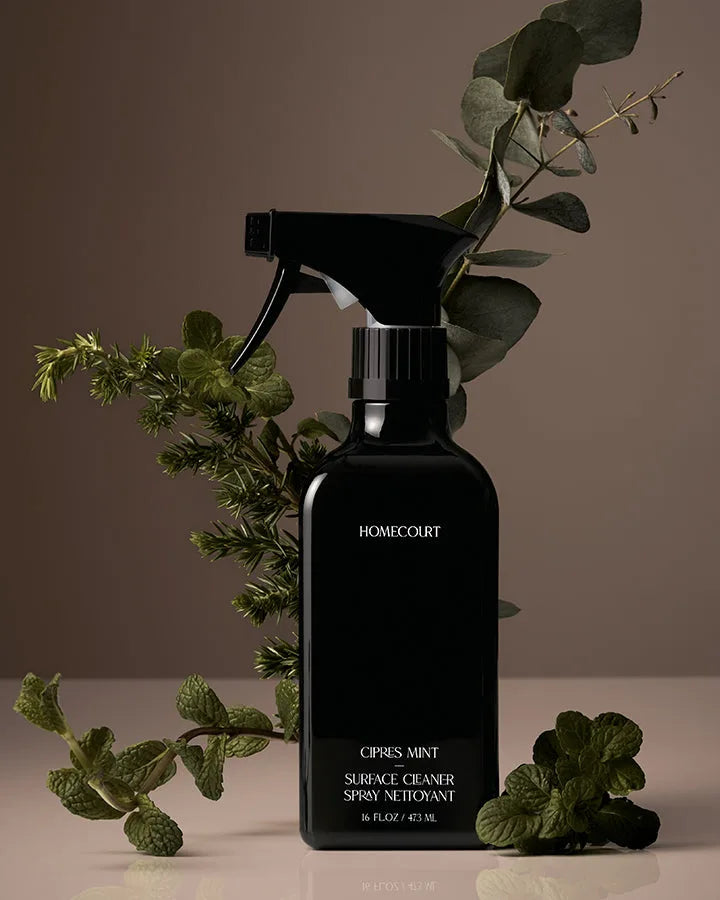
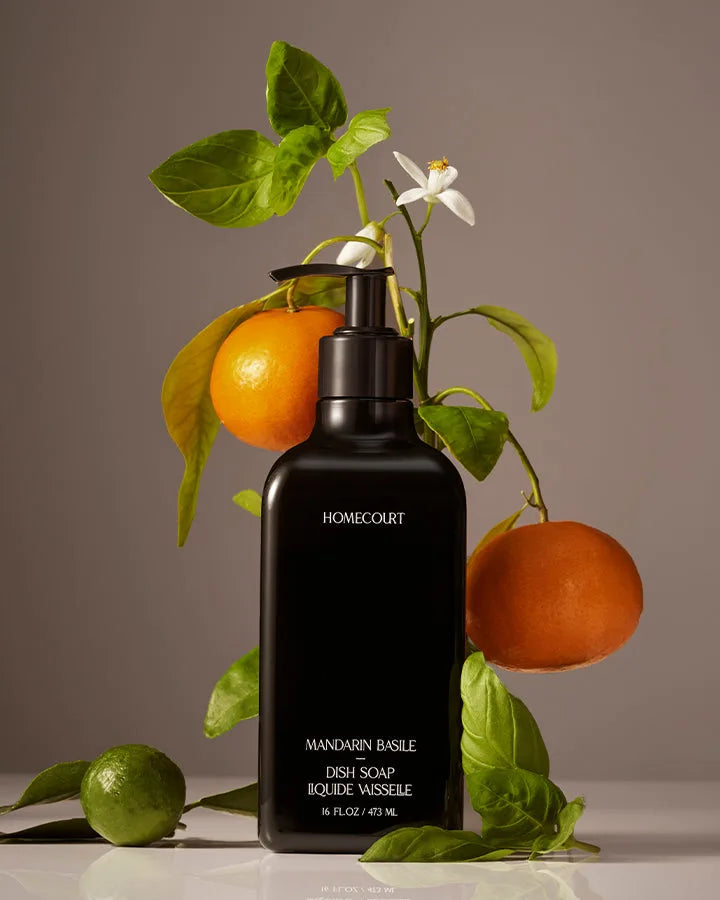
In any kitchen showroom the first question is granite or quartz. The second, which nobody asks until the counters are in, is how much work each one takes to keep clean. We live with that one, because our Surface Cleaner and Dish Soap end up on both.
From across the room the two look alike. Up close they behave differently. Granite is a natural igneous rock, cut from a quarried slab and polished, while quartz is an engineered surface, ground quartz bound in a synthetic resin.
That one difference decides almost everything about how each is cared for.
The short answer
Quartz is the easier countertop to care for because it is non-porous and never needs sealing. Granite needs an impregnating sealer, renewed when water stops beading, but it takes heat far better. Both get the same daily routine: warm water, a mild dish soap or a neutral spray, and a dry cloth.
Quartz vs granite verdict for easy care
Quartz is the easier counter to care for
- Non-porous, so it never needs a sealer
- Spills wipe up with warm water and mild soap
- Granite takes the hot pan, quartz needs a trivet
We scored quartz and granite from 1 to 10 on the five things that decide how a counter ages: daily cleaning, sealing, stains, heat and price. Quartz averages 8.2, granite 7.4. The quartz vs granite gap is almost entirely sealing and stains, which is to say porosity.
Granite wins the heat round outright, and the two tie on price. If you cook hard and set pans down without thinking, that one round may matter more than the other four.
Quartz vs granite countertops side by side
How the two stones behave in a working kitchen
Five rounds settle quartz vs granite countertops. Each is a moment at the counter: the nightly wipe, the yearly sealer, the glass of red wine, the hot pan and the invoice.
The cleaners are the same for both. Our cleaner for quartz vs granite countertops is labeled for non-porous surfaces including sealed stone and granite, and a gentle plant-based dish soap with warm water is what the Natural Stone Institute recommends for any stone surface. Iowa State stone countertop care says the same for both: mild soap, no harsh acids.
Daily cleaning for granite & quartz
Quartz 9Granite 8
How to clean granite countertops is the same answer as quartz: warm water, a few drops of mild dish soap or a neutral surface cleaner, a soft cloth, then dry. Blot spills rather than wiping them, so you do not spread the stain, and skip bleach and harsh acids on both. The round goes to quartz only because nothing you do that day depends on a sealer underneath.
Sealing granite countertops
Quartz 10Granite 6
Here quartz takes the round without trying. It is non-porous and, as the Iowa State extension notes, does not require sealing or polishing. How to seal granite countertops: clean the surface, apply an impregnating sealer made for stone, let it rest about half an hour, then wipe away the excess. The Natural Stone Institute points out that a sealer does not truly seal the stone, only makes it more stain resistant, and recommends a non-toxic sealer on any food prep surface. Test with a few drops of water. If they bead, you are fine. If they soak in, it is time.
Stain resistance of quartz & granite
Quartz 9Granite 7
Quartz resists stains because there is nowhere for a spill to go. A sealed granite counter resists them well too, but a worn sealer lets oil, wine and coffee creep into the stone, where a poultice has to draw them out. On either stone the rule is speed. Flush with water and mild soap, rinse and dry.
Hot pans on quartz vs granite
Quartz 6Granite 9
Hot pans on quartz vs granite is granite's round. Natural stone tolerates heat, which is why a trivet on granite is a precaution rather than a requirement. The resin in quartz can scorch or discolor under a pan straight from the burner, so a trivet is part of owning it.
Quartz vs granite price
Quartz 7Granite 7
Call quartz vs granite price a tie. Both are sold by the slab and priced by the fabricator, and the spread inside each material is wider than the gap between them. A common granite can cost less than a designer quartz, and a rare granite can cost more than any quartz. Get installed quotes for the exact slab, not category averages.
Granite vs quartz at a glance
What each one is & what it asks of you
The granite vs quartz question is really a question about pores. Natural stone has them. Engineered stone does not. Everything in the table, from the sealer to the cleaners to avoid, follows from that.
Granite vs quartz countertops still share one daily habit: wipe spills fast, keep the soap mild, and dry the surface so the minerals in tap water do not leave a film.
| Feature | Quartz | Granite |
|---|---|---|
| What it is | Engineered: ground quartz bound in resin | Natural igneous stone, cut from one quarried slab |
| Sealing | Never | Impregnating sealer, renewed when water stops beading |
| Daily cleaner | Warm water with mild dish soap or a neutral spray | The same, then dry with a soft cloth |
| Cleaners to skip | Bleach and harsh acids | Vinegar, lemon and ammonia glass cleaners |
| Hot pans | Trivet required, since heat can scorch the resin | Tolerates heat, though trivets are still advised |
| Pattern | Uniform, repeats across slabs | One of a kind, varies slab to slab |
| Price | Overlapping ranges, set by brand and finish | Overlapping ranges, set by stone and origin |
Who should choose quartz or granite
Pick by how you cook
Granite vs quartz countertops pros and cons come down to one trade. Granite asks for a sealer and gives you heat tolerance and a one-of-a-kind slab. A trivet is all quartz asks, and it gives you a counter that never needs anything but a wipe.
Granite vs quartz countertops bottom line.
Choose quartz if you want the least maintenance and a consistent look. Choose granite if you want natural stone and set pans down hot.
Either way the cleaning routine is the same, and the whole Homecourt home care collection is built for it: a Surface Cleaner and a Dish Soap gentle enough for stone, plus refill pouches that cut plastic by 92%.
Choose quartz for
- Busy kitchensNobody has to remember a sealing schedule.
- Pale countersA non-porous surface shrugs off wine and coffee.
- Matching runsIslands and backsplashes come out the same shade.
Choose granite for
- Cooks who move fastA pan straight off the burner will not scorch it.
- A slab nobody else hasEvery piece of natural stone is its own pattern.
- Outdoor kitchensNatural stone was made for weather. Resin was not.
Granite & quartz countertop care FAQ
Quick answers before you buy or clean
Is Quartz Better Than Granite?
Is quartz better than granite depends on what you value. For easy care, quartz, which never needs a sealer. For heat, and for a pattern no other slab repeats, granite.
Can You Use Vinegar on Granite?
Can you use vinegar on granite? No. Iowa State's extension warns that acidic cleaners such as lemon juice, ammonia and window cleaners can damage granite, and the Natural Stone Institute adds that vinegar and other acids can dull stone. Use mild dish soap or a neutral cleaner instead. Our surface cleaners FAQ covers which surfaces the Surface Cleaner is labeled for.
Do Granite Countertops Need to Be Sealed?
Do granite countertops need to be sealed? Most do, with an impregnating sealer, and that is the biggest care difference in the granite vs quartz decision. Some dense granites need it rarely, so ask your fabricator about your slab.
More Homecourt kitchen cleaning guides
Keep reading